

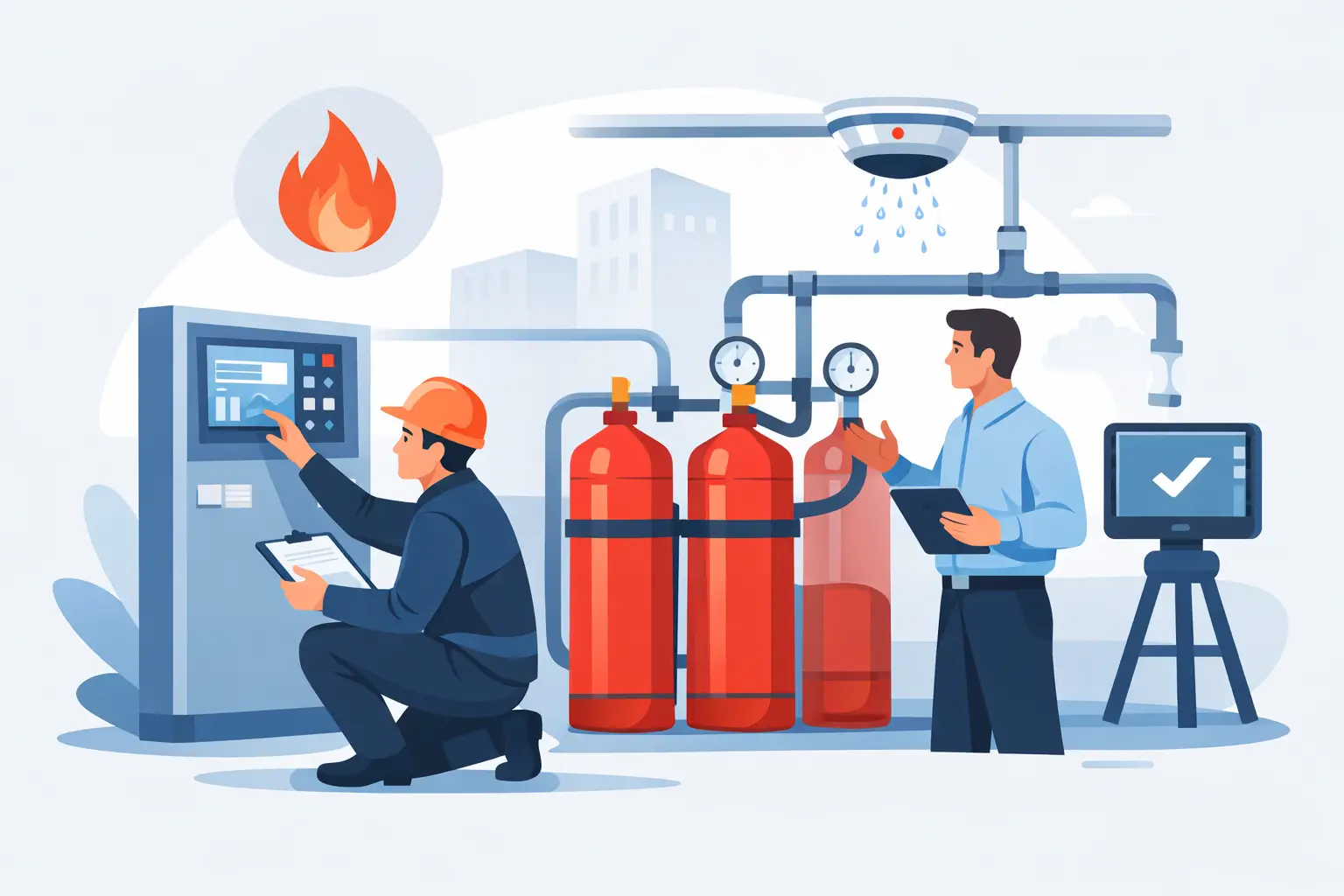
A suppression system can be correctly designed, installed with care and filled with the specified extinguishing agent, yet still fail to protect the room if its detection, controls and interfaces have not been proven as a whole. Fire suppression system commissioning is the point at which the installed equipment becomes a verified life-safety and business-continuity measure rather than a collection of components.
For a server room, production line, battery area or commercial kitchen, that distinction matters. A delayed release, an incorrectly configured shutdown signal or an enclosure that cannot retain agent concentration can turn a manageable incident into significant equipment damage and prolonged downtime. Commissioning establishes that the system will respond as intended under the conditions it is expected to face.
What fire suppression system commissioning proves
Commissioning is a structured process of inspection, testing, configuration and documented handover. It checks the physical installation against the approved design, then confirms that every connected part of the protection strategy operates in the right sequence.
On a gaseous fire suppression system, this may include automatic fire detection, manual release and abort controls, audible and visual warning devices, control panels, cylinder banks, selector valves, discharge pipework, pressure-relief vents and plant shutdowns. The process also considers interfaces with the building fire alarm, ventilation, dampers, doors, access control and monitoring systems.
The purpose is not simply to demonstrate that an alarm sounds or that a panel displays a healthy indication. The critical question is whether the system can detect a developing fire, warn people, control the environment, release the correct agent into the correct enclosure and maintain the designed concentration for long enough to extinguish the hazard.
This is particularly relevant where water damage would be as disruptive as the fire itself. Inert gas agents such as IG55, IG541, IG01 and IG100, alongside clean agents including Novec 1230 and HFC227ea, are selected to protect sensitive equipment and high-value spaces. Their effectiveness depends on the complete system, not the cylinders alone.
The work that should happen before testing starts
Good commissioning begins before the first functional test. The commissioning engineer should review the approved drawings, cause-and-effect documentation, calculations, equipment schedules and any agreed variations made during installation. This provides a clear benchmark for what has been designed to happen when an initiating device operates.
A visual inspection follows. Pipework must be adequately supported and correctly labelled, nozzles installed in the specified positions, cylinders secured, electrical connections completed, and manual controls accessible. In protected enclosures, changes made by other trades need particular attention. A new cable route, unsealed opening, altered ceiling layout or ventilation change can affect both detection coverage and agent retention.
This early check avoids a common and costly mistake: treating commissioning as the time to discover that the room no longer matches the design. Where the protected volume or opening arrangements have changed, the system may require reassessment before it can be accepted.
Testing the sequence, not just individual devices
The most valuable part of fire suppression system commissioning is cause-and-effect testing. Each input is tested against the output it should produce, including fault conditions. Depending on the risk and system design, engineers will verify detector zones, first and second-stage alarm logic, time delays, manual release, abort functions and discharge indications.
They will also test the actions needed to make the room suitable for suppression. This can include shutting down air handling plant, closing dampers, stopping process equipment, isolating fuel supplies or releasing door retainers. These interfaces need careful coordination because they often sit outside the suppression contractor’s own equipment scope.
A shutdown that occurs too early may disrupt operations unnecessarily. One that does not occur when required can allow agent to escape or feed the fire. The correct approach depends on the fire risk assessment, the selected agent, the room layout and the operational consequences of an automatic shutdown.
For occupied spaces, warning arrangements and abort controls deserve equal care. Personnel must have sufficient warning to leave safely, and the abort facility must work exactly as the agreed operating philosophy requires. This is not a feature to be assumed from a panel setting. It must be tested, demonstrated and understood by the people responsible for the site.
Discharge testing and simulated discharge
A full agent discharge test may be appropriate in some circumstances, but it is not automatically the best or only way to prove a system. Discharging an inert gas, clean-agent, CO2, wet-chemical or dry-powder system has practical, safety and cost implications. It may require planned downtime, agent replacement, environmental considerations and a controlled test arrangement.
In many cases, a simulated discharge test verifies the release circuit, control logic, alarms, shutdowns and actuators without releasing the extinguishing agent. Mechanical and electrical checks of release mechanisms are then carried out in line with the applicable system requirements and manufacturer instructions.
The right test method should be agreed for the application. A data centre with tight uptime commitments will need a different commissioning plan from a newly built plant room or an industrial process area. What should not change is the requirement for evidence that the release path and protective actions have been properly verified.
Room integrity is part of system performance
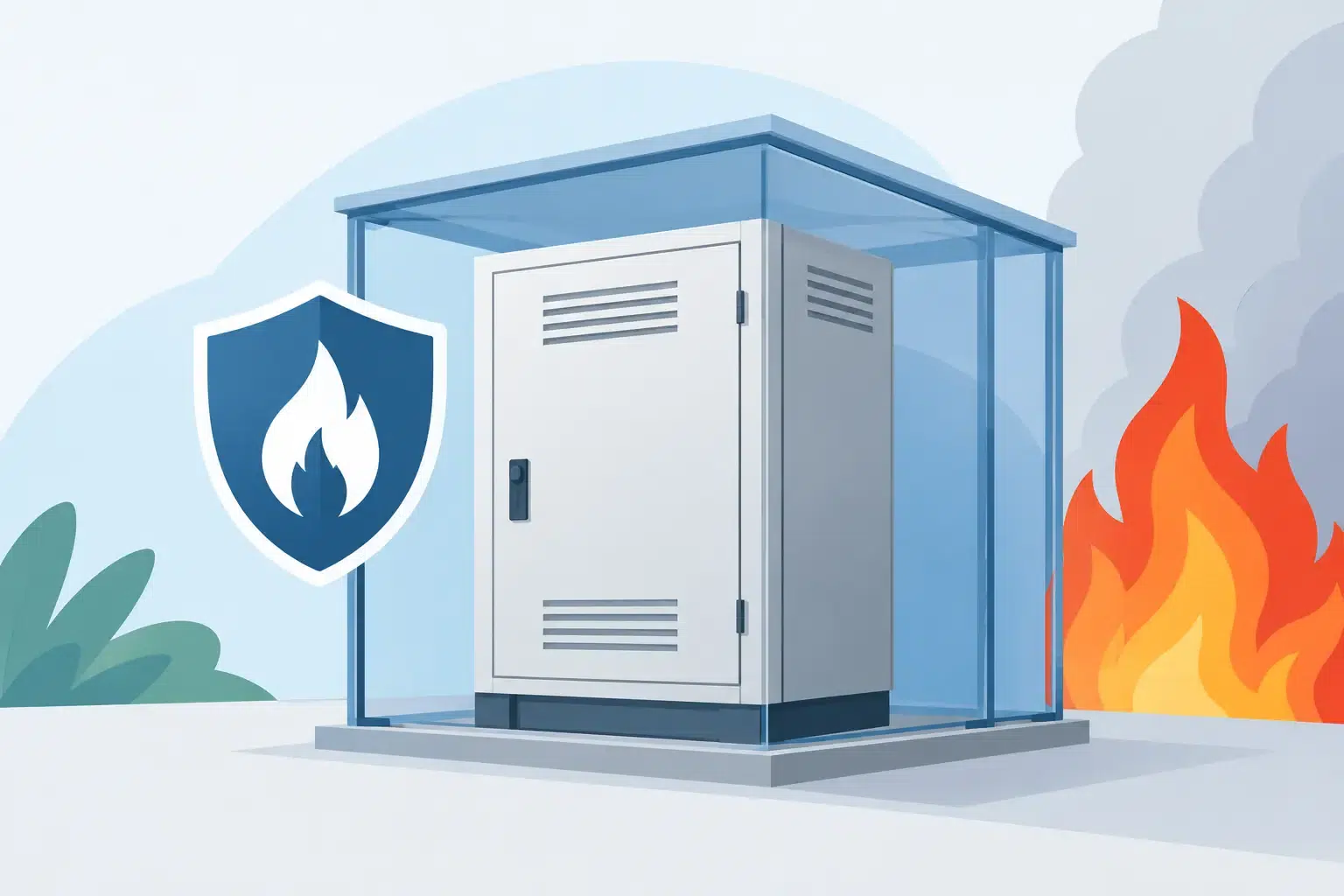
For total flooding gaseous systems, the enclosure is part of the suppression system. Agent concentration must remain within the protected room for the specified holding period, allowing the extinguishing agent to do its job and reducing the likelihood of re-ignition.
A room-integrity test, often called a door fan test, assesses whether the enclosure has excessive leakage. It identifies whether the room is likely to retain the required concentration and can highlight issues around cable penetrations, raised floors, ceiling voids, door seals, louvres and building joints.
Passing this test is not merely a paperwork exercise. If a server room has been altered after installation, or if ventilation paths have been left open, the agent may discharge correctly but fail to achieve the designed retention time. Rectifying leakage before handover is generally far less disruptive than discovering the issue after a system alteration or, worse, an incident.
Pressure relief must also be considered. The rapid discharge of gaseous agents can create pressure changes within an enclosure. Correctly sized and positioned over-pressure vents help protect walls, ceilings, doors and other building elements while allowing the system to perform as designed.
Standards, records and a clear handover
Commissioning should be undertaken against the relevant design standard, system manufacturer requirements and project specification. For gaseous extinguishing systems, BS EN 15004 is commonly central, while associated fire detection, electrical and building-system requirements may also apply. The exact standard framework depends on the system type, building use and insurer or client requirements.
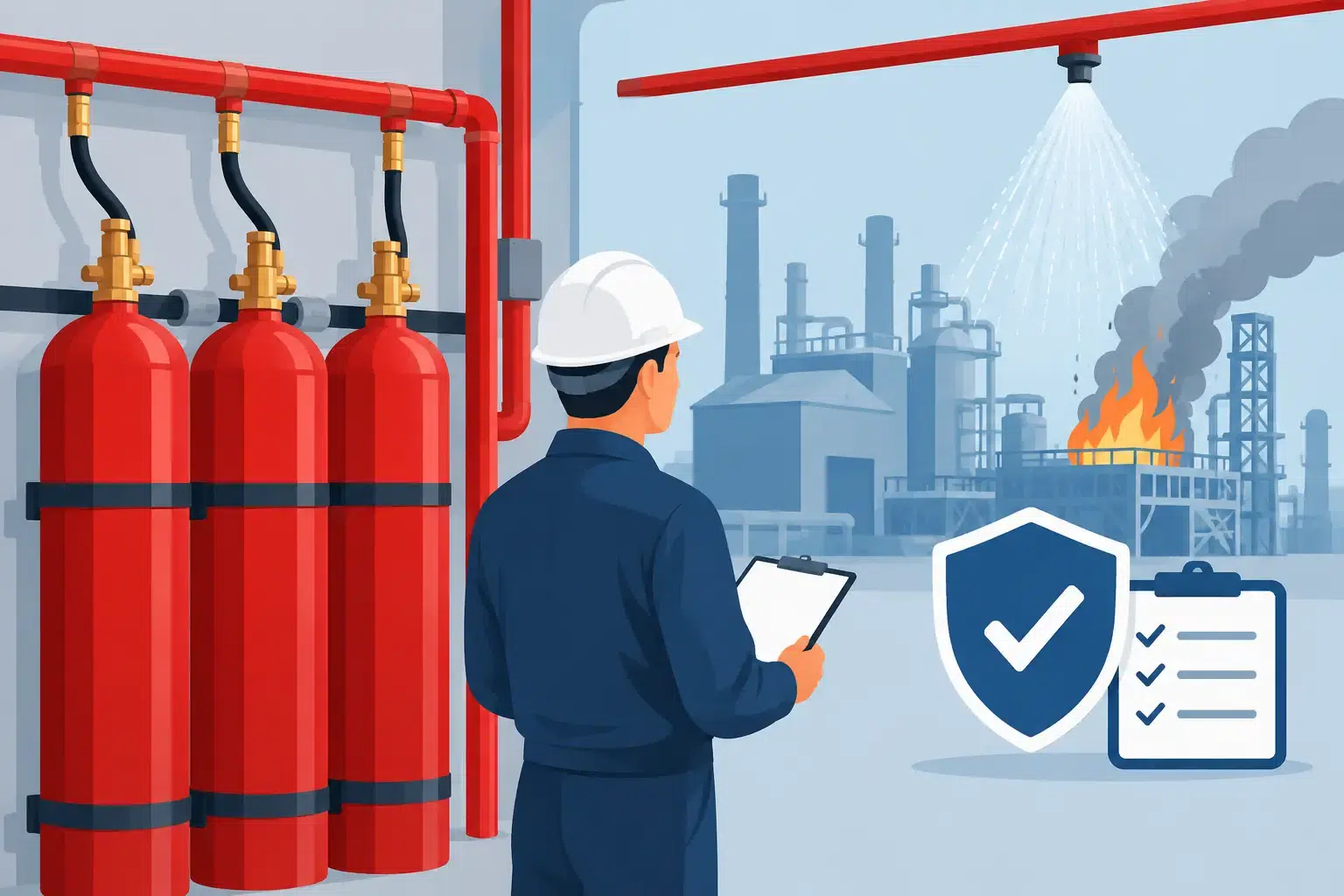
The handover documentation should give the responsible person practical control of the installed system. This normally includes as-fitted drawings, operating and maintenance information, test records, certificates, cause-and-effect details, equipment data and any identified limitations or outstanding actions.
A demonstration is equally useful. Facilities and operations teams should know what alarms mean, which actions occur automatically, how to respond to a fault, where manual controls are located and what must not be altered without review. If a new partition, door, service penetration or ventilation arrangement is planned, the suppression provider should be involved before the work takes place.
Commissioning is not the end of responsibility
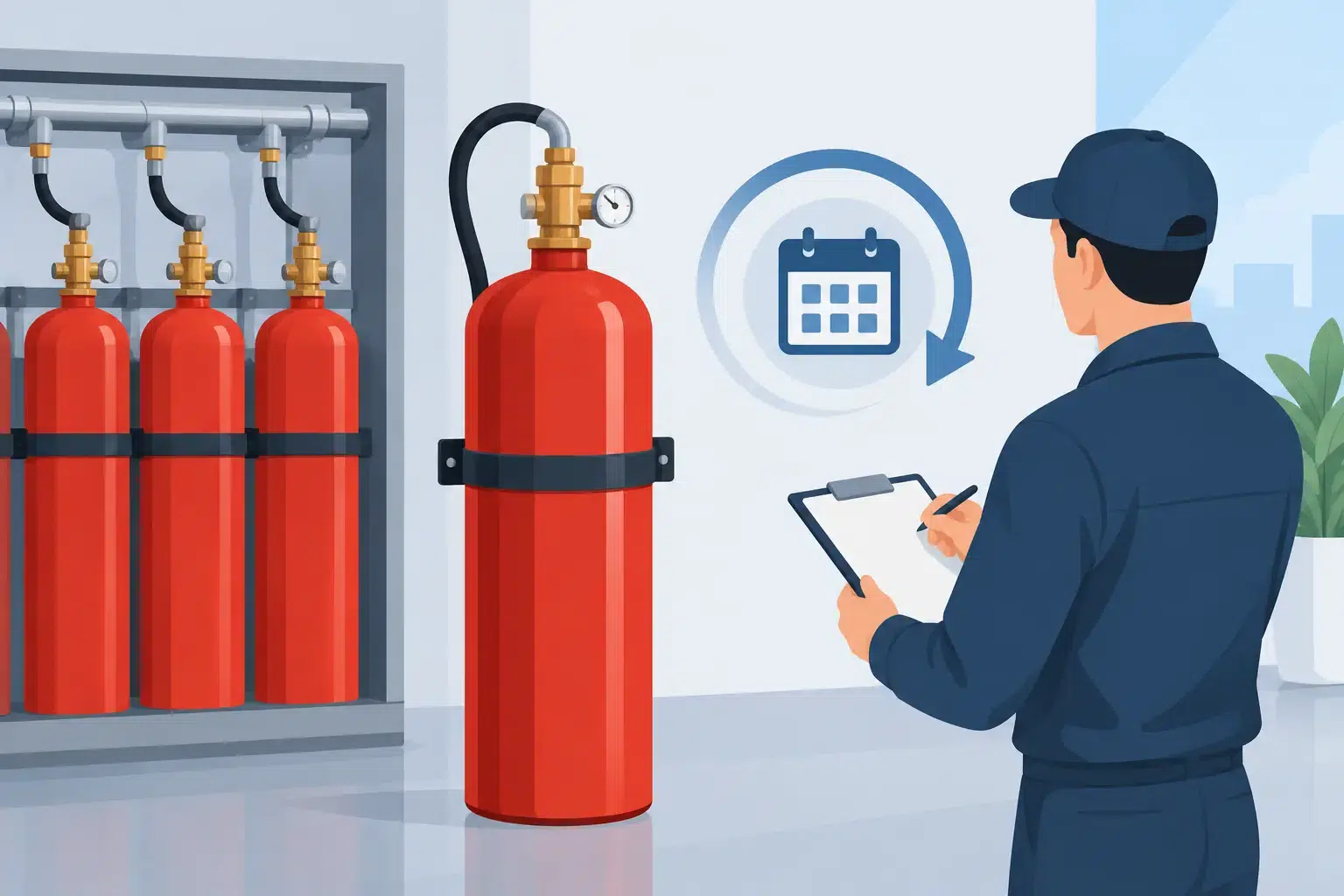
A commissioned system needs routine inspection, maintenance and periodic testing to remain dependable. Batteries age, detector conditions change, interfaces are modified and protected rooms are often altered gradually by routine building work. A system that was correct at handover can become compromised without anyone intending it.
For this reason, commissioning records should form the baseline for future service visits. They show how the system was configured, what was tested and where coordination with other building services was required. They also make later fault finding faster and more informed.
Active Fire Suppression approaches commissioning as part of an integrated project responsibility, from design review and installation through room integrity testing, demonstration and ongoing support. For organisations protecting critical assets, the useful question is not whether the equipment has been fitted. It is whether every part of the protection sequence has been proven under a controlled, documented process before it is needed in a real emergency.
Leave A Comment
You must be logged in to post a comment.