

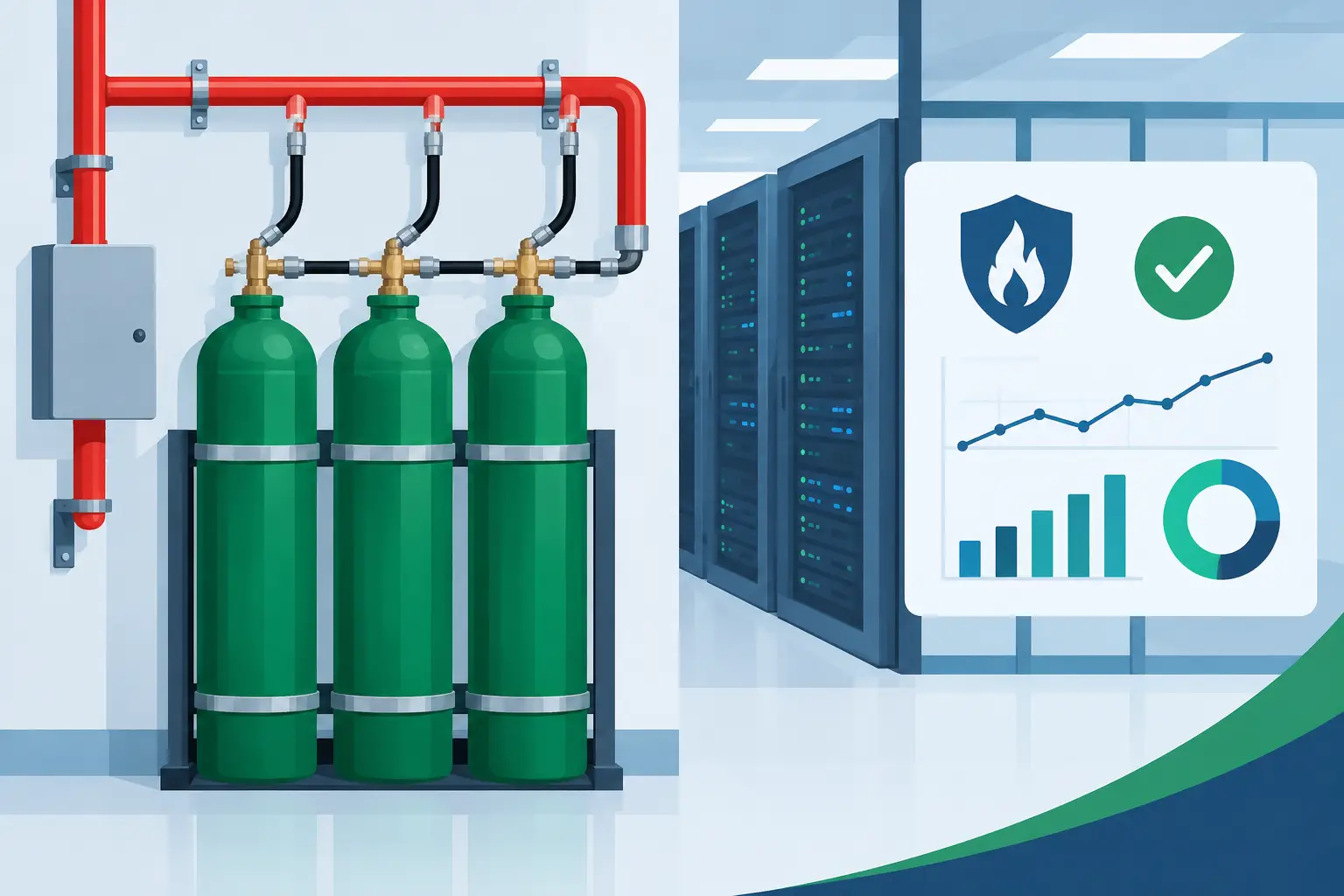
A fire in a live server room, control suite or electrical enclosure can turn a short interruption into prolonged operational loss. An IG541 system performance review establishes whether an installed inert-gas system can still achieve the conditions it was designed for: the right extinguishing concentration, in the right enclosure, for long enough to control a developing fire without causing avoidable disruption.
IG541 is often chosen where water damage, residue and extended recovery times are unacceptable. It is a proven inert gas blend, comprising nitrogen, argon and carbon dioxide, but the cylinder bank alone does not guarantee protection. System performance depends on the entire installation: detection, controls, pipework, nozzles, room construction, pressure relief and ongoing maintenance all have a bearing on the outcome.
What good IG541 performance looks like
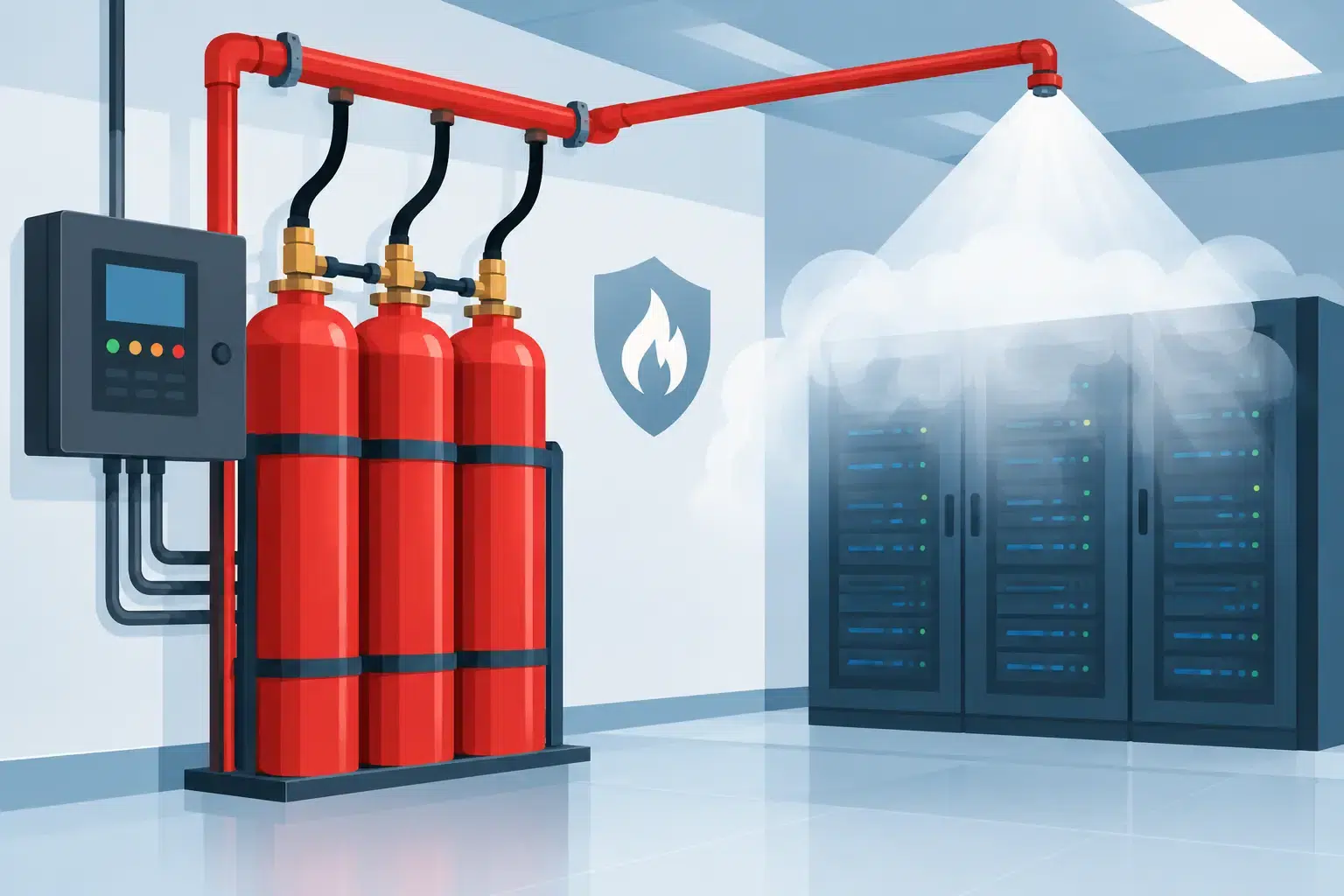
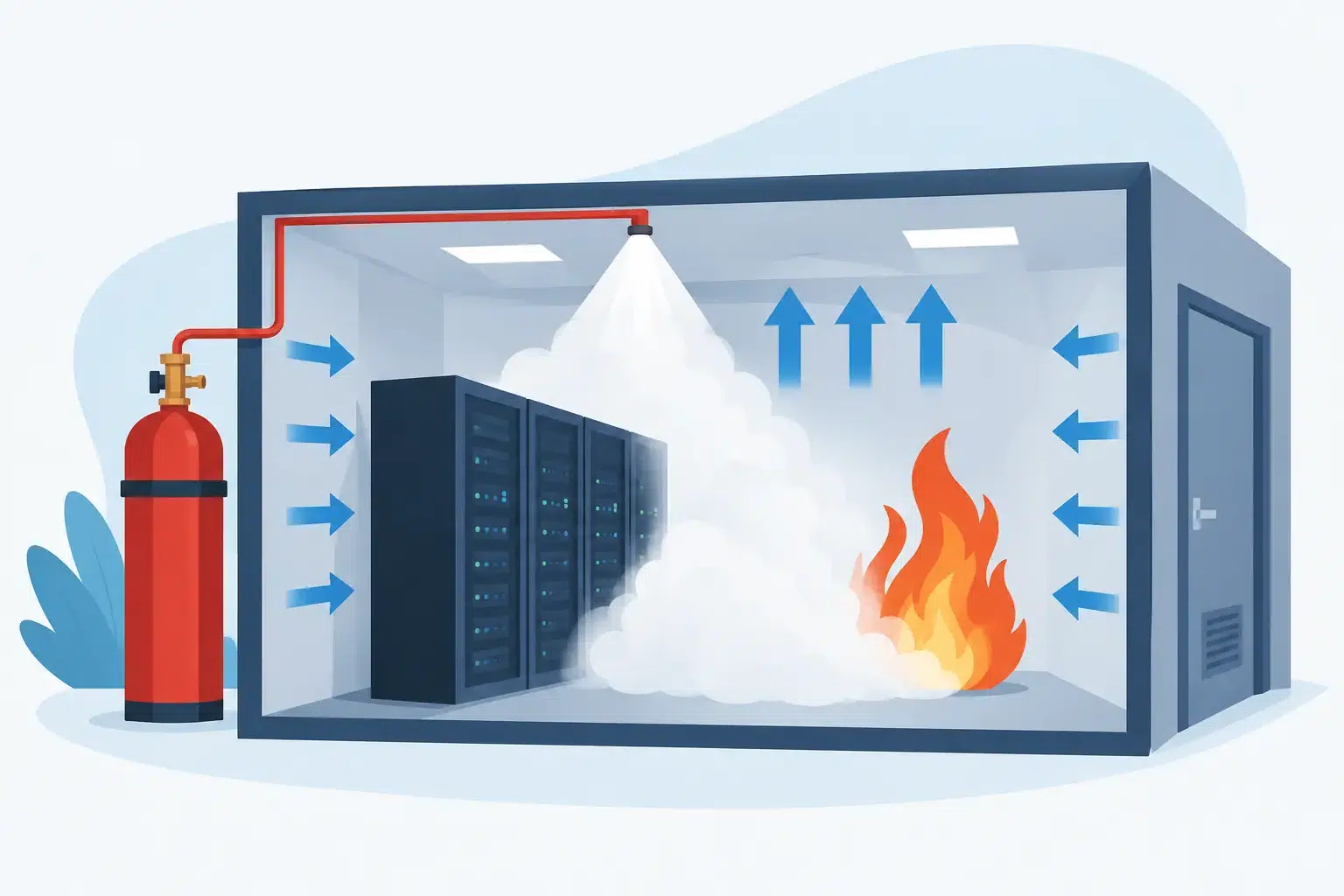
An IG541 system suppresses fire by reducing the oxygen concentration within a protected enclosure to a level at which combustion cannot continue. Unlike a clean agent that suppresses primarily through chemical action, an inert gas works by changing the atmosphere in the room. The design concentration must therefore be calculated precisely for the fire risk, the room volume, expected ambient conditions and the fuel involved.
For a critical enclosure, good performance means more than a successful discharge test on the day of commissioning. The system must release its agent within the required discharge period, achieve the specified concentration throughout the protected volume and retain that concentration for the required holding time. This gives responding personnel and the fire and rescue service time to address the incident while helping to prevent re-ignition.
The review should also consider the business result. Will the detection sequence identify a genuine fire early enough? Will the shutdowns operate as intended? Can the room return to service in a controlled manner after an event? For a data centre or process-critical facility, these questions are as significant as the agent calculation itself.
The core checks in an IG541 system performance review
Confirming the original design remains suitable
The starting point is the approved design documentation. This should identify the protected hazard, enclosure volume, design concentration, cylinder quantity and pressure, pipework arrangement, nozzle sizes and required hold time. A competent review compares this information with the room as it exists now.
Changes that appear minor can materially affect suppression performance. New cable penetrations, replacement doors, relocated equipment, raised-floor alterations, added extract ductwork or partition changes may increase leakage or change the effective room volume. A room that has evolved around a live operation is not necessarily the room for which the IG541 system was engineered.
Particular care is needed where equipment layouts create voids or obstruct gas distribution. Underfloor and ceiling voids may need to be included within the protected volume, or separately protected, depending on the fire strategy. A system may be correctly sized on paper yet leave a vulnerable area if the room configuration has changed without a design review.
Checking detection, controls and release logic
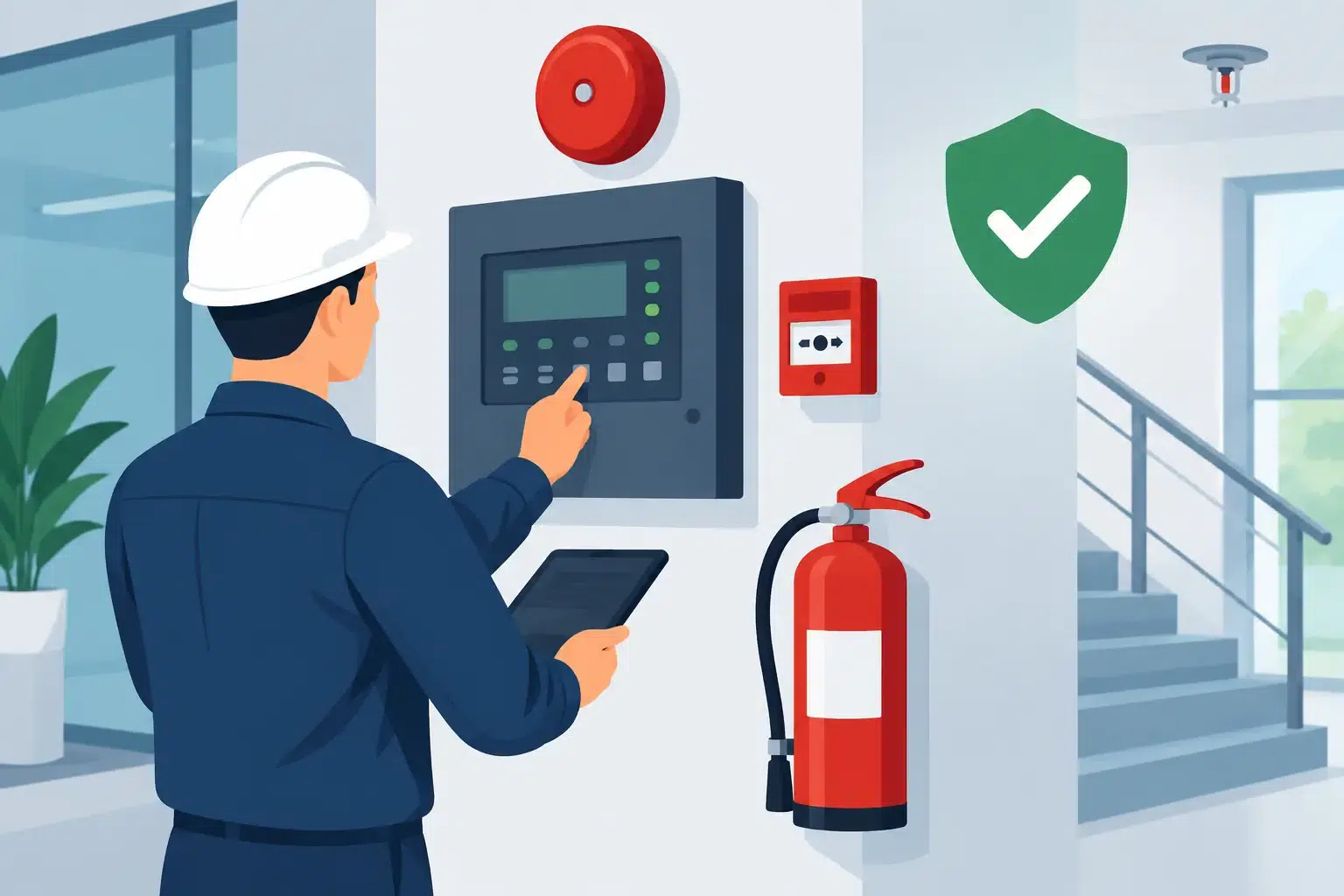
Inert gas is normally released following confirmed fire detection rather than the operation of a single detector. Cross-zoned detection, manual release facilities, abort controls, alarms, warning signage and timed delays should all be reviewed as part of the functional sequence.
The objective is to balance early intervention with protection against unwanted discharge. A poorly maintained detector, an altered control panel programme or an isolated interface can compromise that balance. The review should verify that detection devices are appropriately located, tested and free from conditions that may cause false alarms or delayed response.
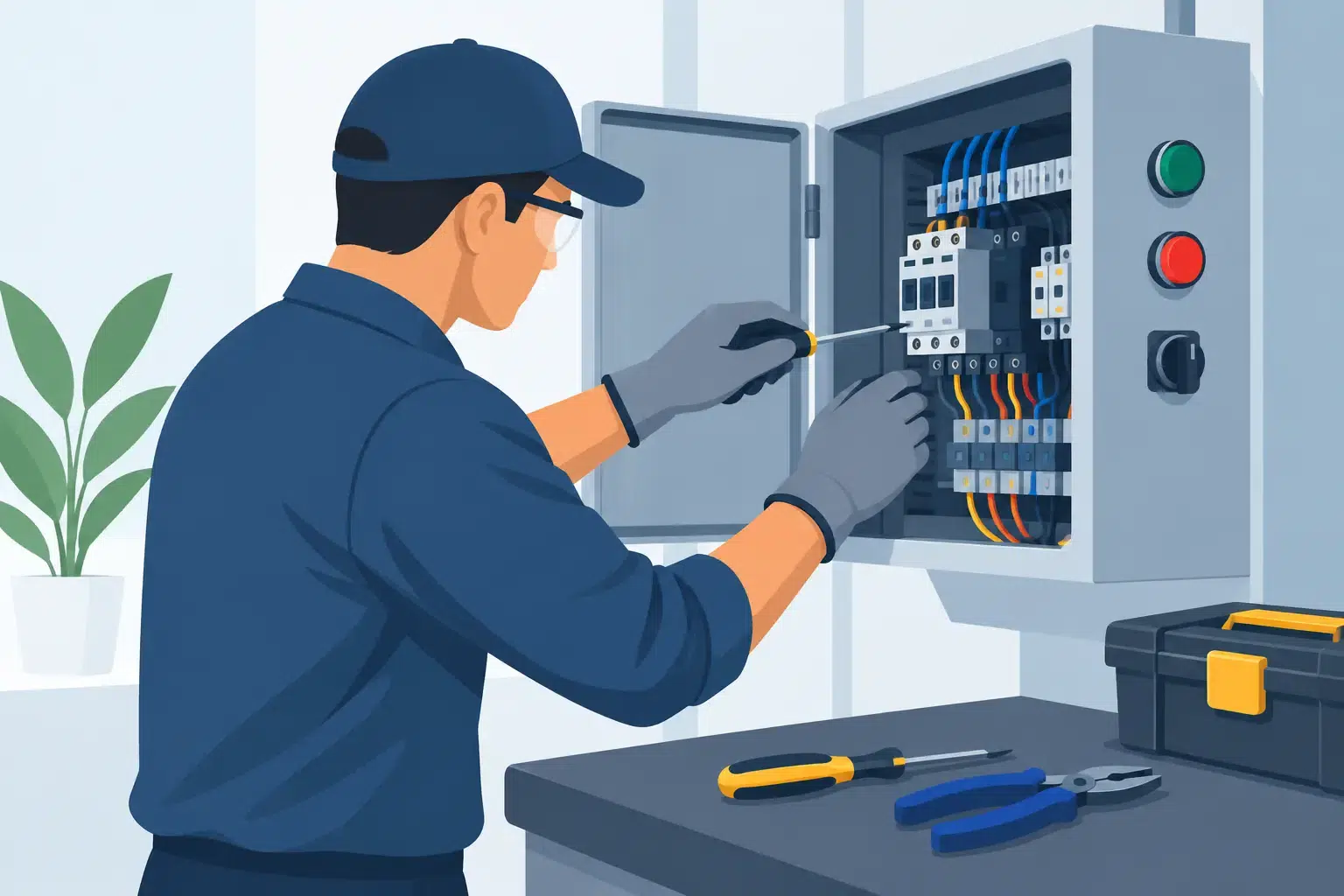
Cause-and-effect testing is particularly valuable. It confirms that the system produces the actions assumed in the fire strategy, such as closing dampers, stopping air handling, shutting doors where applicable and signalling to a monitored alarm receiving centre. If ventilation continues to run after discharge, agent concentration may be lost before the hold period is achieved.
Verifying cylinders, pipework and discharge equipment
IG541 is stored at high pressure, so the physical condition of the storage and distribution equipment requires careful attention. Cylinders must be correctly secured, identifiable and within the required inspection and servicing regime. Their pressure status, valve arrangements, pilot cylinders where fitted, actuators, hoses and manifold components should be checked against the system design and manufacturer requirements.
Pipework must remain properly supported and protected from damage. Modifications made during electrical, mechanical or building works can introduce unsupported sections, accidental restrictions or unapproved changes. Nozzles should be unobstructed, correctly orientated and consistent with the hydraulic design.
A full discharge is not usually necessary as part of routine maintenance, and it can cause significant operational disruption. However, functional testing of releasing equipment, controls and associated interfaces provides evidence that the system can operate as intended without unnecessarily discharging the agent. The appropriate test method depends on the system, site risk, insurer requirements and the available outage window.
Testing enclosure integrity and pressure relief
Room integrity is often the decisive factor in gaseous suppression performance. IG541 cannot maintain a fire-controlling concentration in an enclosure that leaks excessively. Door gaps, service penetrations, unsealed cable trays, ceiling voids and poorly fitted dampers can all undermine the hold time.
A room integrity test, often referred to as a door fan test, measures the leakage characteristics of the enclosure and predicts whether it can retain the designed concentration. It is a practical way to identify weaknesses without discharging the system. It should be repeated after significant building works, changes to services or alterations to the room envelope, not merely treated as a one-off commissioning document.
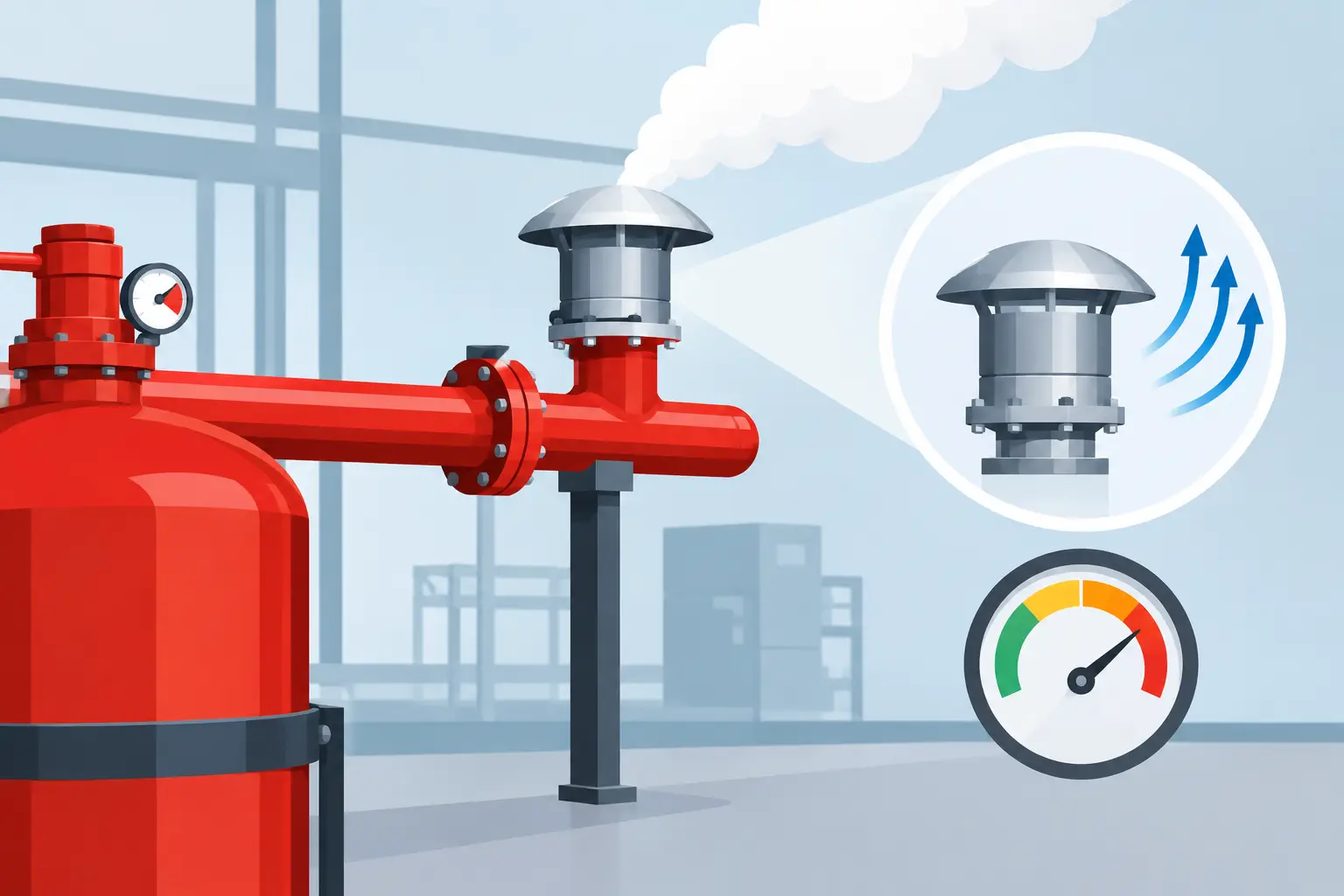
Pressure management deserves equal attention. The rapid introduction of inert gas creates a pressure change within the enclosure. Suitable pressure relief venting must be correctly sized, installed and unobstructed to protect the room structure, doors and ceilings while allowing the system to perform as designed. A blocked, painted over or altered vent is a significant defect, even where all cylinders and control equipment appear serviceable.
Why maintenance records matter as much as the equipment
An effective review combines physical inspection with clear evidence. Maintenance reports, fault records, isolation logs, room integrity certificates, cylinder servicing information, system drawings and cause-and-effect documentation should tell a consistent story. Gaps in this record do not automatically mean the system is ineffective, but they make it harder for a responsible person, insurer or auditor to demonstrate that performance has been managed.
Maintenance should be planned around the installed system and the operational importance of the protected area. A hospital technical room, financial-services data suite and lightly occupied plant room may all use IG541, yet their access arrangements, outage tolerance and recovery procedures will differ. The same applies to remedial works. A small sealing defect might be resolved promptly; a room that cannot meet hold time may require coordinated construction work, revised ventilation controls or a reassessment of the suppression design.
Relevant UK and European standards, including BS EN 15004, provide an essential framework for gaseous fire-extinguishing systems. They do not remove the need for site-specific engineering judgement. The protected risk, occupancy, enclosure condition and operating procedures must still be considered together.
Occupancy and operational safety
IG541 is widely used in normally occupied spaces because its blend includes carbon dioxide, which supports human respiration at the reduced oxygen concentrations associated with system discharge. That does not make a discharge event routine or risk-free. Warning alarms, discharge delays, emergency escape arrangements, training and clear procedures remain fundamental.
A performance review should establish whether staff understand what the pre-discharge alarm means, where the exits are and how to report a fault or isolation. It should also confirm that contractors working in the room cannot unintentionally impair the system through temporary covers, open doors, altered airflows or unsealed service works.
For sites with changing occupancy or new operational processes, the original life-safety assessment may need revisiting. This is especially relevant where a space originally designed as an occasional-access technical room becomes regularly occupied.
Turning review findings into dependable protection
The value of a review lies in the action taken afterwards. Findings should distinguish between urgent impairments, performance concerns and planned improvements, with clear ownership and realistic timescales. A cylinder-bank fault or disabled release circuit needs immediate control measures. A failed integrity test may call for a managed programme of sealing works followed by re-testing.
At Active Fire Suppression, this work is approached as an integrated engineering task rather than a checkbox inspection. Reviewing the suppression equipment alongside the room, detection, interfaces and business continuity arrangements gives facilities and engineering teams a clearer basis for investment and compliance decisions.
If an IG541-protected room has changed, has uncertain maintenance records or has never had its enclosure integrity reassessed since commissioning, addressing that question before an incident is the practical route to retaining both asset protection and operational confidence.

Leave A Comment
You must be logged in to post a comment.