

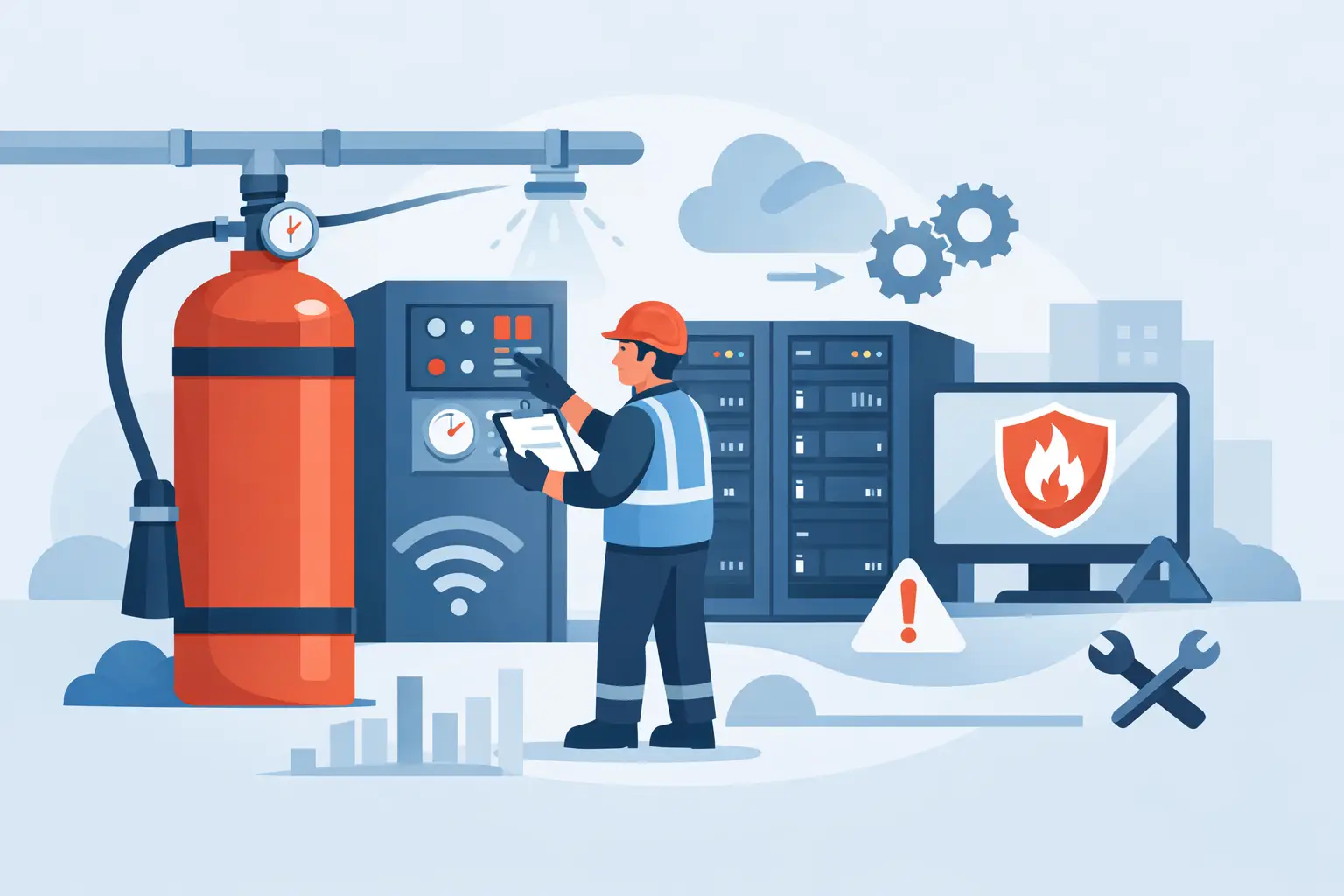
A suppression system can look perfectly serviceable on the wall while a depleted cylinder, obstructed nozzle or compromised enclosure prevents it from controlling a real fire. That is why fire suppression maintenance is not simply a compliance task. For organisations running server rooms, production equipment, commercial kitchens, battery rooms or other critical operations, it is the work that keeps a designed level of protection ready to operate.
Automatic suppression is often selected because water from sprinklers or firefighting hoses could cause as much operational damage as the initial fire. Clean agents, inert gases, CO2, wet chemical and dry powder each have defined applications, discharge characteristics and servicing needs. Maintaining them properly protects more than equipment. It supports staff safety, insurer confidence and the ability to return to normal operation after an incident.
What fire suppression maintenance must prove
A planned visit should do more than confirm that equipment is present. It should establish that the system remains suitable for the risk, is in working order and can release its extinguishing agent into the protected area as intended.
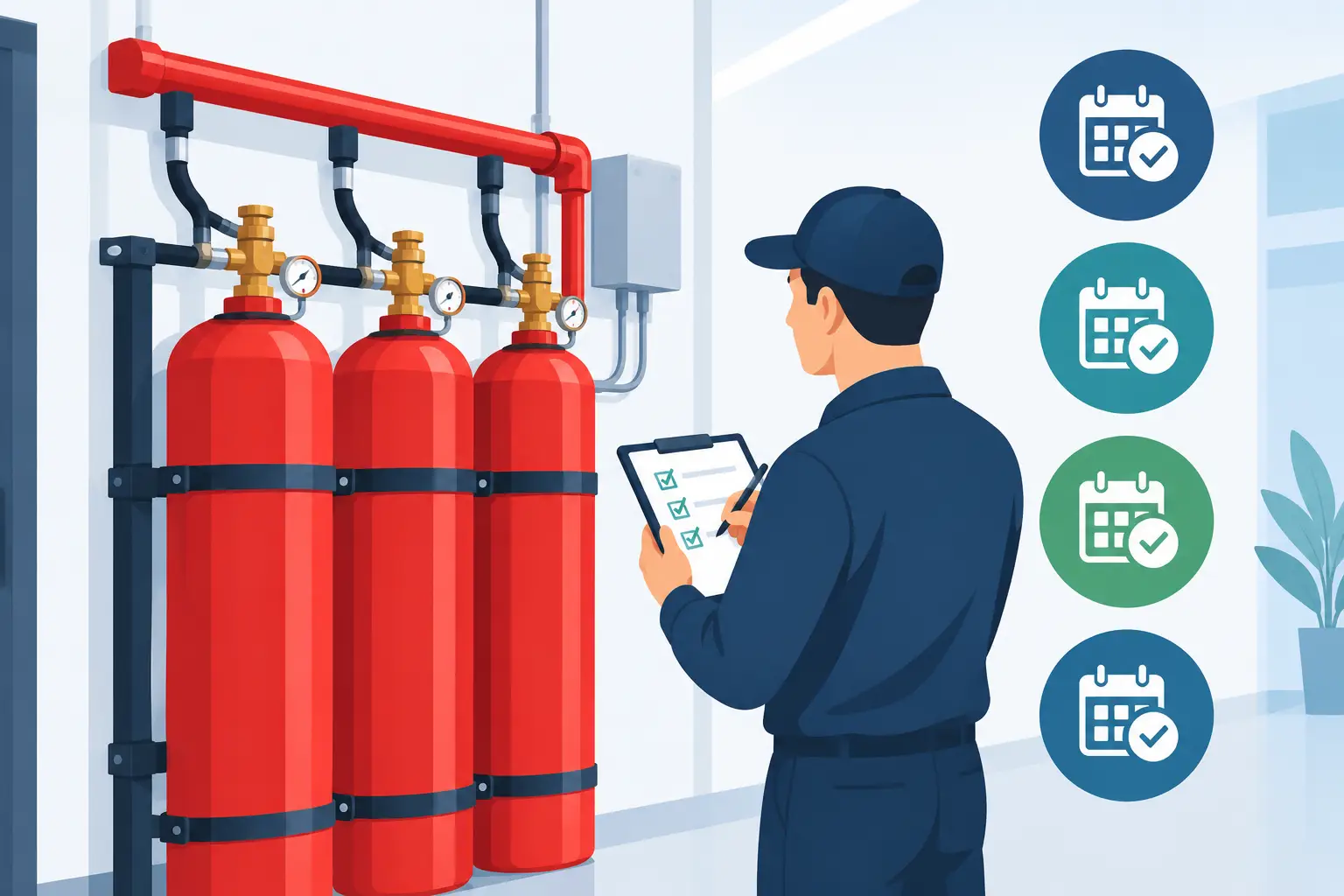
This involves checking the physical condition of cylinders, pipework, nozzles, detection devices, control panels, alarms, manual release points and abort controls. Engineers also verify pressures, agent quantities, battery condition, fault indications, labels and warning notices. Where equipment has a defined service life, that timetable must be managed rather than left until a fault occurs.
The system also needs to communicate with the building as designed. A gaseous suppression release may need to shut down ventilation, close dampers, stop plant, signal a fire alarm panel and operate visual or audible warnings before discharge. These interfaces are central to performance. A correctly maintained cylinder bank cannot protect a room if an extract fan continues to remove the agent as it discharges.
Maintenance records matter because they provide a clear history of inspections, defects, repairs and testing. They help responsible persons demonstrate that issues have been identified and acted upon, while giving facilities teams useful evidence for audits, insurers and internal risk reviews.
The enclosure is part of the suppression system
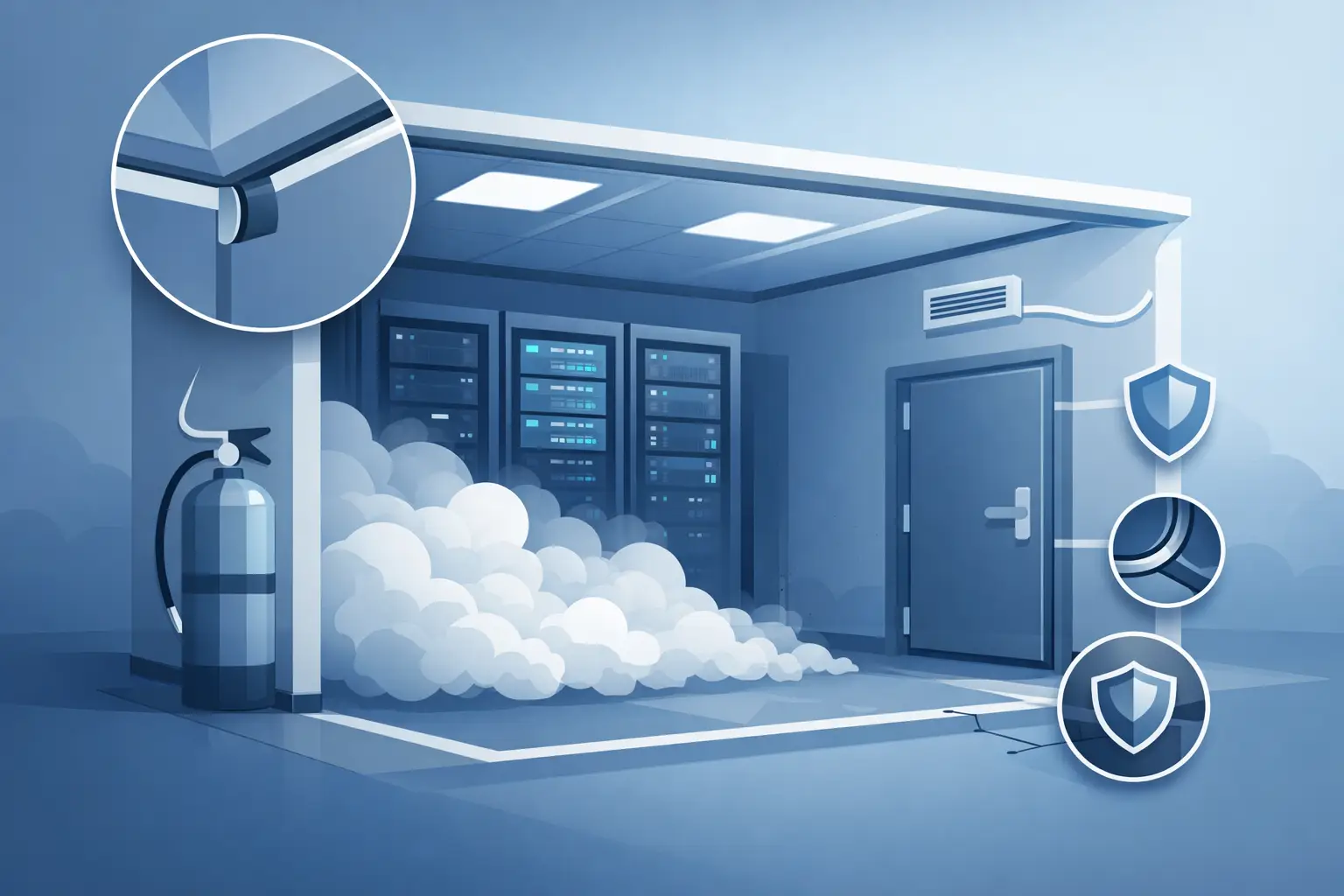
For inert-gas and clean-agent systems, the protected room is not merely the place where equipment happens to sit. It is an engineered part of the solution. The enclosure must retain a sufficient concentration of agent for the required hold time after discharge.
A new cable route, poorly sealed pipe penetration, replacement ceiling tile or altered door can change that performance. These are routine changes in data centres, communications rooms and plant spaces, yet they can materially affect suppression effectiveness. A room-integrity test identifies whether the enclosure can retain agent appropriately and highlights areas needing remedial sealing.
This is one reason a maintenance contract should include a conversation about changes to the room, not only a checklist of components. If the occupancy, ventilation arrangement, fuel load or protected equipment has changed, the original design basis may need review. The appropriate response is not always a full replacement. It may be a seal upgrade, revised controls, additional detection or a recalculated agent quantity. The right answer depends on the risk.
Maintenance requirements differ by system type
A competent maintenance programme reflects the installed technology rather than treating every suppression system as interchangeable.
Inert gas and clean-agent systems
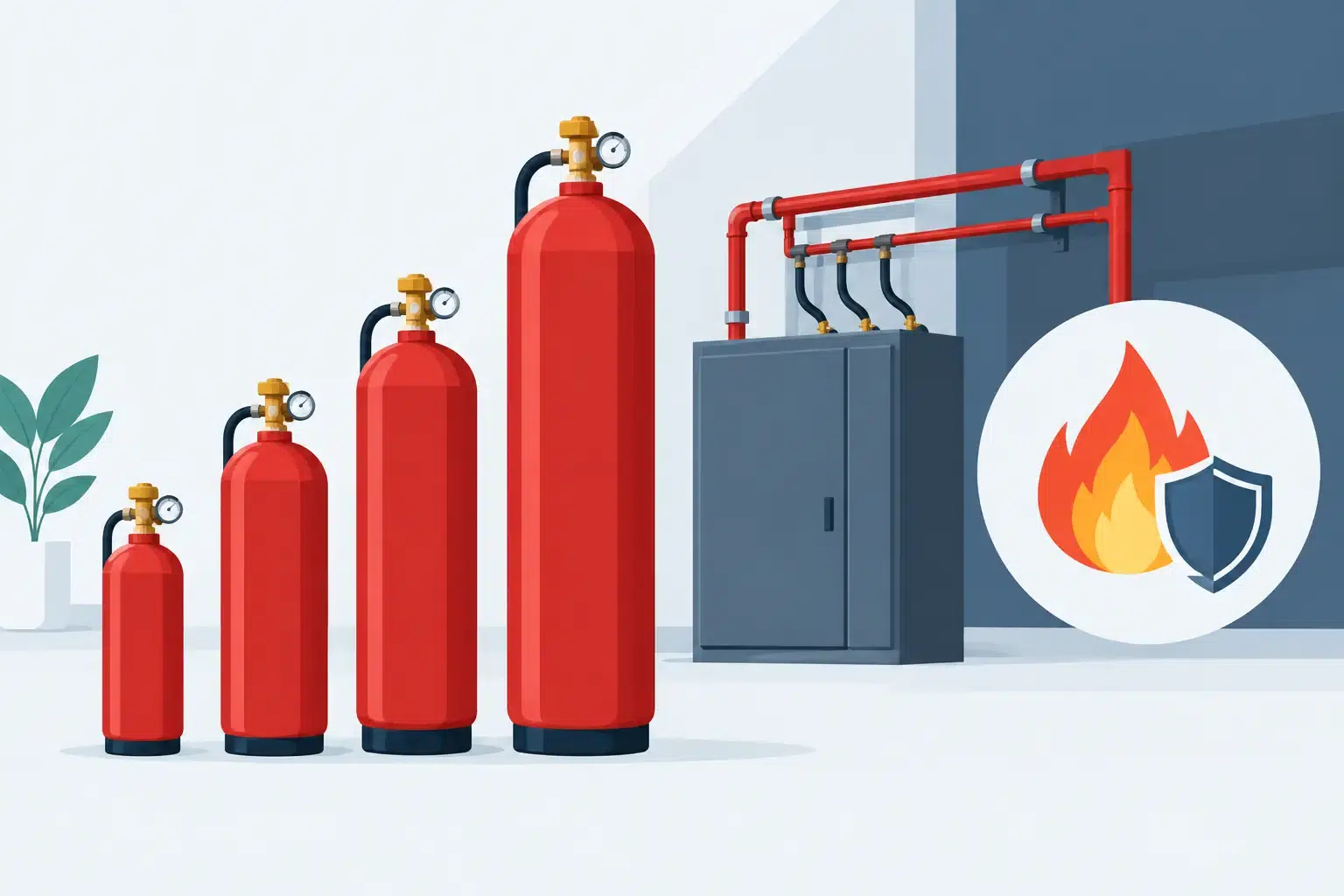
Systems using IG55, IG541, IG01, IG100, INERGEN®, Novec 1230 or HFC227ea/FM200/FE227 depend on accurate agent storage, reliable releasing controls and a sound enclosure. Cylinder pressures and weights, hose condition, manifold arrangements, actuators, selector valves, discharge nozzles and low-pressure monitoring all require attention. Control-panel logic and cause-and-effect functions should also be tested in a controlled manner.
These systems are often installed where business interruption is the dominant concern. In a server room, for example, a minor fault left unresolved can become a major resilience issue when a fire occurs outside normal working hours. Testing should be planned to protect availability, with agreed isolation procedures and clear communication to IT, security and building-management teams.
CO2 systems
CO2 remains highly effective for certain industrial hazards, machinery spaces and unoccupied or controlled environments. However, it presents a significant life-safety consideration because its discharge can create an oxygen-deficient atmosphere. Maintenance must therefore give particular attention to warning alarms, pre-discharge delays, lock-off arrangements, signage, manual controls and any safeguards intended to prevent personnel being exposed.
Changes in access arrangements or working practices can alter the risk. A space once rarely entered may become a regular maintenance area, requiring a review of the protection strategy and operating procedures.
Wet-chemical kitchen suppression
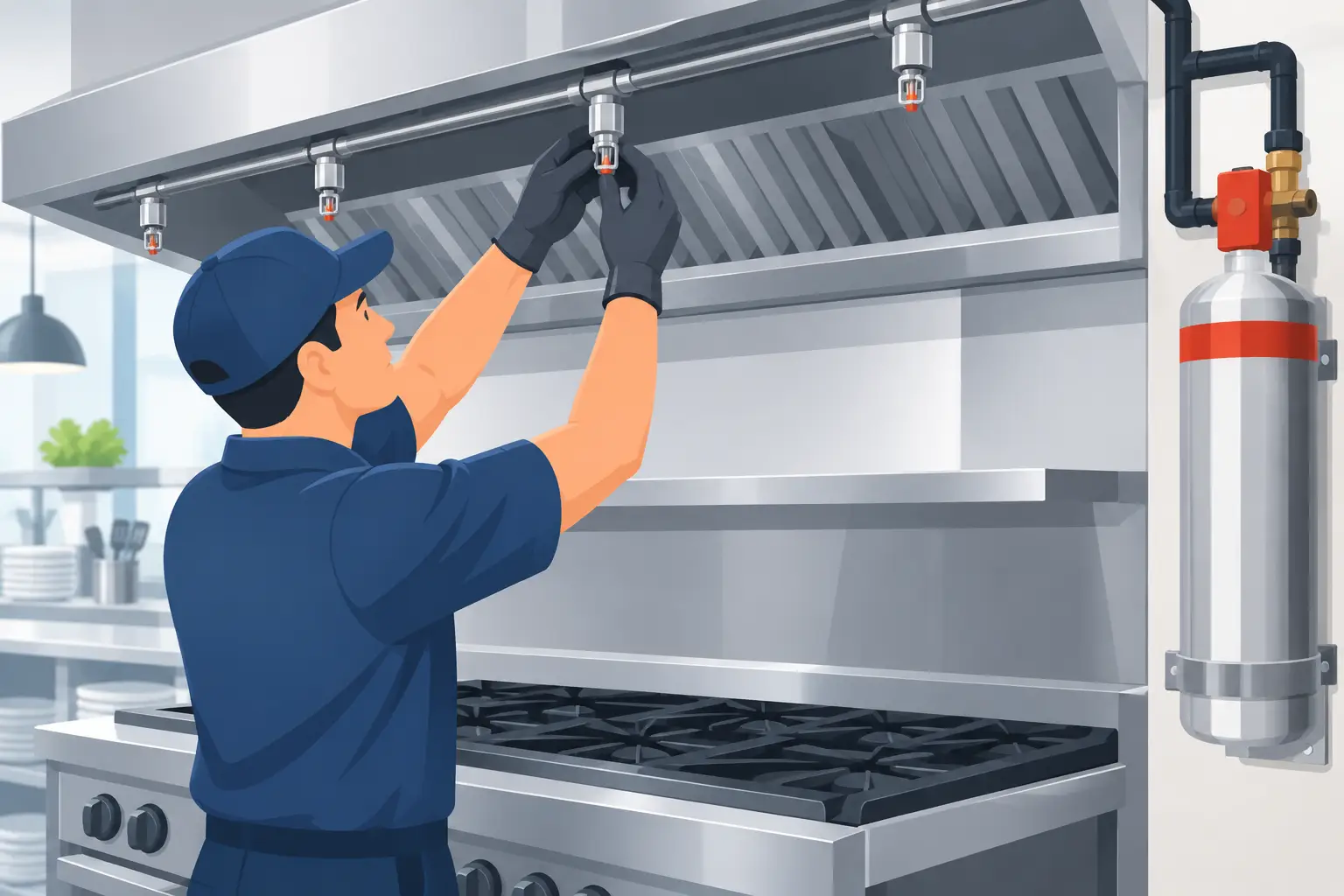
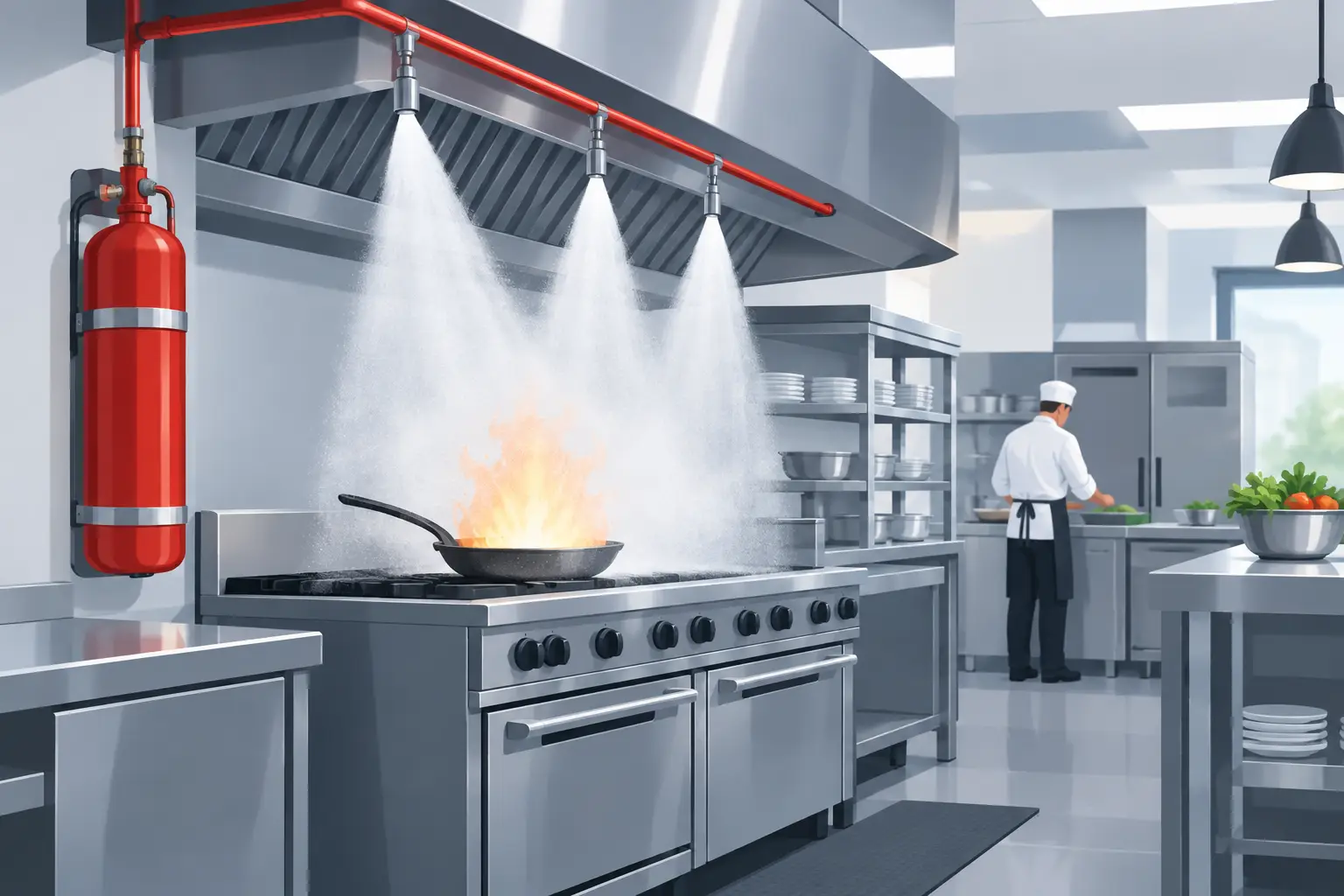
Commercial kitchens are dynamic environments. Grease build-up, appliance replacement, canopy alterations and changes to cooking equipment can affect the system’s coverage and operation. Maintenance should confirm that detection links, fusible components, pipework, nozzles, agent containers and manual pull stations remain in suitable condition and correctly positioned.
The system’s fuel and electrical shut-down interfaces also need checking. A wet-chemical discharge is intended to control the cooking-oil fire, but safe isolation of the associated appliances is part of the overall response. Kitchen teams should understand what the system does, how to raise the alarm and why nozzles must not be obstructed or moved during cleaning.
Dry-powder and specialist systems
Dry powder can be appropriate for specific industrial processes and hazards, particularly where rapid knockdown is required. It can also create substantial clean-up and interruption after a discharge. Maintenance must focus on agent condition, pressurisation, distribution pipework, discharge devices and the detection or manual-release arrangements that trigger the system.
The correct agent is always a design decision based on fire class, occupancy, environmental policy, equipment sensitivity and recovery priorities. Maintenance provides an opportunity to revisit whether that decision still reflects the operation being protected.
Testing without creating avoidable disruption
Facilities managers are right to be cautious about testing systems that interface with critical plant. A release test, alarm test or shutdown simulation can affect operations if it is not properly prepared. The answer is not to avoid testing. It is to carry it out with a documented method, competent engineers and agreed controls.
Before work begins, relevant stakeholders should know what will be tested, what signals may be generated, whether any systems will be isolated and how protection will be reinstated. This may include the fire-alarm receiving centre, security staff, building-management team, IT lead, tenant representatives and production supervisors.
Not every visit requires an actual agent discharge. Functional testing can verify much of the detection, control and signalling sequence without releasing agent. However, periodic inspection, component testing and, where required, discharge-related testing remain essential elements of a standards-led programme. The test regime should follow the system manufacturer’s requirements, applicable British, European or NFPA standards, the system design documentation and insurer conditions.
A clear handover at the end of the visit is equally important. The site should know whether the system is fully operational, partially isolated, awaiting parts or subject to any operational restrictions. An unresolved fault should never disappear into a service report without an agreed action.
Common issues found during fire suppression maintenance
Many defects are not dramatic failures. They are gradual changes that become serious only when the system is needed. Damaged or painted-over nozzles, cylinder pressure loss, expired batteries, corroded components, disabled fault signals and blocked manual release points are all avoidable concerns.
Room changes are especially common. Contractors may introduce unsealed service penetrations, leave fire doors ajar, remove warning signs or relocate equipment beneath nozzles. In a kitchen, a new appliance may sit outside the original nozzle coverage. In a data room, a new cooling arrangement can affect the distribution and retention of an agent.
Poor documentation creates another risk. If the current zone drawings, cause-and-effect information and service history are unavailable, engineers and site teams have less certainty about what will happen during an alarm. Keeping records current makes future maintenance safer and faster, particularly when personnel change.
Choosing a maintenance partner
The right provider should understand the particular suppression technology installed and be able to support the full system, including detection, controls, mechanical components, room integrity and repairs. A generic inspection approach may identify obvious defects, but complex systems benefit from engineers who can interpret discharge logic, calculate enclosure implications and advise on agent-specific requirements.
Look for a service partner that can explain findings in operational terms. A facilities manager needs to know not only that a fault exists, but whether it affects immediate protection, what temporary measures are appropriate, how long the repair will take and whether a broader system review is advisable.
Active Fire Suppression approaches maintenance as part of the system’s whole life, from design and commissioning through testing, repair, room sealing and ongoing support. That continuity is particularly valuable where protection arrangements are complex or downtime is expensive.
A well-maintained suppression system should not demand attention every day. It should provide quiet assurance that, if a fire develops in a critical space, detection, control, warning and extinguishing will work together as designed. The practical next step is to review the current service records, recent room changes and outstanding faults before they become a test of the system under real fire conditions.

Leave A Comment
You must be logged in to post a comment.