

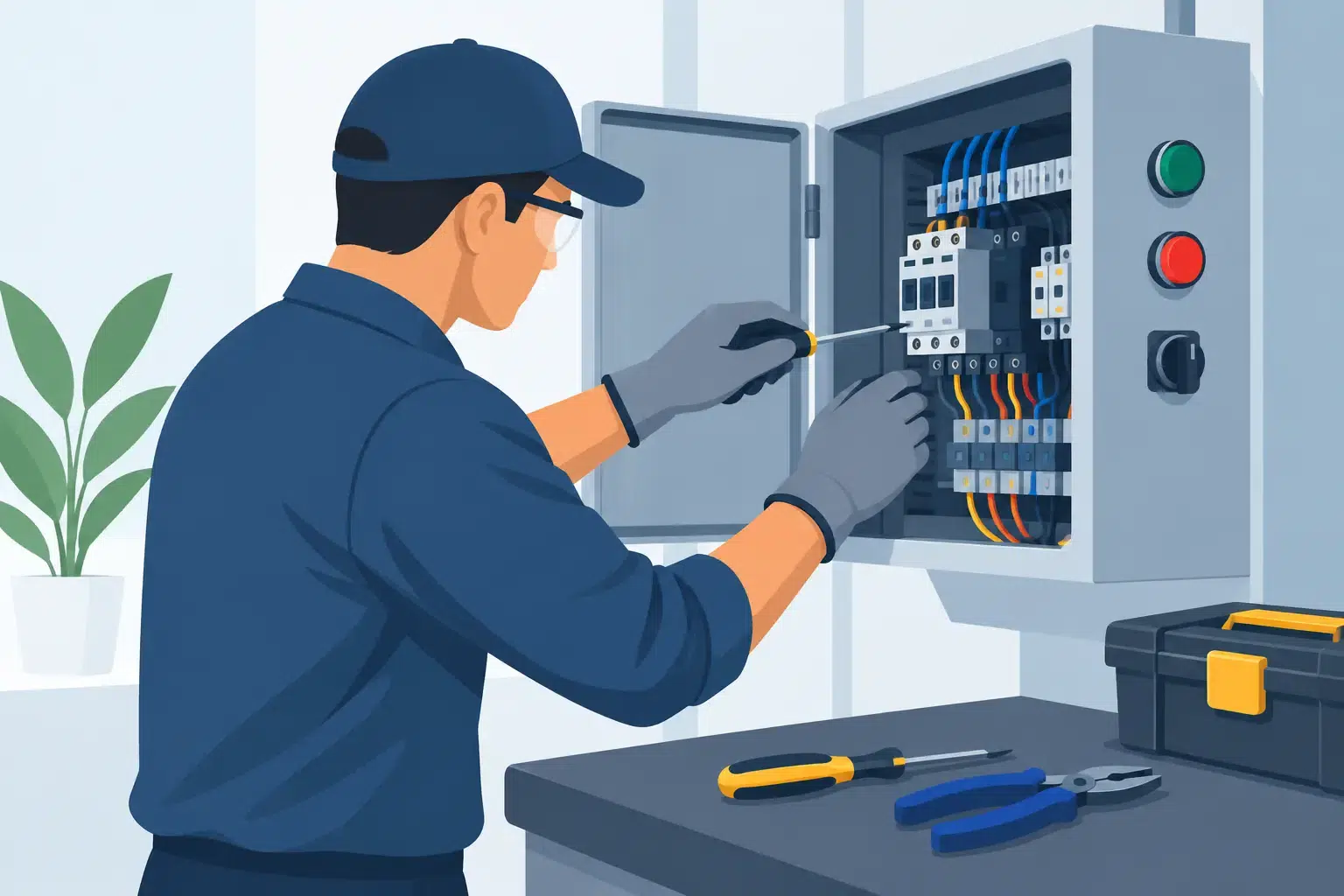
A suppression control panel fault can affect far more than a warning light on a cabinet. In a server room, plant space, commercial kitchen or production area, the panel is the decision-making point between detection, warning, release and shutdown. Knowing how to repair suppression controls therefore starts with recognising that this is life-safety work, not a routine electrical repair. A well-intentioned reset, disconnected device or temporary bypass can leave a protected risk unable to discharge when it is needed.
The right response is to make the system safe, establish precisely what has failed and return it to service through controlled testing. That protects people in and around the protected enclosure, preserves insurer confidence and avoids discovering an impairment only after a fire event.
What suppression controls are responsible for
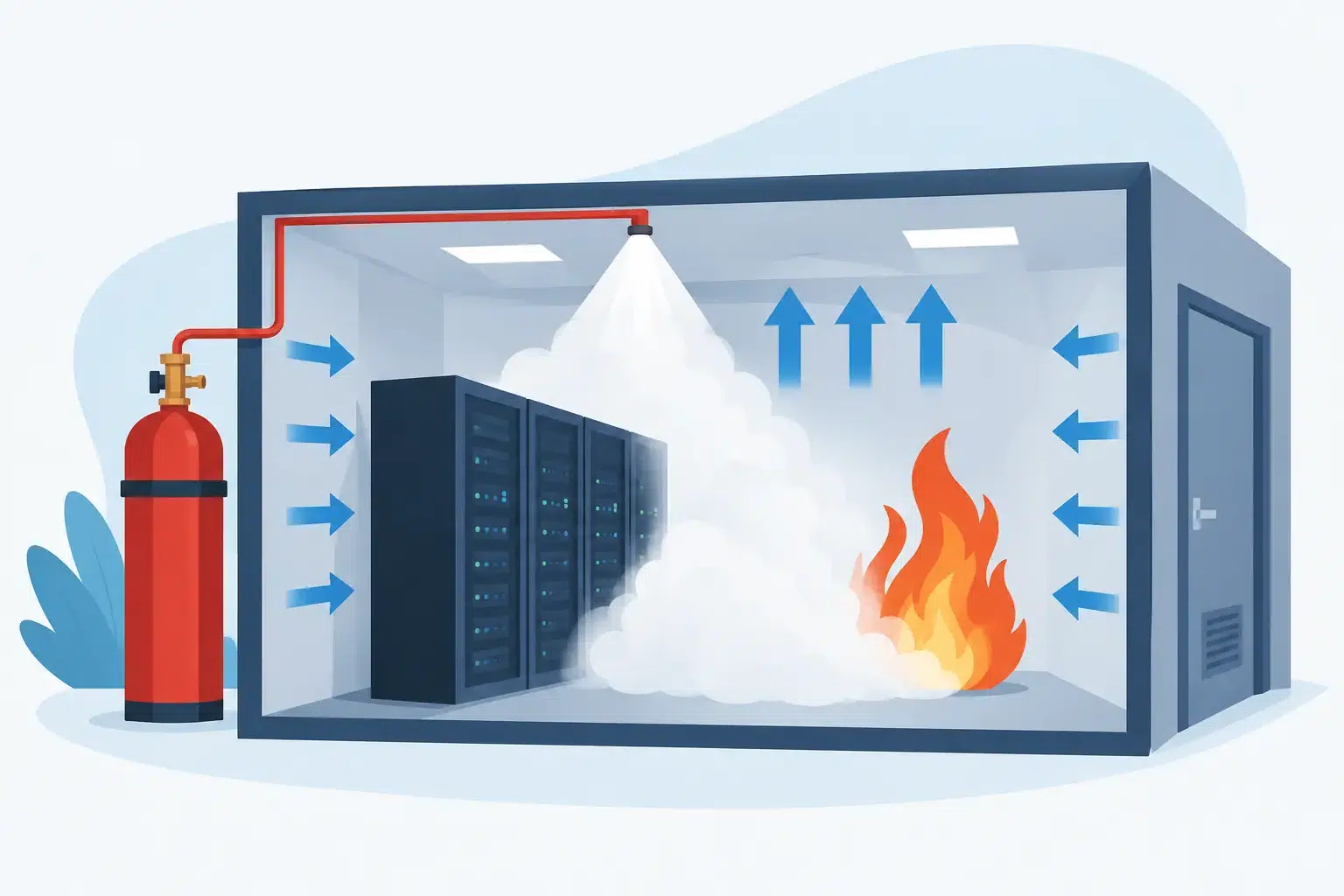
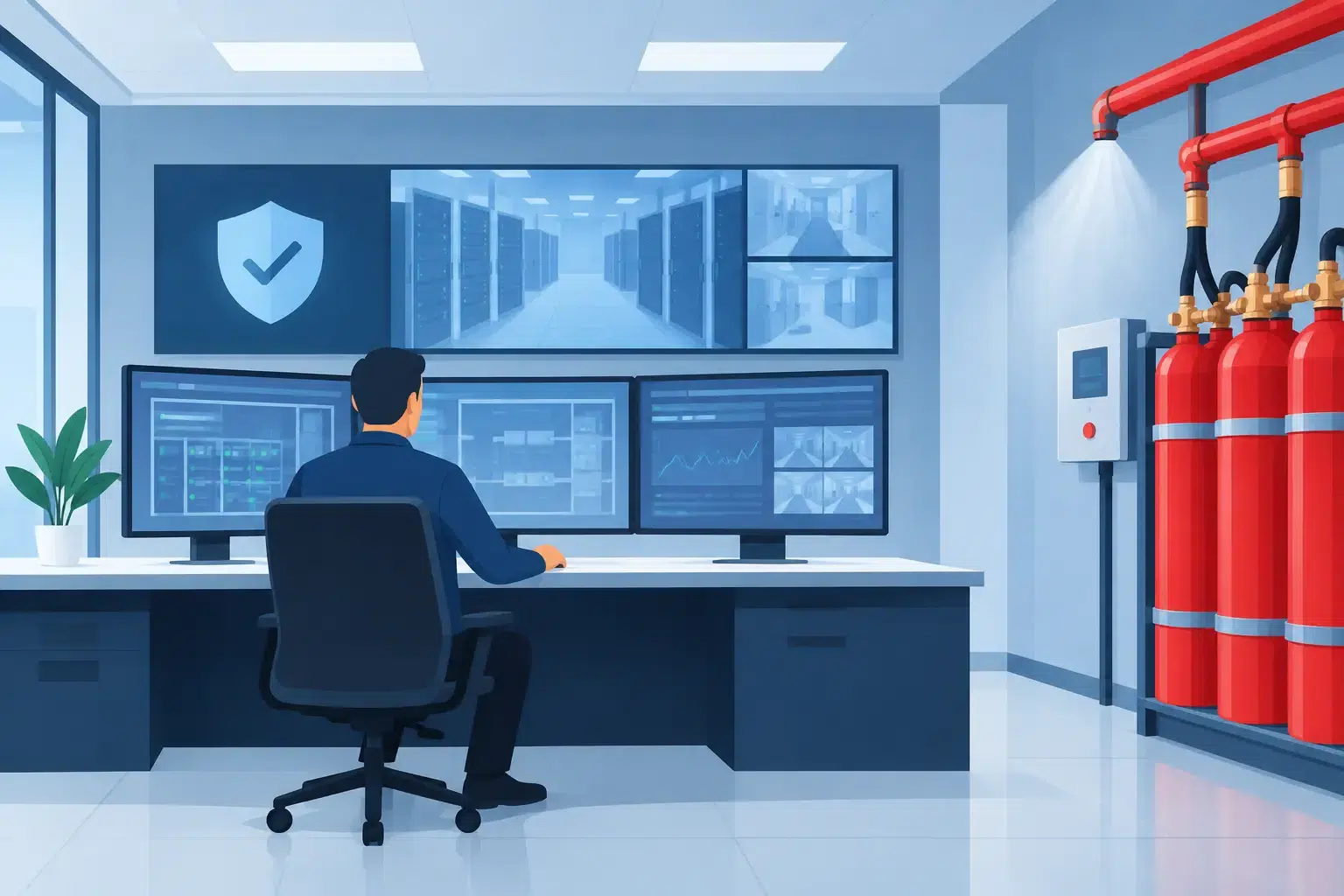
Suppression controls coordinate the devices that make an automatic fire-suppression system work as one engineered arrangement. Depending on the installation, the panel may receive signals from smoke, heat, flame or VESDA detection; operate visual and audible alarms; start time delays; shut down air handling equipment; close dampers; monitor manual release and abort stations; and energise actuators to release an extinguishing agent.
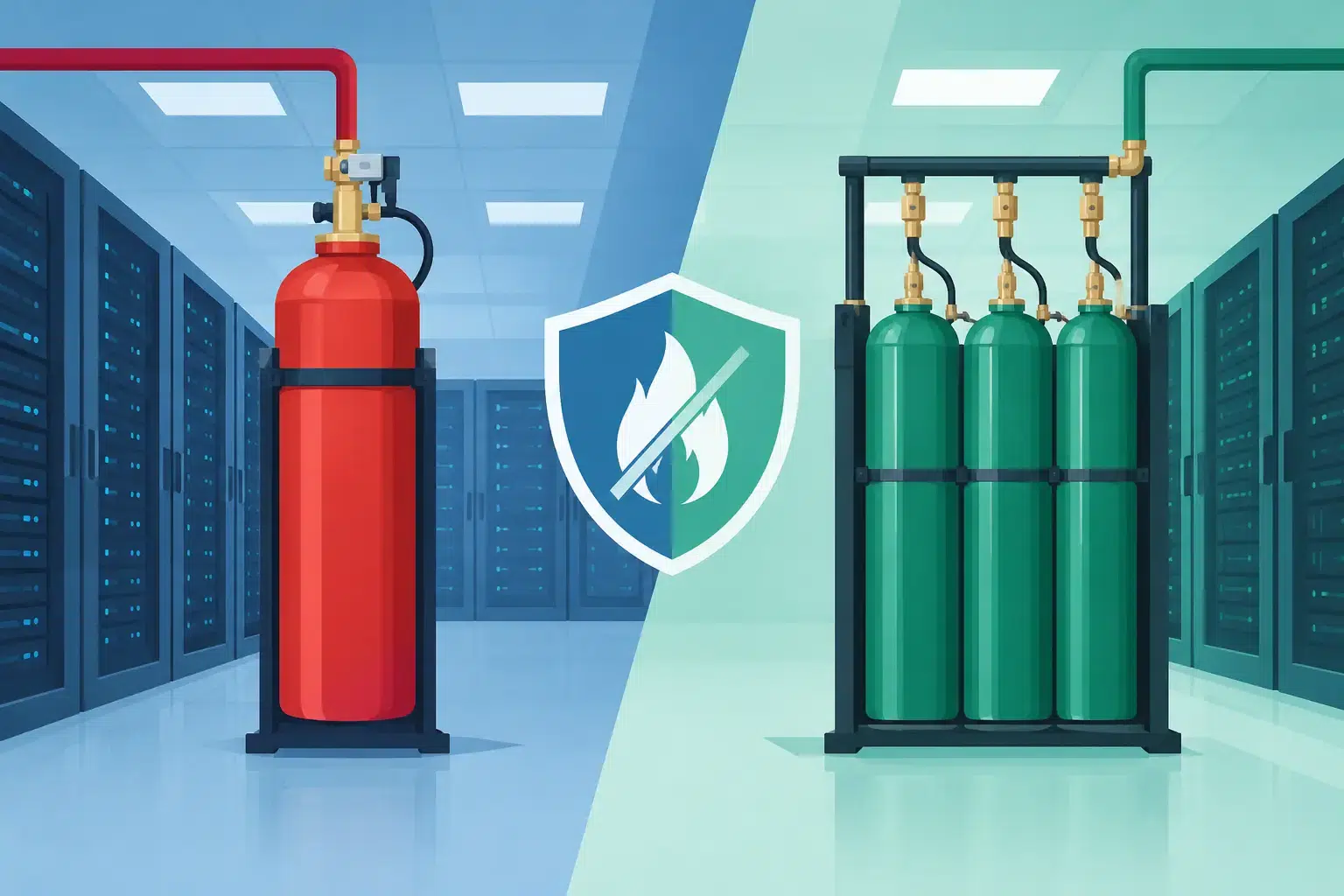
That agent may be IG55, IG541, IG01, IG100, INERGEN®, Novec 1230, HFC227ea/FM200/FE227, CO2, wet chemical or dry powder. The controls must be configured and tested for the selected agent, the protected hazard and the evacuation strategy. A control fault cannot be judged in isolation from these wider design conditions.
Most panels distinguish between a fire condition, a fault condition, an isolation and an activated or released state. The displayed message is valuable evidence, but it is not a diagnosis. A circuit fault could arise from a damaged cable, moisture ingress, a failed detector interface, a discharged or ageing battery, an incorrect end-of-line component, a faulty relay, a power-supply issue or a configuration problem following other building works.
First actions before repairing suppression controls
If the panel shows a fault, treat the protection as potentially impaired until a competent person confirms otherwise. Record the panel indication, time, location and any recent events, such as electrical works, a power interruption, water ingress, decorating, IT changes or construction activity near detection devices. This information often reduces diagnostic time significantly.
Do not silence a panel and assume the issue is resolved. Silencing may stop the local buzzer while the fault remains active. Equally, do not reset a released system, reconnect actuation circuits or replace components without understanding the condition of the suppression equipment and cylinders.
The responsible person should assess the immediate risk. If the protected room contains critical IT equipment, electrical switchgear, a battery installation or another high-value process, temporary measures may be required while the automatic system is unavailable. These could include increased patrols, restricting hot works, pausing higher-risk operations and ensuring a suitable response plan is in place. The exact approach depends on occupancy, fire load, detection coverage, the duration of impairment and insurer requirements.
Where work could affect release circuits, alarms, shutdowns or evacuation warnings, the system should be placed under a formal impairment procedure. Relevant site contacts, monitoring centres and emergency response arrangements need to be informed where applicable. Isolation must be controlled, recorded and removed promptly after testing. An unrecorded isolation is one of the most serious and avoidable suppression-system failures.
Diagnosing the fault without compromising protection
A competent suppression engineer will normally start with the maintenance history, cause-and-effect documentation and system drawings. These establish what the panel should do, which devices are connected and whether a recent change has affected the original design.
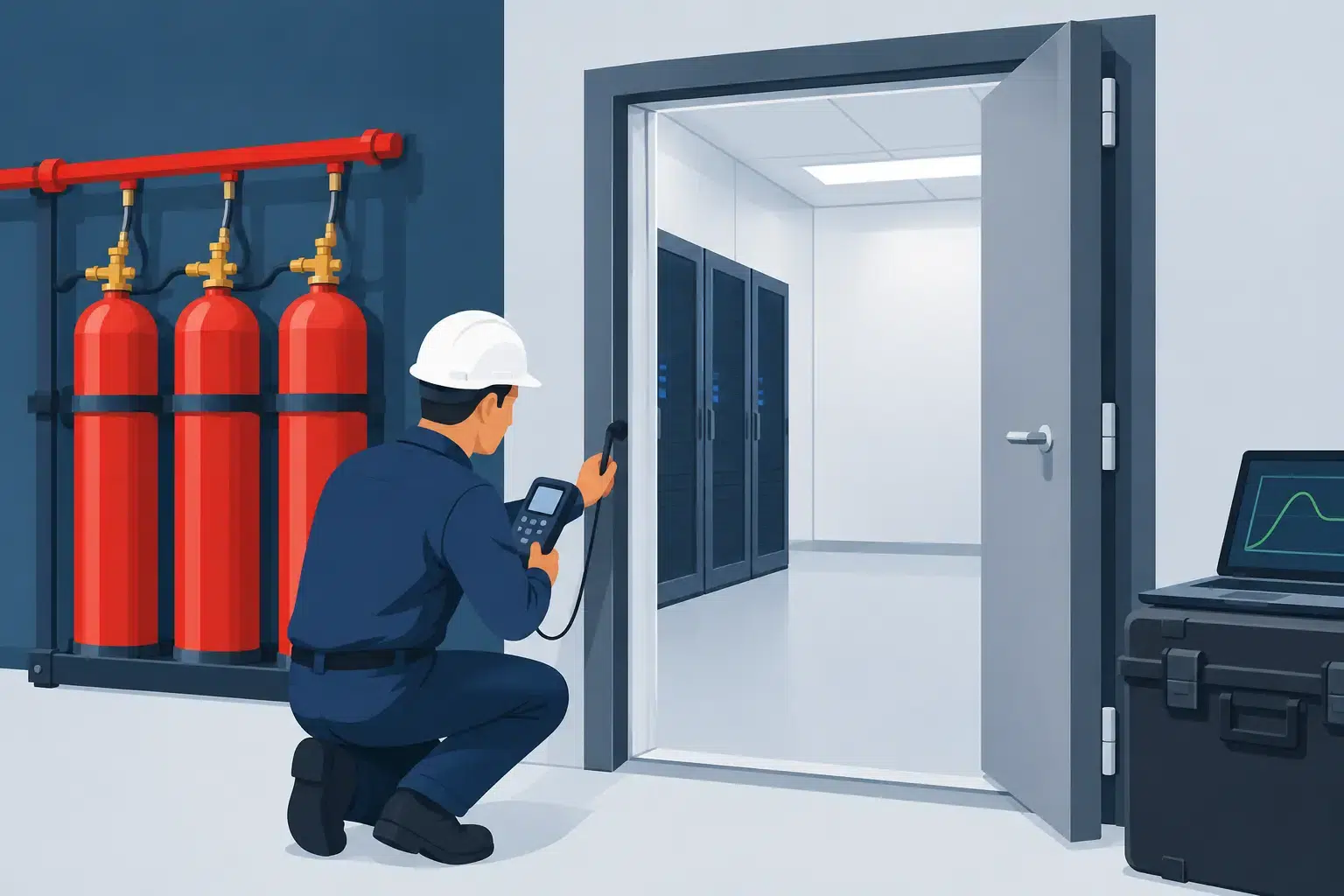
Visual checks can then identify obvious physical issues, including damaged containment, loose detector heads, contaminated devices, signs of water damage, missing call-point elements or altered room layouts. However, visual inspection alone is not enough. The engineer must verify the integrity of monitored circuits, power supplies, standby batteries, detection interfaces, notification devices and release paths using suitable test methods and manufacturer information.
Particular attention is needed where systems interface with other building services. A suppression panel may be dependent on fire alarm signals or may control ventilation shutdown, equipment shutdown, door release, dampers and warning signage. Correcting a fault on one circuit while overlooking a failed interface can leave the overall cause-and-effect sequence incomplete.
This is also the point at which the age and supportability of the control equipment matters. Obsolete panels may have unavailable spares, deteriorating batteries or legacy programming that is poorly documented. Repair may still be appropriate, but a service exchange or carefully planned upgrade can be the more reliable long-term decision. The lower initial cost of repeated repairs must be weighed against downtime exposure and the availability of verified replacement parts.
How to repair suppression controls safely
The repair itself should be undertaken only by engineers who are competent in the relevant suppression technology, panel manufacturer and release arrangement. The work must protect against accidental discharge while ensuring that any isolation does not become permanent.
Repairs may involve replacing a failed monitored device, battery set, power-supply module, interface, relay, sounder circuit component, cable section or panel module. Where programming or configuration is involved, the existing cause-and-effect logic should be backed up and checked against the approved system design. Changes should never be made simply to clear a fault indication.
For release circuits, the stakes are higher. Engineers must confirm the status of actuators, release mechanisms and agent containers before work begins, then use the correct controlled procedure for the equipment. CO2 systems require particular care because of the serious life-safety implications of discharge in occupied areas. Clean-agent and inert-gas systems likewise rely on accurately sequenced warning, delay, shutdown and release functions to protect occupants and achieve the required concentration.
Any replacement component should be compatible with the listed and approved system arrangement. A generic electrical part may appear to fit but fail to provide the required supervision, current rating or operational characteristics. Suppression controls are not the place for unverified substitutions.
Testing is part of the repair, not an optional extra
A fault is only repaired when the system has been proven to operate correctly after the work. Testing should confirm that fault monitoring has been restored, power supplies and batteries are healthy, detection inputs operate as intended and alarms provide the required warning.
The engineer must also verify relevant interfaces and outputs, including ventilation shutdown, equipment shutdown and remote signalling where fitted. Release-function testing needs a controlled approach that proves the sequence without placing people, equipment or agent cylinders at risk. The method will depend on the panel, agent and installed release arrangement.
Where modifications affect the protected enclosure or its ventilation, room integrity may also need review. An inert-gas or clean-agent system can have sound controls and charged cylinders but still fail to hold its design concentration if the enclosure has been altered. New cable penetrations, replaced doors, ceiling works and changes to air-conditioning all deserve consideration.
On completion, the maintenance record should state the original fault, its root cause, work undertaken, parts used, tests completed, any remaining limitations and confirmation that isolations have been removed. Updated records give facilities and engineering teams confidence that the system is fully reinstated, rather than merely quiet.
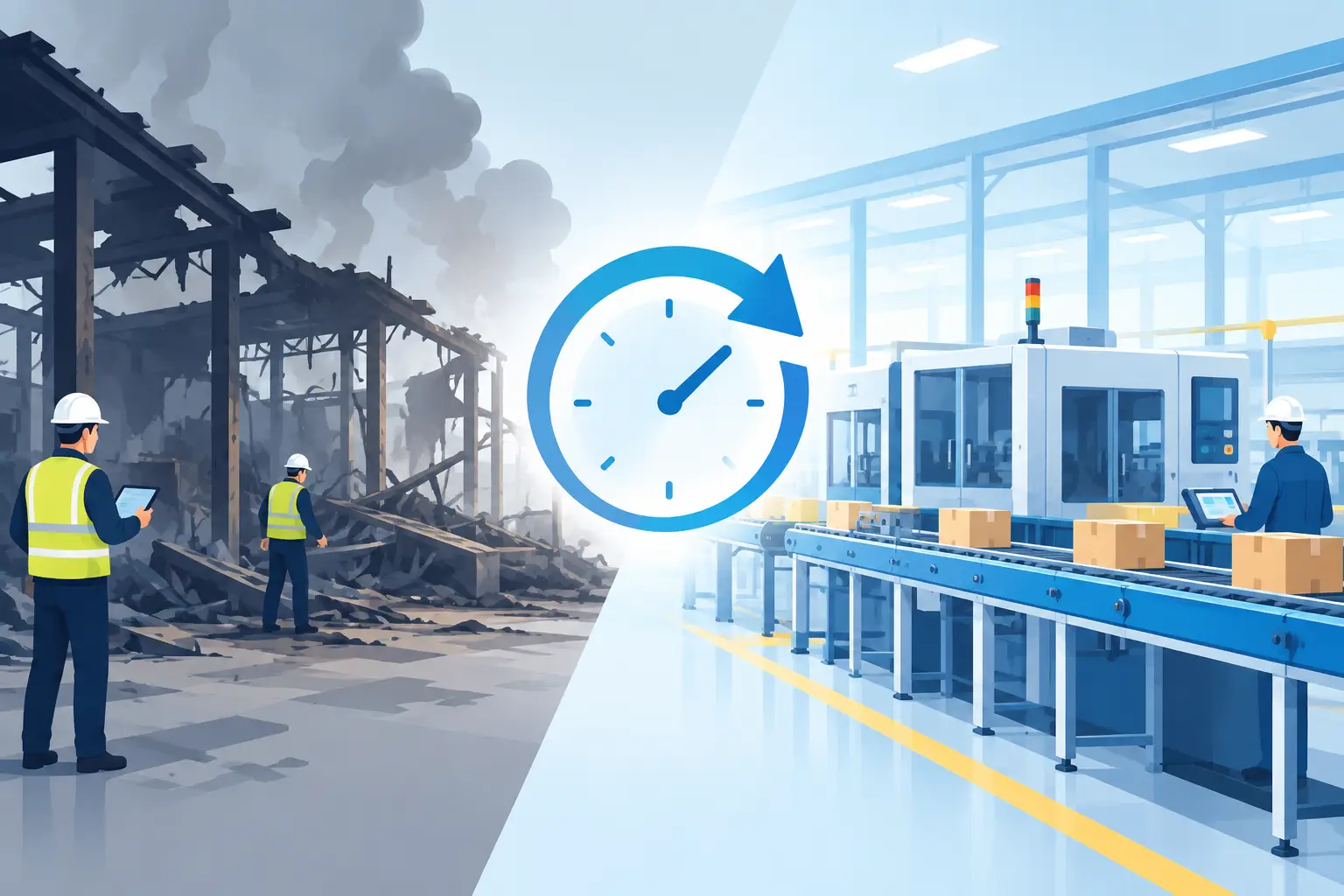
Reducing repeat faults and unplanned downtime
Routine maintenance is the most practical way to identify weakening batteries, contamination, damaged interfaces and changing site conditions before they create an impairment. It should be planned around the system type, risk profile, manufacturer requirements and applicable standards, including the relevant control-panel and gaseous-suppression requirements.
Facilities teams can help by reporting building changes early, protecting control equipment from water and impact, keeping panel areas accessible and ensuring contractors understand that detector circuits, manual stations and release controls are safety-critical. When a fault occurs, prompt reporting with accurate panel information is more useful than repeated resets.
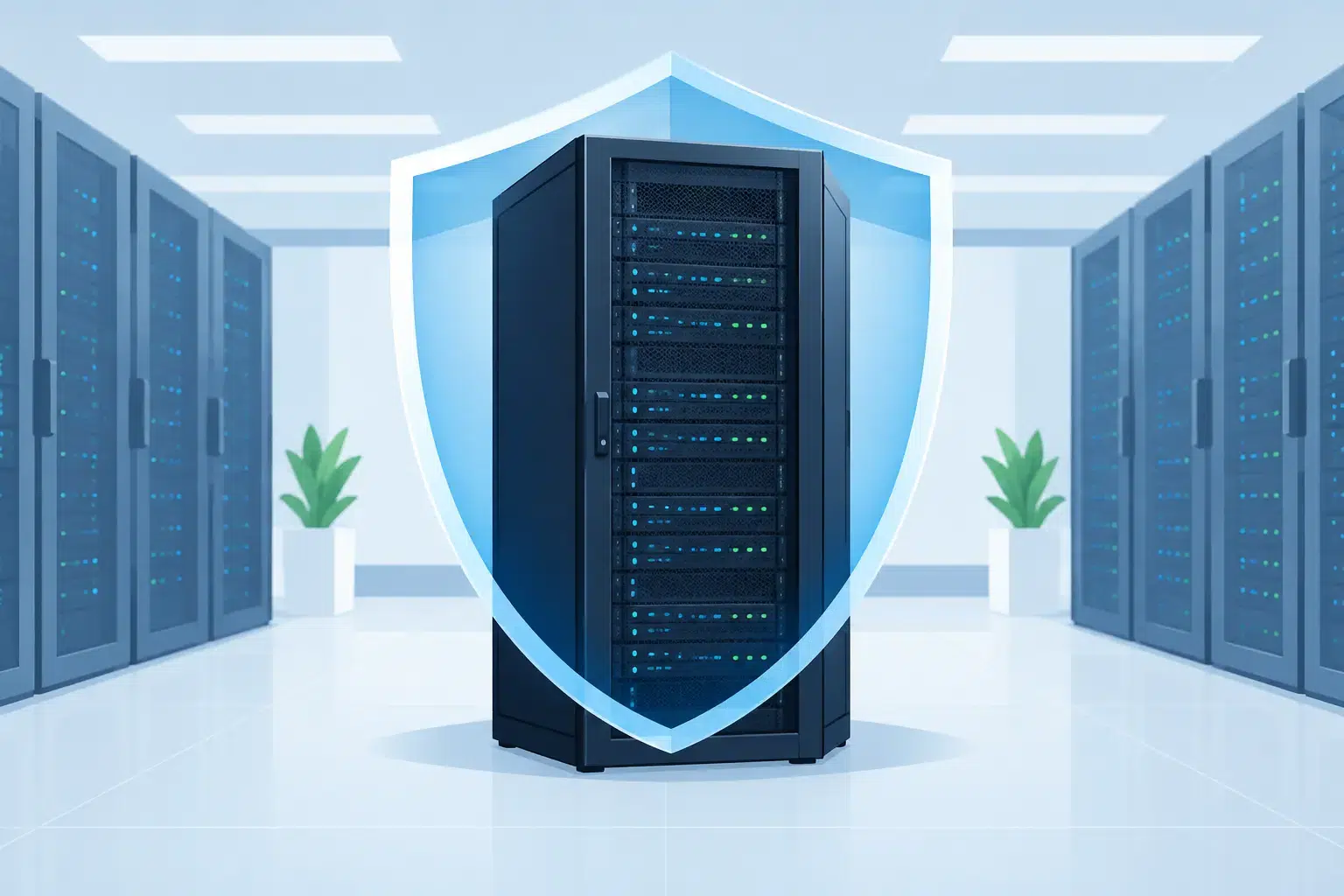
For critical environments, an experienced suppression specialist can take ownership from fault investigation through repair, functional testing, documentation and any necessary upgrade planning. Active Fire Suppression supports this joined-up approach so that a panel repair restores the protection strategy, not just the display to normal.
The most useful question after any suppression-control fault is not simply, “Has the panel reset?” It is, “Can this system still warn, protect and support our operation exactly as it was designed to?” That is the standard a repair should meet.
Leave A Comment
You must be logged in to post a comment.