

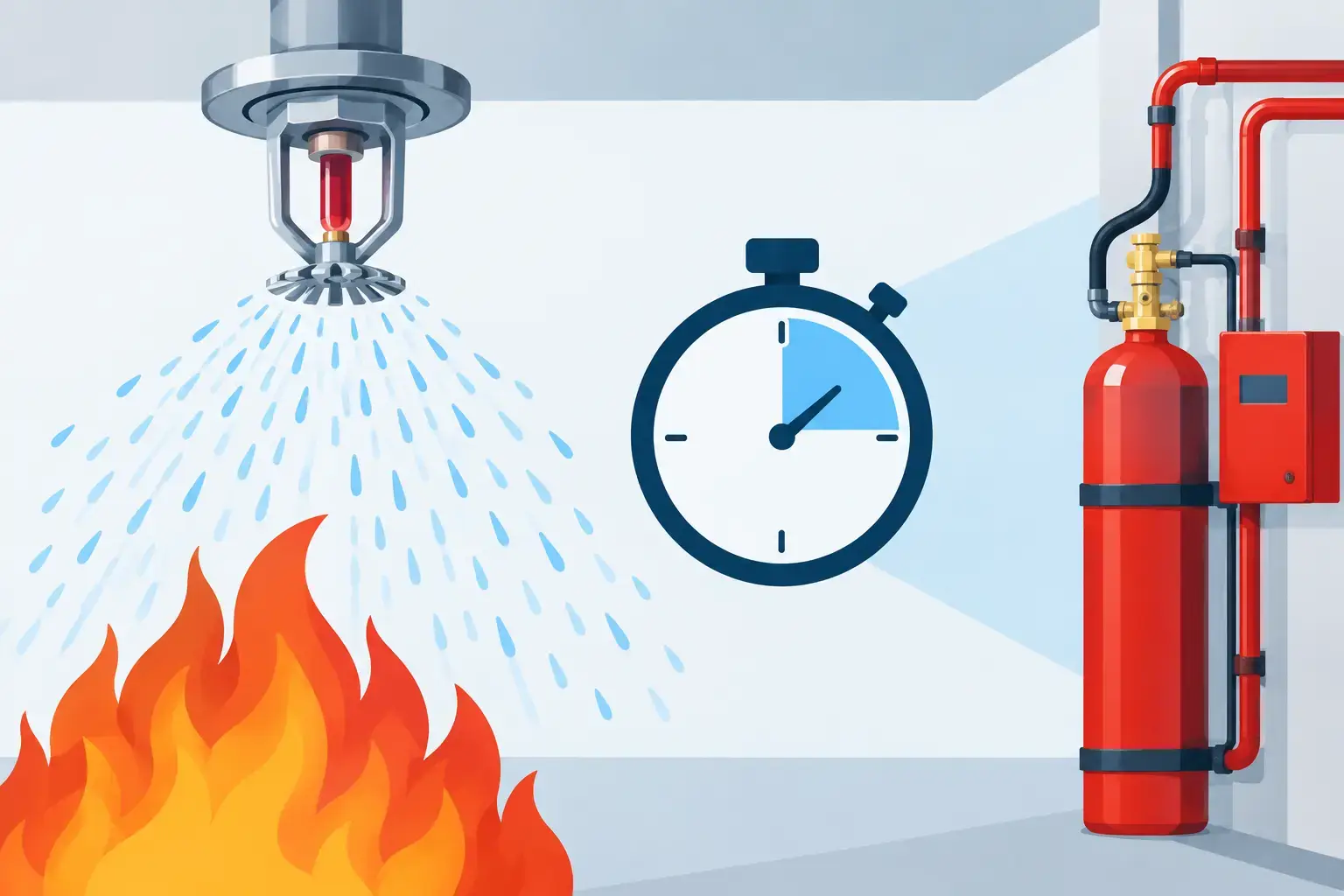
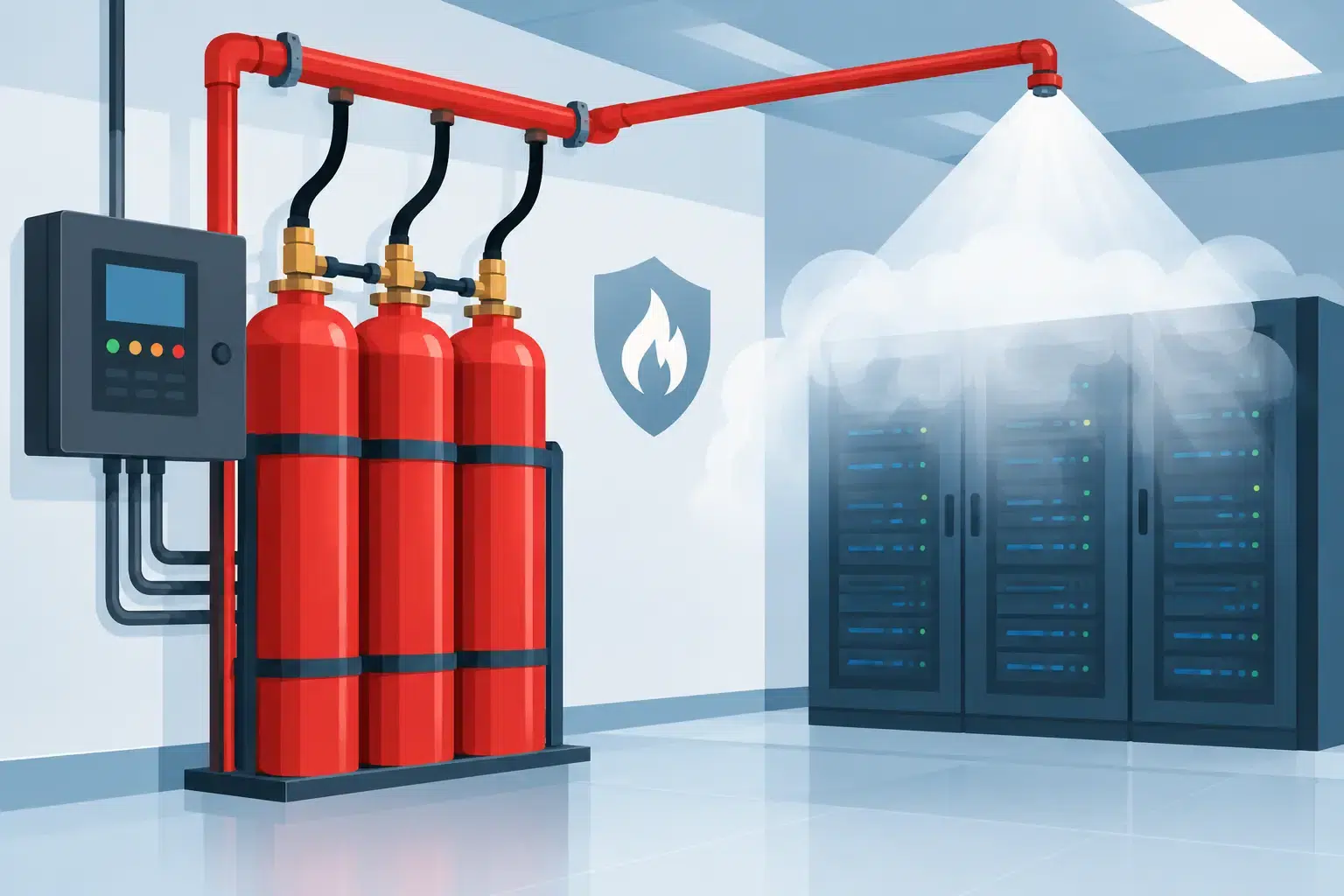
A gaseous fire-suppression system can discharge exactly as designed and still fail to provide the intended protection if the extinguishing concentration escapes from the enclosure too quickly. So, what is a hold time? It is the period for which a protected room must retain a sufficient concentration of extinguishing agent after discharge to control or extinguish a fire.
For a data centre, electrical switchroom, control room or archive, this is far more than a design calculation. Hold time affects whether a small fire is contained before it damages critical equipment, interrupts operations or develops into a larger incident requiring manual firefighting.
What is a hold time in gaseous fire suppression?
Hold time is the measured or predicted duration that the concentration of a gaseous extinguishing agent remains at or above the required level within the protected enclosure. The required level is set by the agent, the fire risk, the design standard and the system specification.
In many total-flooding gaseous suppression applications, the design objective is to maintain the agent concentration for at least 10 minutes. This is commonly referred to as the retention or soak period. It gives the agent time to suppress the fire and, just as importantly, reduces the likelihood of re-ignition while the source of heat is addressed.
The exact requirement is not simply a fixed rule applied to every room. It depends on the extinguishing medium, the hazard, enclosure geometry, ventilation arrangements and the governing standard. Systems should be engineered in accordance with the relevant requirements, which may include BS EN 15004, relevant British Standards, insurer guidance or client-specific criteria.
A hold time applies most often to gaseous systems such as IG55, IG541, IG01, IG100, INERGEN®, HFC227ea and other clean-agent installations. It is particularly relevant where water would create unacceptable secondary damage or where rapid automatic intervention is needed to protect continuity of service.
Hold time is not the same as discharge time
These two terms are often confused, yet they describe different stages of system performance.
Discharge time is how long the system takes to release the required amount of agent into the room. A gaseous system normally needs to reach its design concentration quickly, often within a prescribed period. This rapid discharge is intended to stop fire growth before it produces damaging heat, smoke or contamination.
Hold time begins once the required concentration has been achieved. It measures how well the enclosure retains that concentration. A room may fill correctly in seconds, but if air leakage, open dampers or unsealed service penetrations allow the agent to escape, the effective protection period can be much shorter than intended.
This distinction matters during specification and maintenance. Cylinder quantity, pipework and nozzles influence discharge performance. The room fabric, doors, dampers, cable routes and pressure-relief arrangements largely determine whether the enclosure achieves its hold time.
Why retention time matters to business continuity
Gaseous suppression does not remove the need to investigate the cause of a fire. It creates the conditions to stop combustion and limit damage while the incident is brought under control. If the agent concentration drops below the required level too early, a hot component, smouldering cable or concealed ignition source may reignite.
For critical environments, the consequence can be disproportionate. In a server room, a brief interruption can affect customer-facing systems, communications and stored information. In an industrial control area, it may halt production or create an unsafe process condition. In an electrical room, smoke and corrosive fire residues can damage equipment well beyond the original point of ignition.
A properly retained gaseous agent can help avoid water damage and reduce smoke spread, but it must be paired with reliable early warning, suitable detection and a room capable of containing the agent. Very early warning smoke detection, including VESDA where appropriate, can identify a developing problem before a full discharge is necessary. The best arrangement depends on the risk assessment and operating requirements, not on one product choice alone.
What affects a room’s hold time?
The main issue is leakage. Every protected enclosure has potential escape paths, and even minor gaps can collectively have a significant effect on retention. Common examples include unsealed cable penetrations, gaps around pipework, poorly fitting doors, suspended ceilings, raised access floors and joints in walls or cladding.
Mechanical ventilation is another major consideration. Supply and extract systems may remove agent from the room unless they are shut down or correctly controlled on system discharge. Fire and smoke dampers need to close reliably, and their status should be coordinated with the suppression controls. A damper that remains open is not a minor commissioning fault – it can undermine the whole retention strategy.
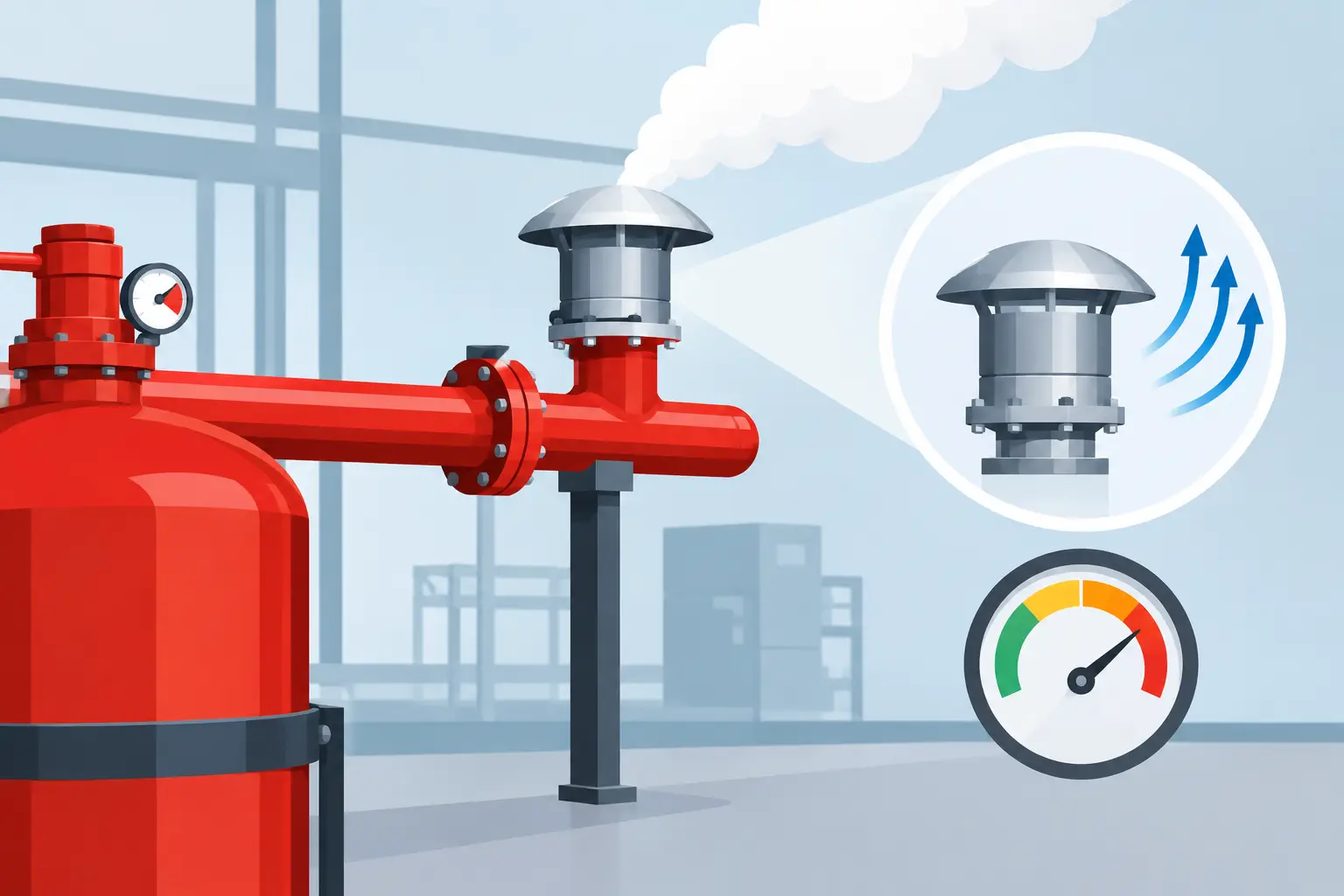
Pressure relief also requires careful design. When gaseous agent enters an enclosure at speed, the room pressure changes. Over-pressure vents protect the building fabric and doors from excessive pressure, but they must be correctly sized and located. They are engineered safety components, not simple openings in the wall. A poorly considered venting arrangement can affect both pressure management and agent retention.
Room volume and construction matter too. A room with a return-air plenum, an open void or a lightweight partition may not behave as a single enclosure. Sometimes the practical solution is to improve sealing. In other cases, the protected volume needs to be redefined, additional areas must be included in the design, or a different suppression approach may be more suitable.
How is hold time verified?
A room-integrity test, often called a fan test, is the established method for assessing whether an enclosure is likely to retain extinguishing agent for the required period. Rather than discharging agent as a test, calibrated fans are fitted into a doorway and used to measure air leakage characteristics.
The test data is then used to model the predicted retention time for the specified agent and design concentration. It identifies whether the room is expected to meet the required hold time and can indicate the likely scale of leakage. This makes it a practical, non-destructive way to validate enclosure performance.
A pass result is valuable evidence, but it is not a lifetime guarantee. The room tested is the room that must remain in service. Later works can compromise integrity without anyone intending to affect the fire-suppression system. New data cables, containment, air-conditioning works, security equipment and building alterations can all introduce leakage paths.
For this reason, integrity testing should be considered after material changes and as part of an ongoing maintenance strategy. Regular inspection should also confirm that doors close properly, seals remain intact, dampers operate as intended and no unapproved openings have appeared in the enclosure boundary.
Designing for hold time from the start
The most economical point to address retention is during design, before fit-out decisions become difficult and costly to reverse. A suppression specialist should understand where the actual room boundary sits, how services enter it, what ventilation runs during normal operation and what must happen automatically when fire is detected.
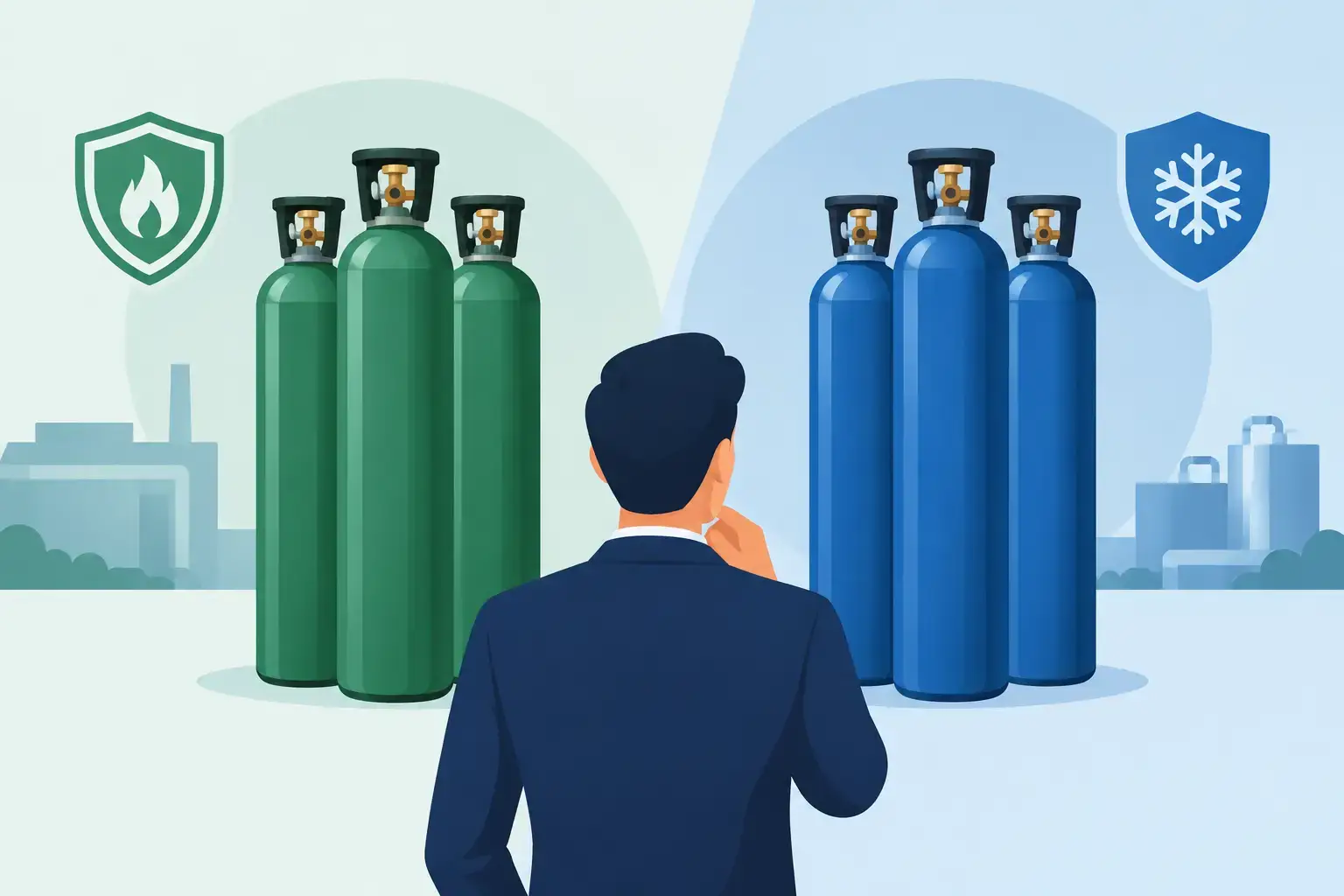
The design also needs to account for people. In occupied areas, agent selection, warning arrangements, time delays, emergency abort controls and evacuation procedures require particular care. Inert gas systems and clean agents have different properties, design concentrations and practical considerations. The right choice is based on the hazard, room conditions, occupancy, environmental policy and the operational value of what is being protected.
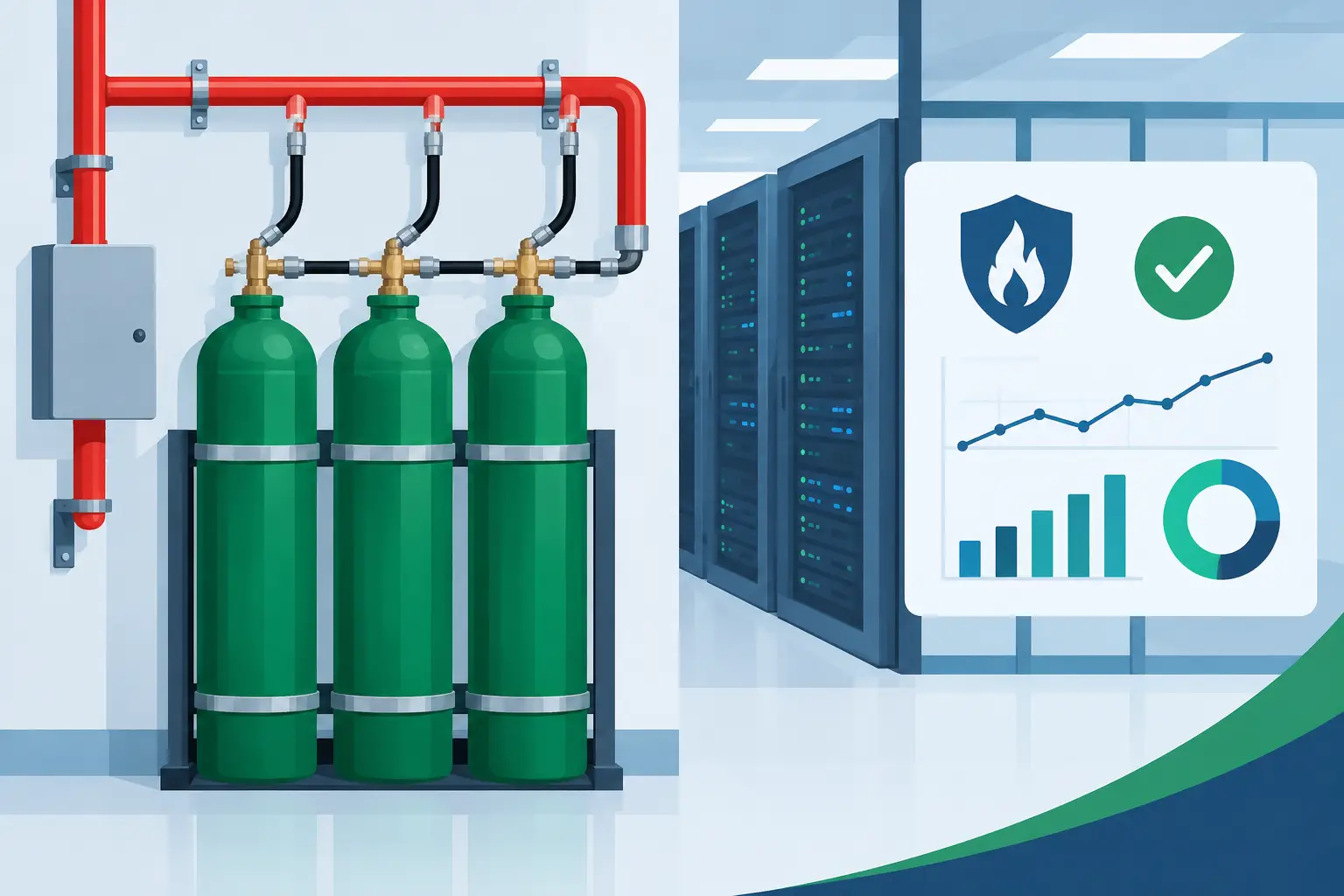
Commissioning should bring these elements together. Detection inputs, cause-and-effect programming, ventilation shutdown, damper closure, alarms, discharge controls and pressure relief should be demonstrated as one coordinated system. A cylinder bank on a wall is only one part of the protection measure.
At Active Fire Suppression, this integrated view extends from risk discussion and system design through installation, room sealing, integrity testing, commissioning and planned maintenance. It gives facilities and engineering teams one accountable route for protecting the enclosure as well as the equipment inside it.
A practical question for facilities teams
If your system protects a business-critical room, ask a straightforward question: would the enclosure still pass its integrity test after the changes made over the last year? If the answer is uncertain, it is worth checking before an incident tests the system for real. Retention is not an abstract number on a certificate – it is the time your fire-suppression system has to do the job you rely on it to do.

Leave A Comment
You must be logged in to post a comment.