

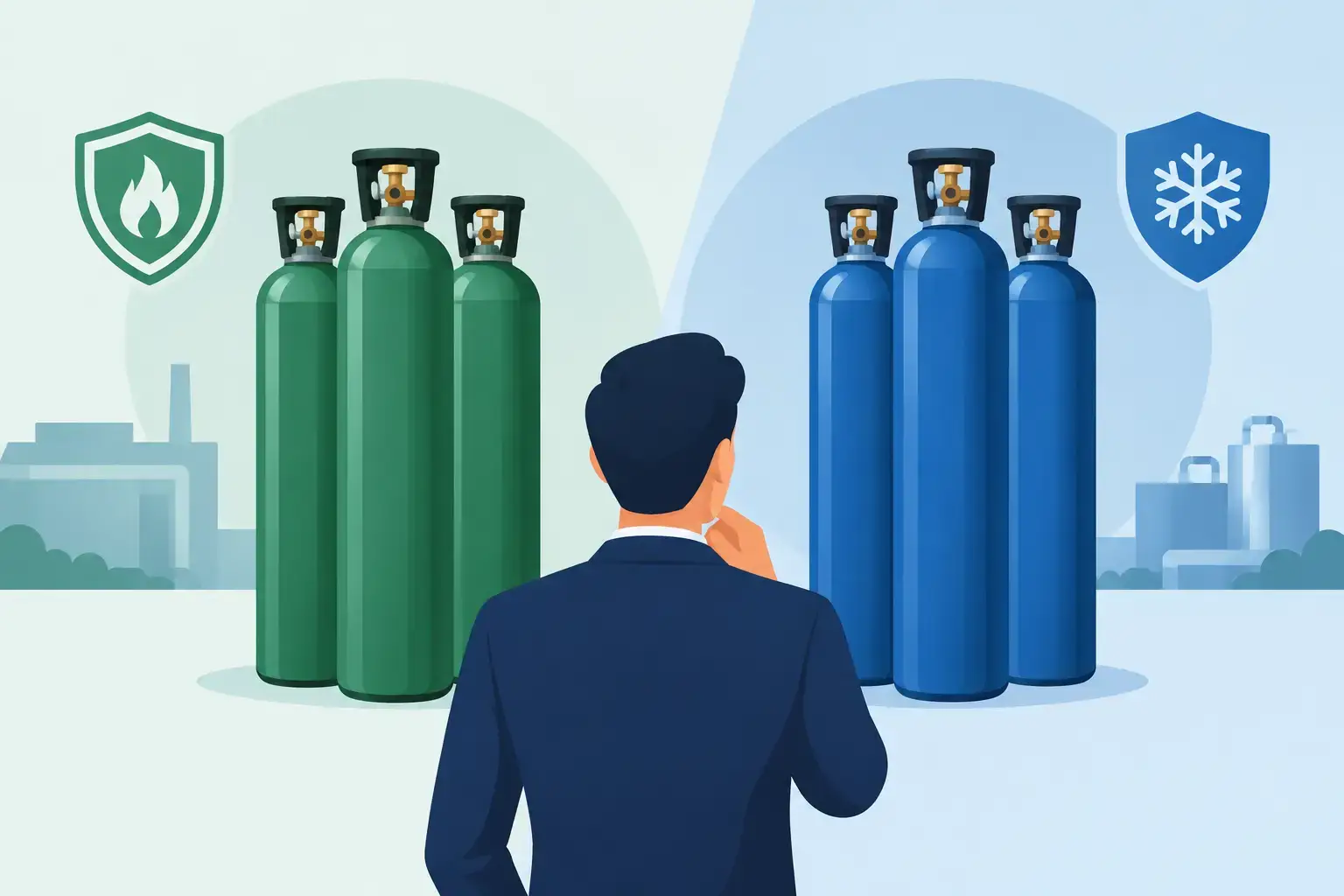
A fire in a live server room, control room or electrical switchroom is rarely limited to the equipment that burns. Smoke migration, water damage and prolonged isolation can turn a contained incident into days of lost operation. Choosing IG55 or IG541 is therefore not simply a question of selecting an inert gas. It is a design decision that affects life safety, room construction, cylinder accommodation, insurer expectations and how confidently your operation can recover.
Both agents are proven options for total flooding fire suppression in enclosed, high-value environments. Both can extinguish a fire without leaving residue on sensitive equipment. The right choice comes from the detail of the protected risk rather than a generic preference for one agent over another.
Why inert gas choice matters in critical rooms
Inert gas systems extinguish fire by reducing the oxygen concentration inside an enclosure below the level needed to support combustion. They are widely specified for data centres, communications rooms, archives, electrical rooms, process-control spaces and similar areas where water discharge could cause serious secondary damage.
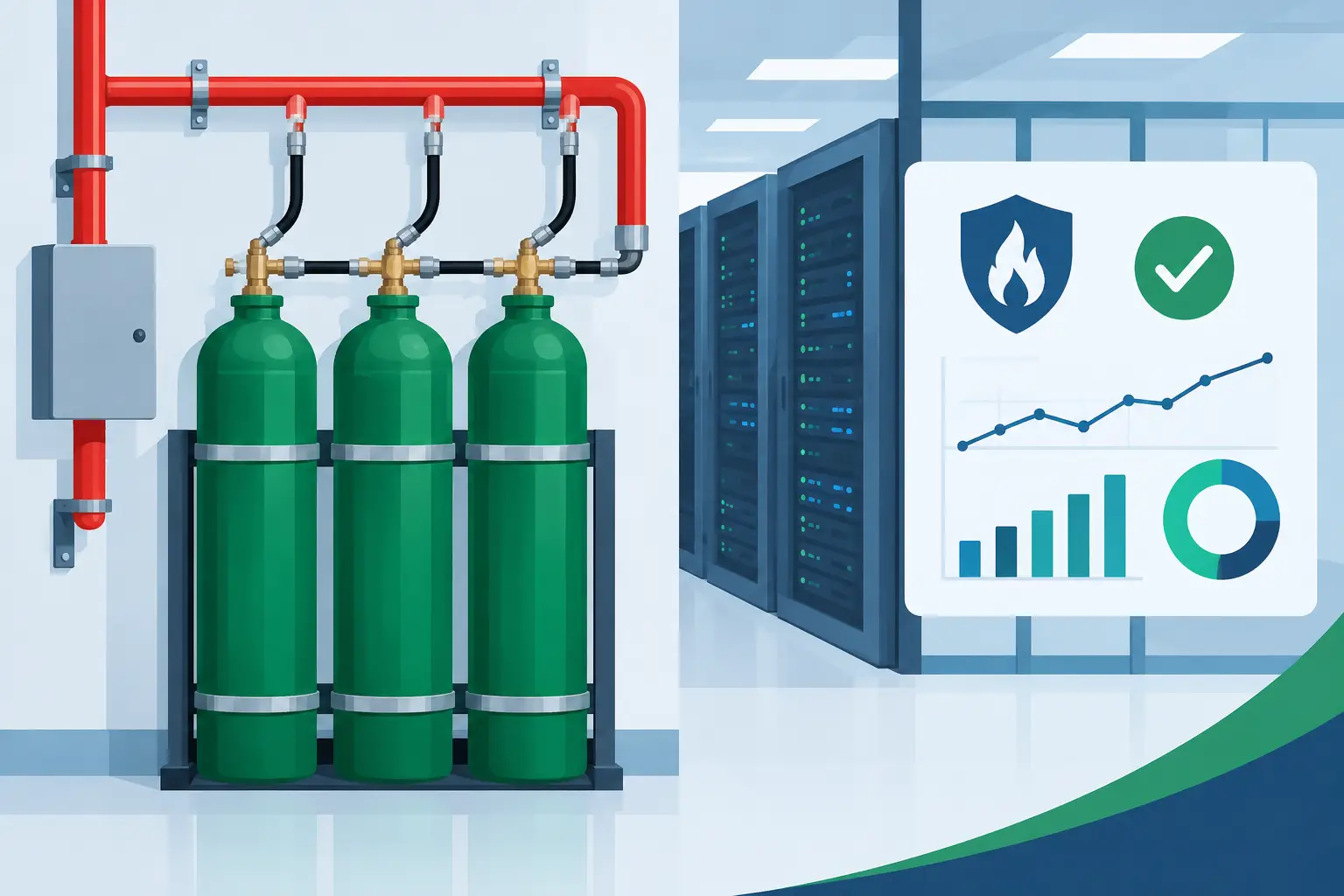
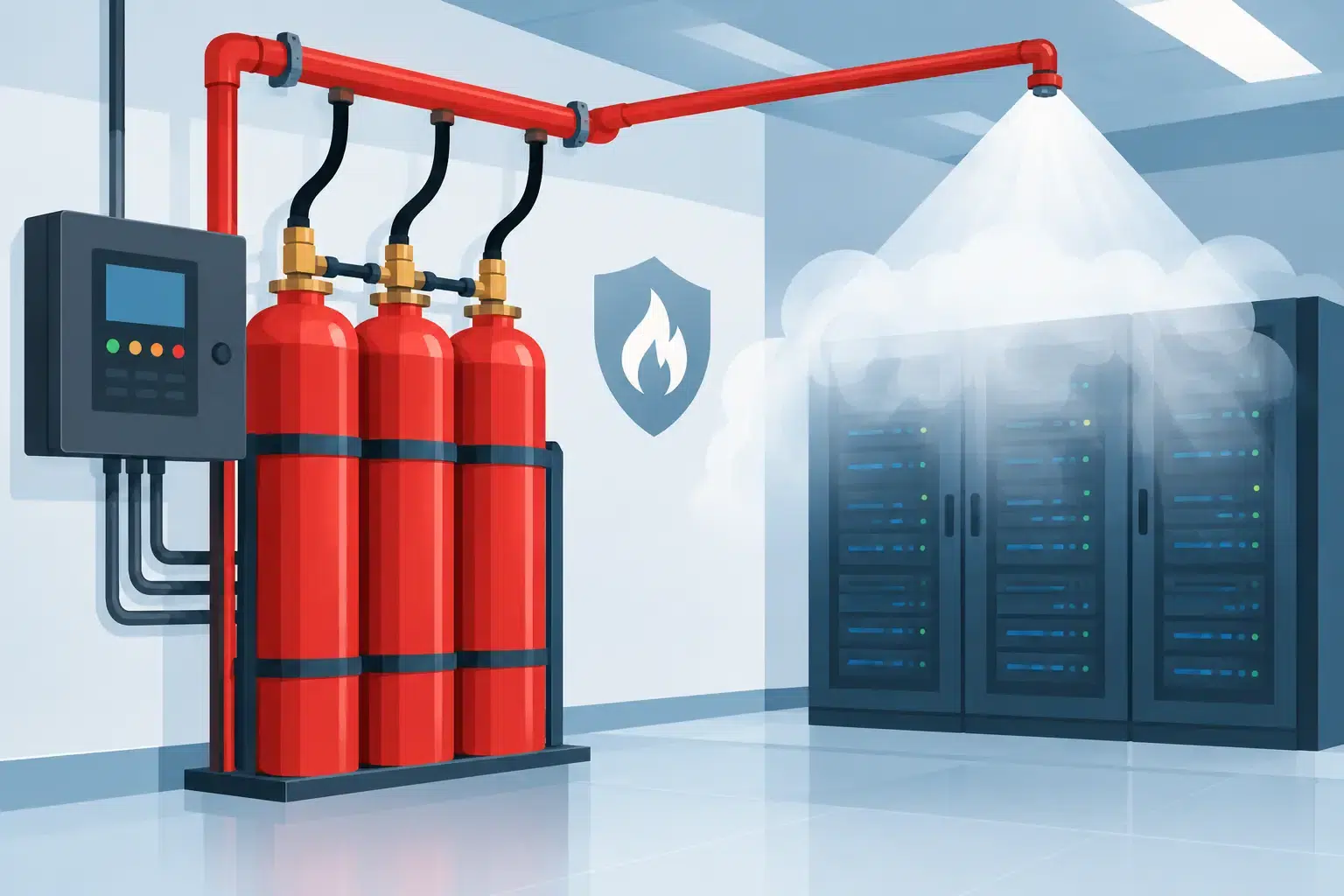
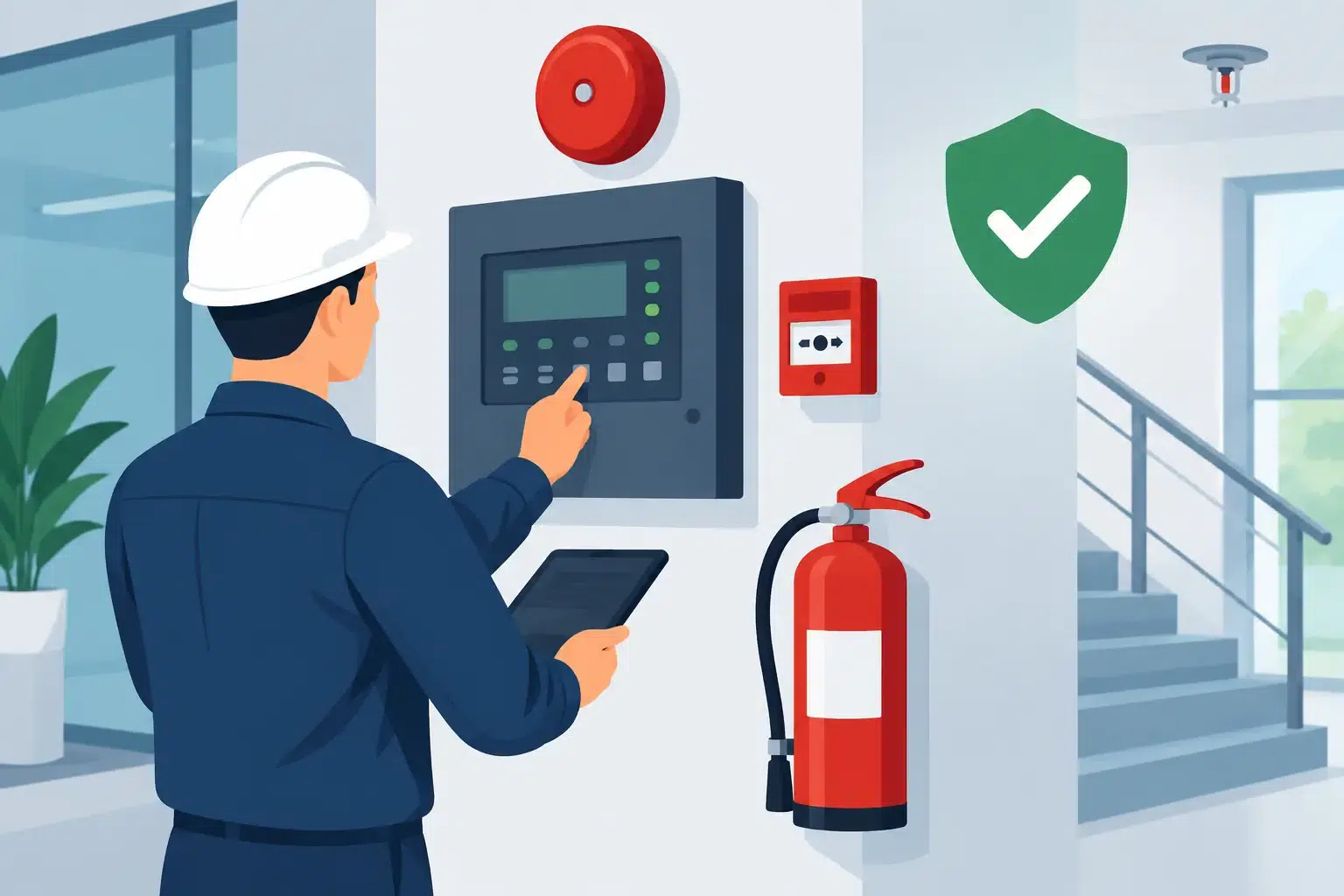
Unlike a sprinkler system, a correctly designed inert gas installation protects the enclosure as a whole. Automatic detection identifies the developing fire, control equipment provides alarms and delays, and the agent is discharged through pipework and nozzles. The system must then retain an extinguishing concentration for the required hold time.
That last point is crucial. An agent cannot perform as intended if it escapes through ceiling voids, cable penetrations, poorly fitting doors or building interfaces. Room integrity, pressure relief and the response procedure are as important as the cylinders themselves.
IG55 or IG541: the practical difference
IG55 is a blend of 50 per cent argon and 50 per cent nitrogen. IG541, often known by the INERGEN® name, is a blend of nitrogen, argon and a small proportion of carbon dioxide, typically 52 per cent nitrogen, 40 per cent argon and 8 per cent carbon dioxide.
Both are naturally occurring atmospheric gases and both are suitable for occupied spaces when designed, installed and operated within the relevant safety limits. Neither leaves a corrosive or conductive residue, which makes them well suited to protecting electronic equipment and irreplaceable assets.
The carbon dioxide content in IG541 is the key technical distinction. At the specified extinguishing concentration, it is intended to support the body’s breathing response as oxygen is reduced. This has made IG541 a familiar choice for normally occupied technical rooms. However, this does not remove the need for a full life-safety assessment. Discharge alarms, evacuation arrangements, warning signage, lock-off procedures and managed access remain essential for either system.
IG55 contains no added carbon dioxide. In some applications, that simpler two-gas composition may align well with site policy, environmental objectives or an existing agent strategy. The required quantity of agent, cylinder count and physical installation arrangement must still be calculated for the actual enclosure, hazard and design concentration. Assumptions based on floor area alone are not enough.
Extinguishing performance is designed, not assumed
For a given room, the volume of agent required is affected by enclosure size, minimum and maximum room temperatures, altitude, the fire hazard and the applicable design standard. A system protecting a normally conditioned IT room will not necessarily be designed in the same way as one protecting a warm plant space or a room with significant underfloor and ceiling voids.
Both IG55 and IG541 are generally discharged rapidly for surface Class A fire risks, with the system engineered to achieve the required concentration within the applicable discharge time. Pipe sizing, nozzle location and cylinder pressure all affect that outcome. The agent selection cannot be separated from hydraulic calculation and discharge testing.
Storage, pressure relief and room integrity
Inert gas systems need more cylinder storage than some clean-agent alternatives. This is often the decisive issue in constrained buildings, especially where the protected room is in a city-centre office, live data facility or refurbishment project with limited plant space. Cylinders may be installed adjacent to the risk or in a separate cylinder store, provided the system design supports the arrangement.
The comparison between IG55 and IG541 should include the available storage footprint, access for installation and future cylinder servicing, structural loading, and the route for pipework. High-pressure cylinder options can reduce the number of cylinders required, but they need suitable handling arrangements and must be planned around safe maintenance access.
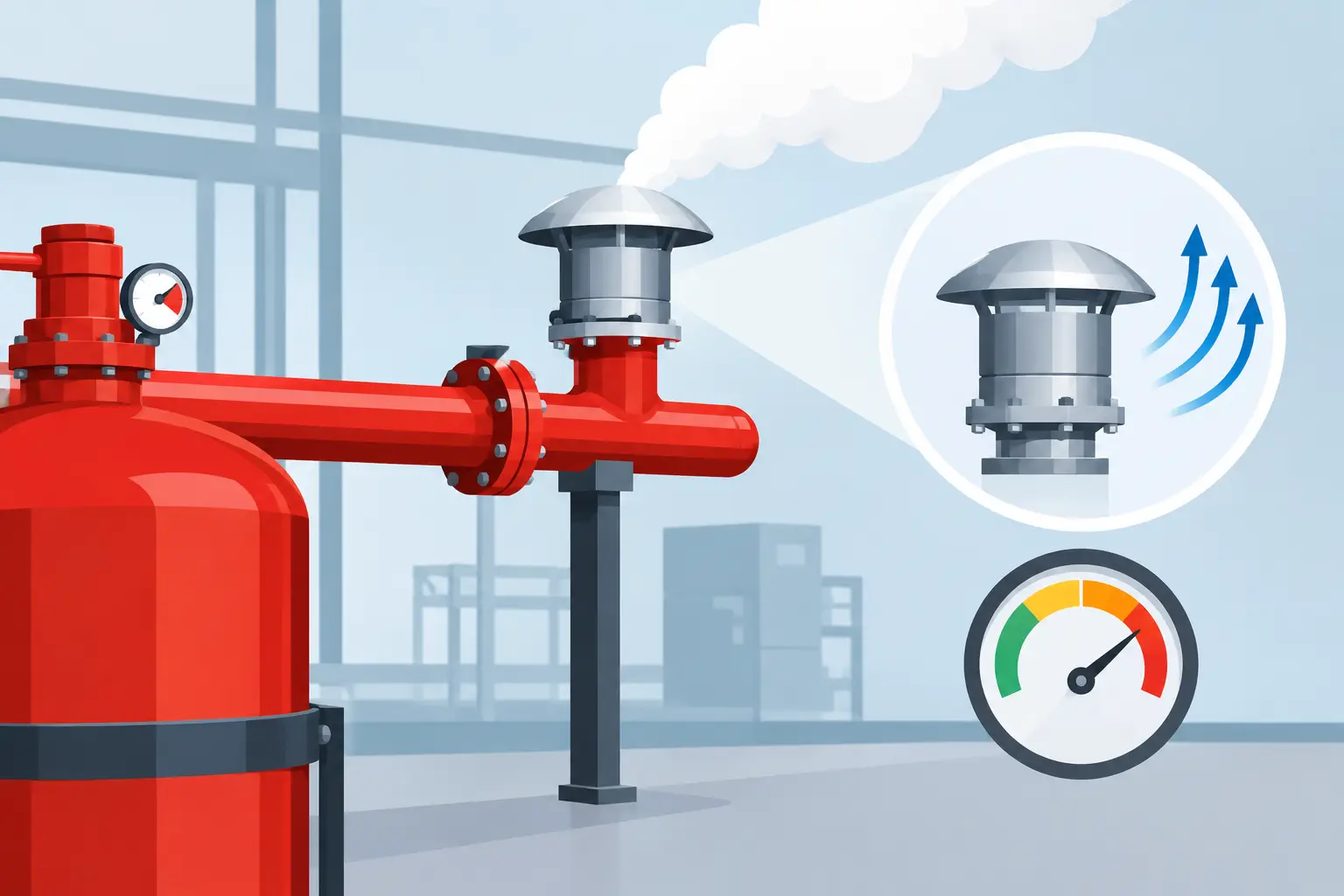
When inert gas enters a sealed enclosure, it creates a temporary pressure change. Without correctly sized pressure-relief venting, doors, partitions, ceilings or raised floors may be damaged during discharge. The vent must be selected using the final system flow characteristics and enclosure construction, not treated as an afterthought.
Room-integrity testing confirms whether the enclosure is likely to hold the concentration for the required period. It also identifies leakage paths that might otherwise undermine the system. On projects involving legacy data rooms or altered services, remedial sealing is frequently the difference between an installed system and a dependable one.
Occupancy and operational safety
An inert gas system can protect spaces that are normally occupied, but every project requires a documented assessment of who may be present, how they will be warned and how they will leave the room. This includes contractors working alone, security personnel making rounds and engineers accessing equipment outside normal hours.
IG541’s carbon dioxide element is often considered where personnel occupancy is a central consideration. Yet it should never be presented as permission to remain in a discharge area. The system must provide pre-discharge alarms and time for evacuation, and staff must understand that the alarm means leave immediately and do not re-enter until authorised.
For either agent, the control arrangement should interface appropriately with ventilation shutdown, door releases where required, equipment shutdowns and fire alarm cause-and-effect logic. These connections need careful coordination with the building-services, IT and operational teams. A technically correct suppression system can still create avoidable downtime if critical equipment is shut down in the wrong sequence.
Selecting IG55 or IG541 for your site
There is no universal winner. IG55 may be an excellent fit where its composition, availability and calculated system arrangement meet the client’s technical and commercial objectives. IG541 may be preferred where its established occupancy characteristics and project-specific design performance suit the room and operating model.
The decision should be based on an engineered review of the hazard, not an agent name on a specification. That review should establish the enclosure volume, air-handling arrangements, likely fuel load, existing detection, people at risk, cylinder location, room leakage, pressure-relief needs and business continuity priorities. It should also consider whether a clean agent, water mist, CO2 or another suppression method is more appropriate for the risk.
For UK commercial installations, the final design should be developed and verified against the relevant standards, including BS EN 15004 where applicable, alongside fire strategy requirements, manufacturer data and insurer conditions. Commissioning should prove the detection, alarms, control logic and release functions before the system is handed over.
Make the decision part of the whole protection plan
An effective inert gas system is not a collection of cylinders installed beside a critical room. It is an integrated life-safety and continuity measure, supported by early fire detection, correctly sealed boundaries, pressure management, tested controls and planned maintenance.
Active Fire Suppression can assess these factors from the initial risk discussion through design, installation, room-integrity testing, commissioning and ongoing service. The most useful next step is to review the actual room and its operation with a suppression specialist, before a small design compromise becomes a major recovery problem.


Leave A Comment
You must be logged in to post a comment.