

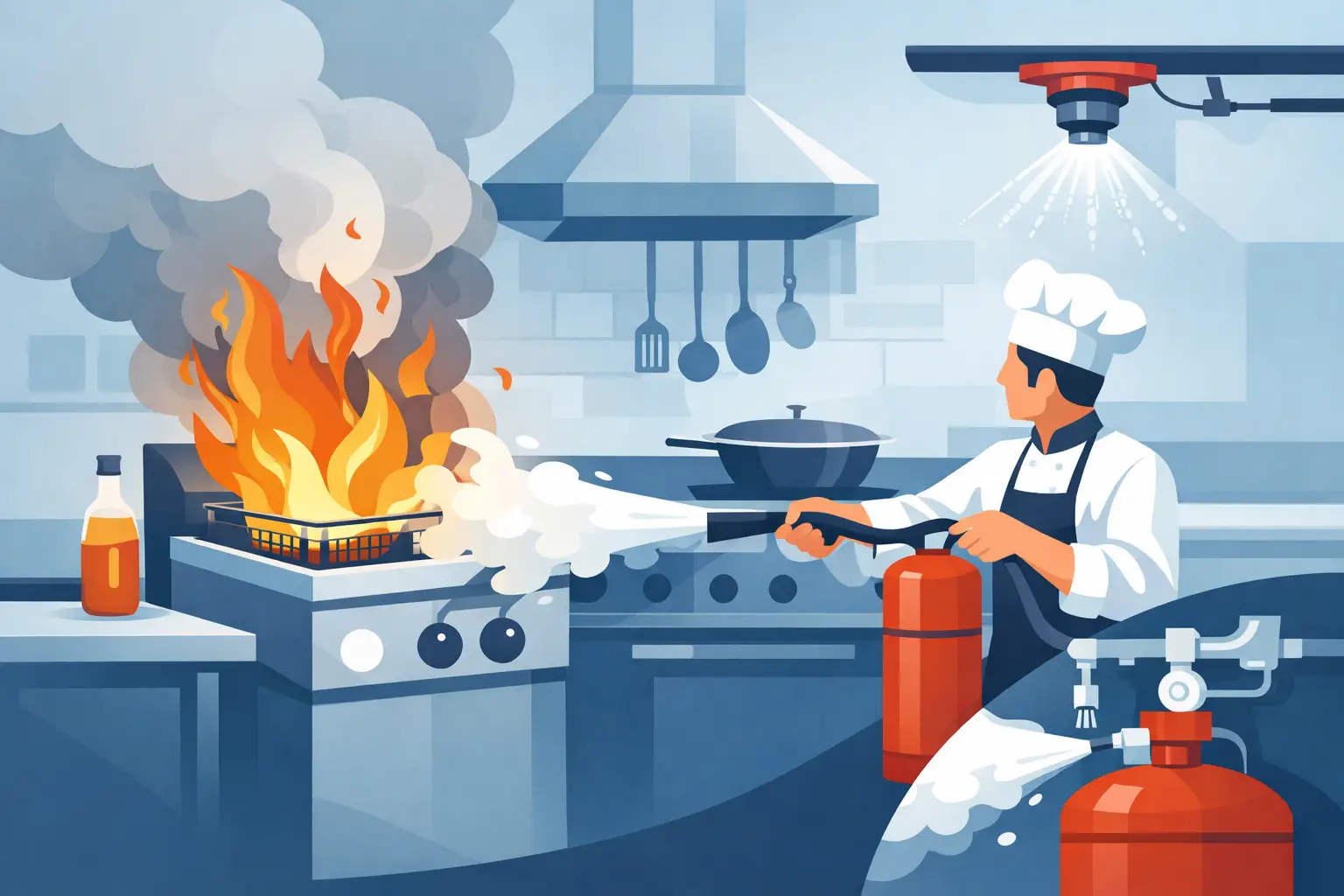
A busy service can turn a small flare-up beneath a fryer or griddle into a serious fire within seconds. Hot oil, grease deposits and powerful cooking equipment create a risk that cannot be managed by portable extinguishers alone. Effective restaurant grease fire protection is designed to detect and attack a developing fire automatically, while isolating the fuel or power that could keep it burning.
For restaurant owners, hotel managers and facilities teams, the objective is not simply to satisfy a requirement. It is to protect staff and customers, limit damage to expensive kitchen equipment and ventilation systems, and avoid the prolonged closure that often follows a kitchen fire. The right system is a properly engineered combination of hood protection, wet-chemical suppression, appliance shut-down and planned maintenance.
What restaurant grease fire protection must do
Commercial cooking fires behave differently from ordinary combustible fires. Cooking oils and fats can exceed their auto-ignition temperature, while grease accumulates inside canopy plenums and extract ducts that are difficult to reach with a handheld extinguisher. Throwing water at burning oil can cause it to erupt and spread, putting people nearby at immediate risk.
A fixed wet-chemical system is intended for this specific hazard. On detection, it discharges a fine spray of potassium-based wet chemical through purpose-designed nozzles. The agent cools the burning oil and reacts with the fat to form a soap-like layer over the surface. This process, known as saponification, helps prevent reignition while the oil cools below its ignition temperature.
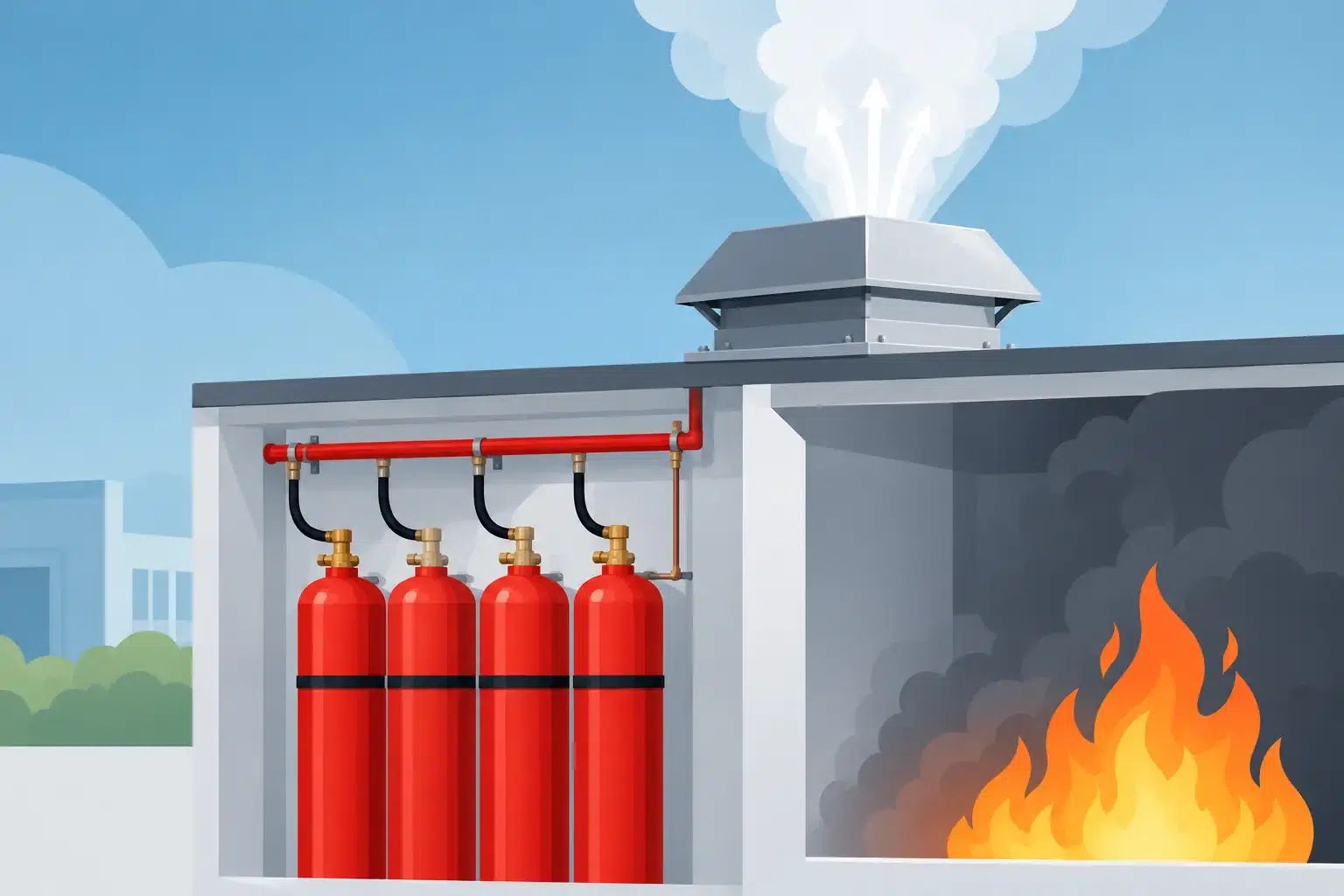
Protection is commonly directed at the cooking appliances beneath the canopy, as well as the hood and plenum. Where the risk assessment and extract layout require it, duct protection may also form part of the design. A system should be matched to the appliances actually in use – fryers, ranges, chargrills, woks, salamanders and solid-fuel equipment present different fire behaviours and coverage requirements.
The discharge should also initiate appropriate equipment interlocks. In many kitchens, this means shutting off the gas supply and electrical power to protected appliances so the fire is not continuously fed. The exact cause-and-effect sequence must be agreed at design stage, particularly where extract fans, make-up air systems, building alarms and gas-safety valves interact. There is no safe one-size-fits-all arrangement.
Why a hood alone is not enough
A kitchen canopy captures heat, vapour and airborne grease, but it is not a fire-suppression system. Nor does a standard building fire alarm provide the rapid, localised intervention required when oil ignites during service. By the time smoke detection has operated and someone has reached for an extinguisher, the fire may have entered the canopy or extract route.
A properly specified automatic system uses a dedicated detection method, often based on heat-sensitive components positioned within the hood. Once operated, it releases agent without waiting for a person to intervene. A manual pull station provides an additional means of discharge, allowing trained staff to activate the system if they see a fire before automatic detection operates.
Portable extinguishers and fire blankets still have a role in the wider fire-safety plan, subject to staff training and the risk assessment. They are not, however, a substitute for fixed suppression over high-risk commercial cooking appliances. Staff should never be placed in the position of having to approach a growing oil fire because automatic protection has been overlooked or left unmaintained.
Designing restaurant grease fire protection around the real kitchen
The most dependable installation begins with a survey of the working kitchen, not a generic equipment schedule. Appliance dimensions, fuel type, cooking media, hood size, plenum arrangement, duct routes and the position of filters all affect nozzle selection and cylinder capacity. Changes that appear minor operationally, such as replacing a fryer or adding a chargrill, can invalidate the original coverage arrangement.
The design must also consider how the restaurant operates. A compact independent kitchen may need a straightforward system covering a small appliance line. A hotel, stadium or multi-brand food venue may have several cooking zones, extended extract systems, different fuel sources and a more complex alarm interface. For both, the aim is clear: reliable automatic discharge where a fire is most likely to start, with controls that leave the area in a safe state.
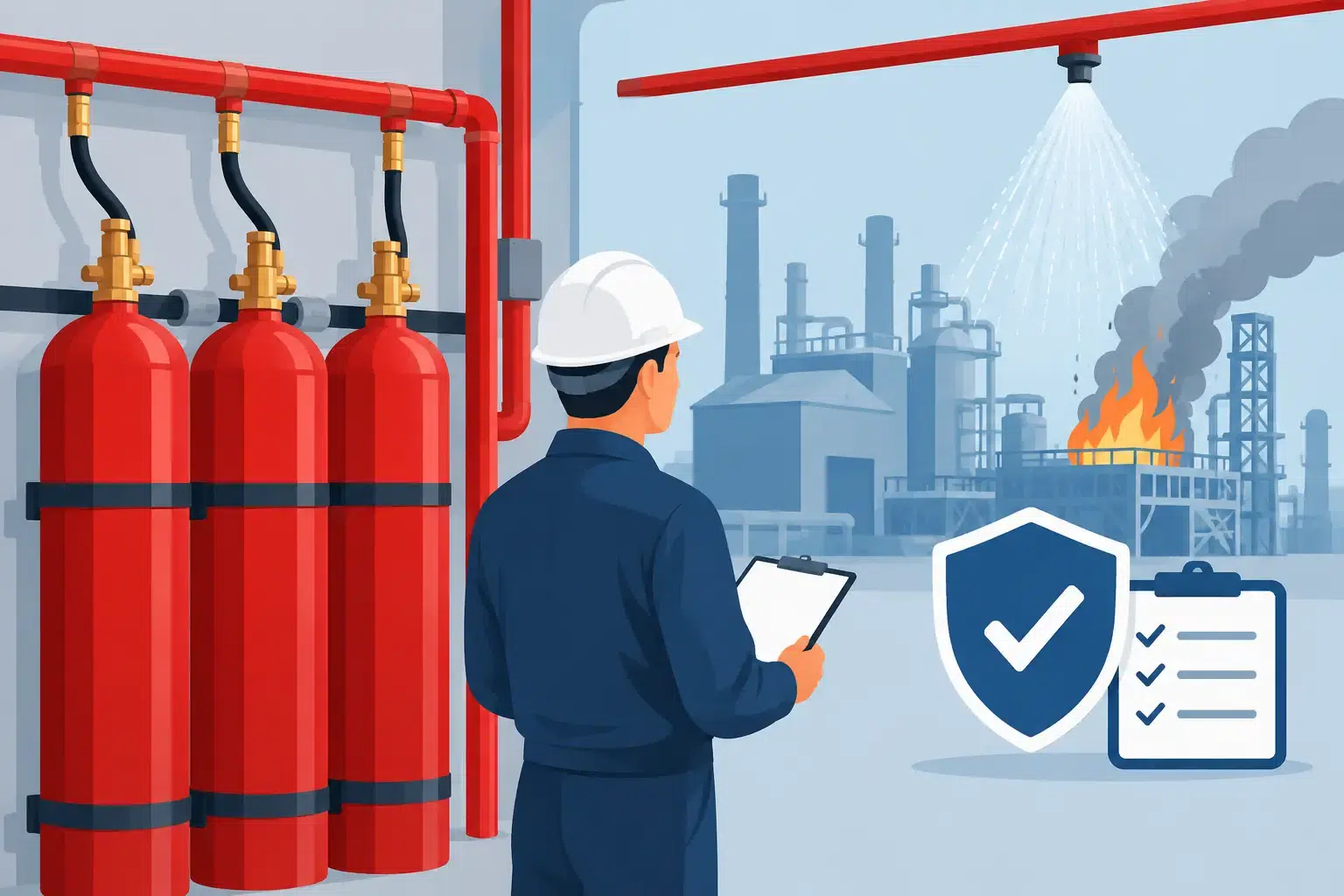
Compliance should be considered alongside operational resilience. In the UK, fixed fire-suppression arrangements for commercial kitchen ventilation are commonly designed with reference to BS EN 16282-7, alongside the manufacturer’s listed design requirements and the wider premises fire-risk assessment. Insurers may set additional conditions concerning agent type, system approval, duct cleaning records, maintenance intervals or alarm monitoring.
A specialist contractor can coordinate these requirements from technical design and budgeting through installation, commissioning and handover. This avoids a common gap in which the kitchen contractor, mechanical contractor and fire-alarm provider each assume that another party is responsible for final interfaces.
Agent selection and appliance coverage
Wet chemical is generally the appropriate agent for deep-fat fryers and other cooking-oil hazards because it cools and suppresses without driving burning oil out of the appliance. Clean agents, inert gases and carbon dioxide are valuable in other applications, including server rooms, electrical risks and enclosed industrial processes, but they are not a replacement for a wet-chemical kitchen system over cooking grease.
Nozzles are not interchangeable fittings. Each is positioned and aimed to discharge the correct quantity of agent across a defined hazard. Blocking a nozzle with signage, moving an appliance outside its protected zone or changing the appliance configuration can compromise performance. Kitchen managers should treat the protected layout as part of the system, rather than as a suggestion that can be altered during a refurbishment.
Detection, alarms and shut-downs
System actuation should be visible and understood by the people who run the kitchen. Following discharge, staff need clear procedures: stop cooking, evacuate the immediate area if required, call the emergency services, do not restart protected appliances and do not reset the system. Even when flames are no longer visible, hot oil and concealed grease can reignite.
The kitchen system should also communicate with the building’s broader fire strategy where appropriate. That may include alarm signalling, gas isolation, remote fault indication and monitoring. Interfaces need testing during commissioning, not simply noted on drawings. A suppression cylinder that discharges correctly but fails to isolate the gas supply does not provide the level of protection the design intended.
Maintenance protects performance between services
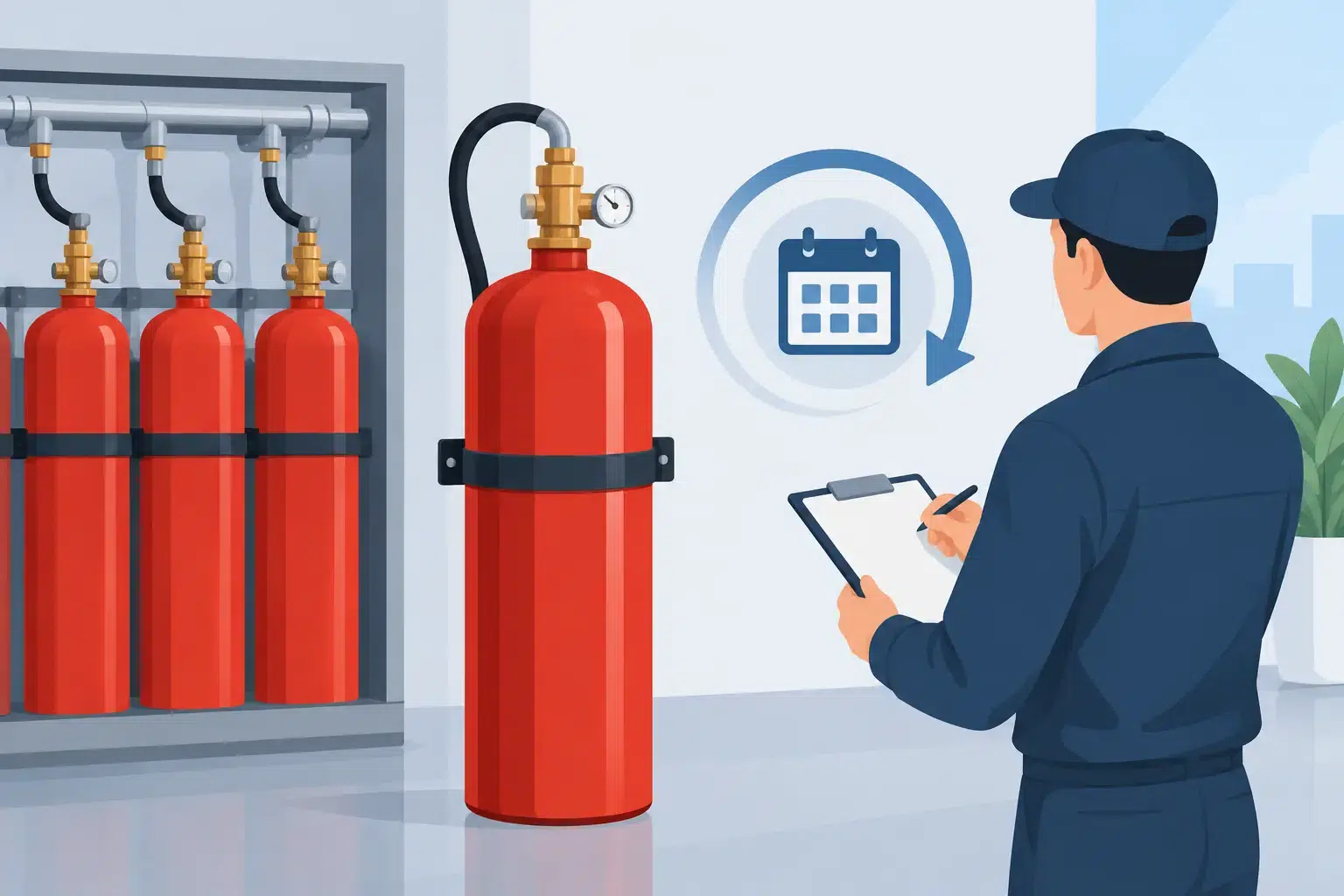
Grease fire protection is life-safety infrastructure, not fit-and-forget equipment. Routine inspection and maintenance are necessary to confirm that cylinders remain serviceable, detection components are in condition, nozzles are clear and correctly located, manual controls are accessible, and shutdown functions still work as designed.
The frequency and scope of maintenance should follow the system manufacturer’s requirements, relevant standards, insurer expectations and the risk profile of the kitchen. High-use kitchens and sites with frequent menu or equipment changes demand particular attention. Records of inspections, servicing, repairs and discharge tests provide evidence of control and help identify problems before an incident exposes them.
Extract cleaning is equally significant. A suppression system deals with the immediate fire, but heavy grease contamination within canopies and ducts increases the available fuel and can allow fire to travel beyond the appliance line. Cleaning schedules should reflect the actual cooking load, not an arbitrary calendar date. A late-night burger operation, for example, will generally create a different grease burden from a low-volume daytime café.
After any system discharge, the kitchen must not simply reopen once the visible residue has been wiped away. The system requires inspection, recharge or service exchange as necessary, restoration of any interlocks, and confirmation that the protected appliances remain correctly covered. The cause of the fire should also be reviewed, whether it was overheating, oil management, equipment failure, poor cleaning or an unsafe operating practice.
Common gaps that create unnecessary risk
The most serious shortcomings are often introduced after the original installation. New cooking equipment is added beneath an existing canopy without a protection review. A gas valve is bypassed because it is inconvenient. Nozzles become coated in grease or are knocked out of alignment. The extract system is altered, but the suppression system is not.
Training can also drift. Kitchen staff may know there is a red pull station on the wall but not understand what it does, when to use it or why restarting equipment after a discharge is unsafe. Brief, practical instruction at handover and refresher training for new starters make the system far more useful in the pressure of a real incident.
Active Fire Suppression approaches commercial kitchen systems as engineered protection for a live, changing operation. That includes assessing the cooking hazards, selecting suitable wet-chemical coverage, integrating controls, commissioning the completed installation and providing ongoing maintenance support.
A kitchen fire does not wait for a quiet period, a planned shutdown or an available manager. Reviewing protection whenever appliances, fuels, menus or extraction arrangements change gives the business the best chance of containing an incident before it becomes a closure, an insurance claim and a risk to the people on site.
Leave A Comment
You must be logged in to post a comment.