


A clean-agent system is often specified because water in the wrong room can turn a small fire into a major business interruption. In a server room, control room, archive, electrical switchroom or process area, the question is not simply whether a fire can be extinguished. It is whether it can be controlled without damaging the equipment and systems needed to keep the operation running. But are clean agents safe for the people who work nearby or may be in the protected space?
The practical answer is yes, when the system is correctly designed for the room, hazard and occupancy. Clean agents are proven extinguishing media used around sensitive assets, but they are not a fit-and-forget solution. Safety depends on the agent selected, the achieved design concentration, warning and evacuation arrangements, enclosure integrity, pressure relief, commissioning and ongoing maintenance.
What is meant by a clean agent?
Clean agents are gaseous fire-extinguishing agents that leave no residue after discharge. Unlike powder, foam or water, they do not normally require a lengthy clean-up and are electrically non-conductive. That makes them suitable for areas containing electronics, communications equipment, electrical infrastructure, documents and high-value machinery.
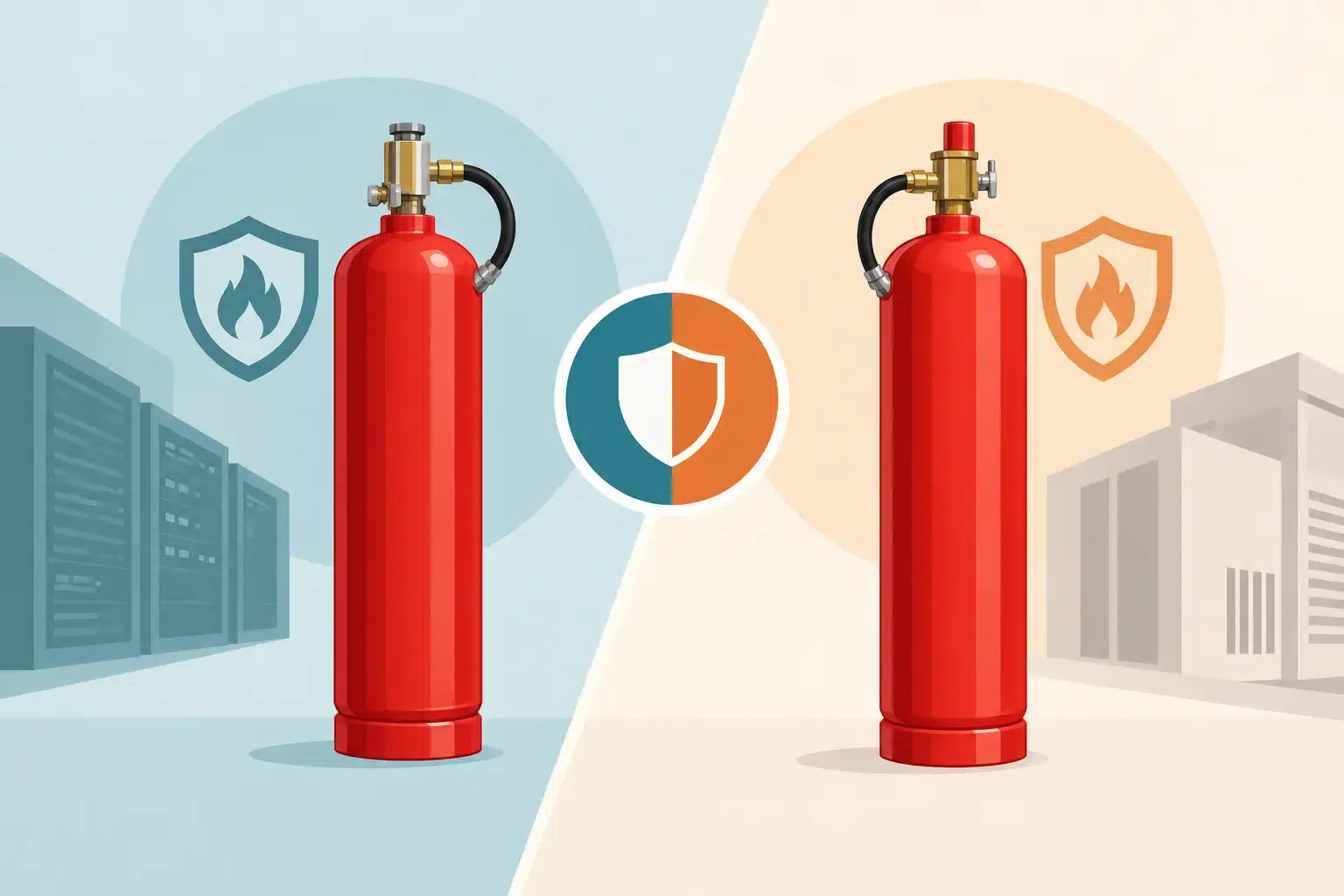
Common clean-agent systems include FK-5-1-12, widely known by the Novec 1230 trade name, and HFC-227ea, often known as FM-200 or FE-227. They extinguish fire principally by absorbing heat from the flame, interrupting the combustion process, or a combination of both. They are different from inert gas systems, which reduce oxygen concentration, and from carbon dioxide systems, which present much more serious life-safety considerations in occupied areas.
The term “clean” describes the absence of residue. It does not mean an agent can be discharged without careful engineering controls.
Are clean agents safe for people?
A properly designed system uses an extinguishing concentration that puts out the expected fire while remaining within recognised human exposure limits for the intended occupancy. The design must account for whether the room is normally occupied, occasionally entered or unoccupied, as well as the likely time needed for people to leave following a pre-discharge warning.
Standards such as BS EN 15004 and NFPA 2001 set out agent-specific requirements, including design concentrations, exposure limits and system arrangements. These are not paperwork exercises. They determine cylinder quantities, nozzle layouts, discharge time, warning devices, control logic and any required pressure-relief measures.
For occupied spaces, the system should provide clear audible and visual warnings before release, allowing occupants to evacuate. A typical arrangement includes automatic detection, a time delay before discharge, emergency stop or abort controls where appropriate, manual release points and clear instructions at entrances. The exact cause-and-effect sequence must suit the risk. A data room with trained staff may need a different arrangement from an intermittently occupied electrical enclosure.
No gaseous extinguishing system removes the need for safe evacuation. People should leave promptly on receipt of a fire alarm or agent-release warning, not remain in the room to assess the event or attempt to retrieve equipment.
Exposure limits are specific to the agent
Each agent has its own safety data and allowable exposure parameters. FK-5-1-12 systems are commonly selected where occupied-space safety and low environmental impact are priorities. HFC-227ea is also an established agent with a substantial installed base, but it requires careful consideration of its concentration limits and environmental profile.
A competent designer does not select an agent from a generic table. The fire class, room volume, minimum and maximum ambient temperature, altitude, leakage characteristics and expected occupancy all affect the final design. A concentration suitable for one enclosure cannot simply be copied to another.
The fire itself can also alter the safety picture. At high temperatures, extinguishing agents and burning materials may produce hazardous decomposition products. This is another reason for immediate evacuation and for preventing re-entry until the incident has been assessed and the room has been ventilated where necessary.
Safety for equipment and business continuity
For sensitive equipment, clean agents offer a major advantage: they can suppress a developing fire without soaking, corroding or coating the protected assets. This can significantly reduce recovery time compared with a water-based discharge, particularly where smoke-sensitive electronics, archive materials or production controls are involved.
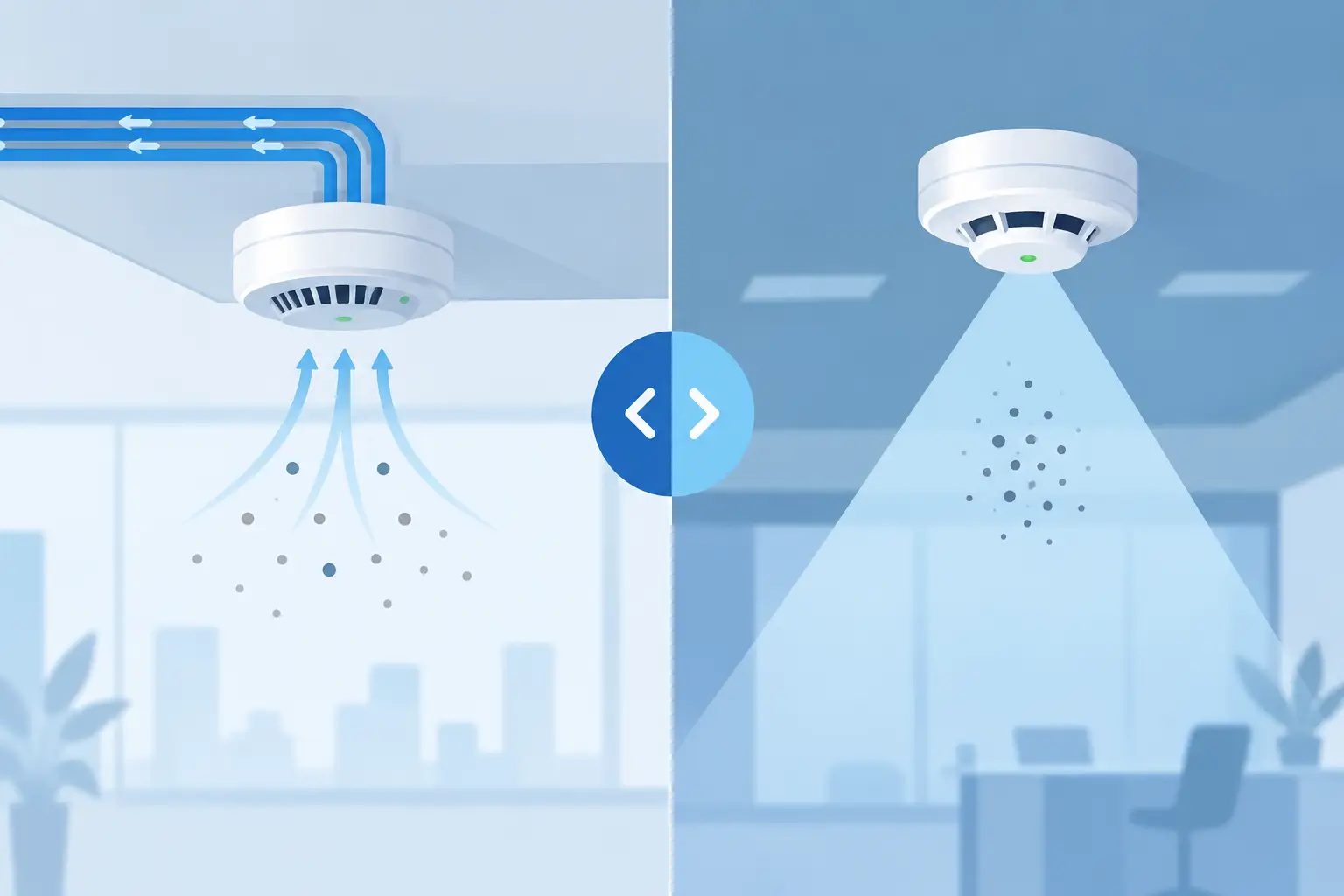
However, a clean-agent system does not make a room immune to fire damage. Heat, smoke, soot and loss of power can still affect equipment before the agent operates. The best results come from combining early warning detection, often including aspirating smoke detection, with automatic suppression and a clear incident response plan.
The room itself is part of the system. A clean agent must remain at the required concentration for a defined holding period so it can extinguish the fire and reduce the chance of re-ignition. Open cable penetrations, unsealed ceilings, poorly fitting doors and unprotected ventilation paths can allow the agent to escape too quickly.
This is why room-integrity testing matters. It provides evidence that the enclosure is sufficiently sealed to retain the agent, without the disruption of a full discharge test. Where a discharge could create excessive pressure changes, correctly sized over-pressure vents are also essential. They protect walls, ceilings, doors and glazing while allowing the system to perform as designed.
Environmental safety needs to be part of the decision
The environmental question is not identical to the life-safety question. An agent may be suitable for use in an occupied enclosure yet still have a significant global warming impact or face changing availability and policy considerations.
HFC-227ea is a reliable fire-suppression agent, but HFCs have a comparatively high global warming potential. For some organisations, this affects corporate sustainability policy, future system strategy and insurer or client requirements. Existing systems can often be maintained responsibly, but replacement decisions should consider the long-term position rather than only the initial installation cost.
FK-5-1-12 has traditionally been chosen for its low global warming potential and short atmospheric lifetime. Organisations should nevertheless assess product availability, manufacturer support and their own environmental obligations before committing to an agent. The most appropriate choice may be a clean agent, an inert gas system or another suppression approach entirely.
A well-engineered specification considers all three areas together: life safety, asset protection and environmental impact. Selecting solely on cylinder footprint, headline price or the name of a familiar agent can lead to an unsuitable system.
The design details that make a clean-agent system safe
A suppression system is only as dependable as its design and maintenance. Before a system is specified, the protected hazard needs to be understood in practical terms. That includes the fuel likely to burn, ignition sources, ventilation, room construction, electrical interfaces, normal occupancy and the consequences of unwanted discharge.
The resulting design should cover detection zones, release logic, warning devices, manual controls, lock-off procedures, nozzle locations, pipework, cylinder storage, pressure relief and interfaces with air handling, power shutdown and building fire alarms. Ventilation may need to shut down before discharge, but that decision must be coordinated carefully so it does not create another operational or safety problem.
Commissioning should verify that the installation matches the approved design and that controls operate in the intended sequence. Staff should understand what the alarms mean, how to leave the area safely and who has authority to reset or isolate the system. They should not be expected to make technical decisions during an alarm event.
Maintenance then keeps the original design intent intact. Changes such as a new cable route, an added door, a relocated cabinet or altered ventilation can compromise enclosure integrity or nozzle coverage. Regular inspection, servicing and periodic room-integrity testing are therefore central to safety, not optional extras.
When a different agent may be the safer choice
Clean agents are highly effective in enclosed, high-value environments, but they are not right for every risk. A deep-seated fire in paper, plastics or other ordinary combustibles may need cooling as well as flame knockdown. A large, leaky industrial area may be impractical to protect with a total-flooding clean-agent system. Kitchens, lithium-ion battery hazards, flammable liquids and outdoor risks each require a more specific assessment.
Inert gases can be a strong alternative for some critical rooms, particularly where an environmentally neutral agent is preferred. Their larger cylinder banks, lower discharge temperatures and oxygen-reduction method need to be accommodated in the design. Carbon dioxide remains effective for certain unoccupied industrial hazards, but its risk to personnel means it demands especially stringent controls.
The right answer starts with the risk, not with a preferred cylinder label. Active Fire Suppression approaches agent selection as part of an integrated design, installation, commissioning and maintenance responsibility, so that the system protects people as well as the assets they rely on.
If you are reviewing a clean-agent system, begin with the room: who enters it, what must continue operating, how well the enclosure is sealed and what would happen if a fire started overnight. Those answers provide a safer basis for choosing the agent and the system around it.
Leave A Comment
You must be logged in to post a comment.