

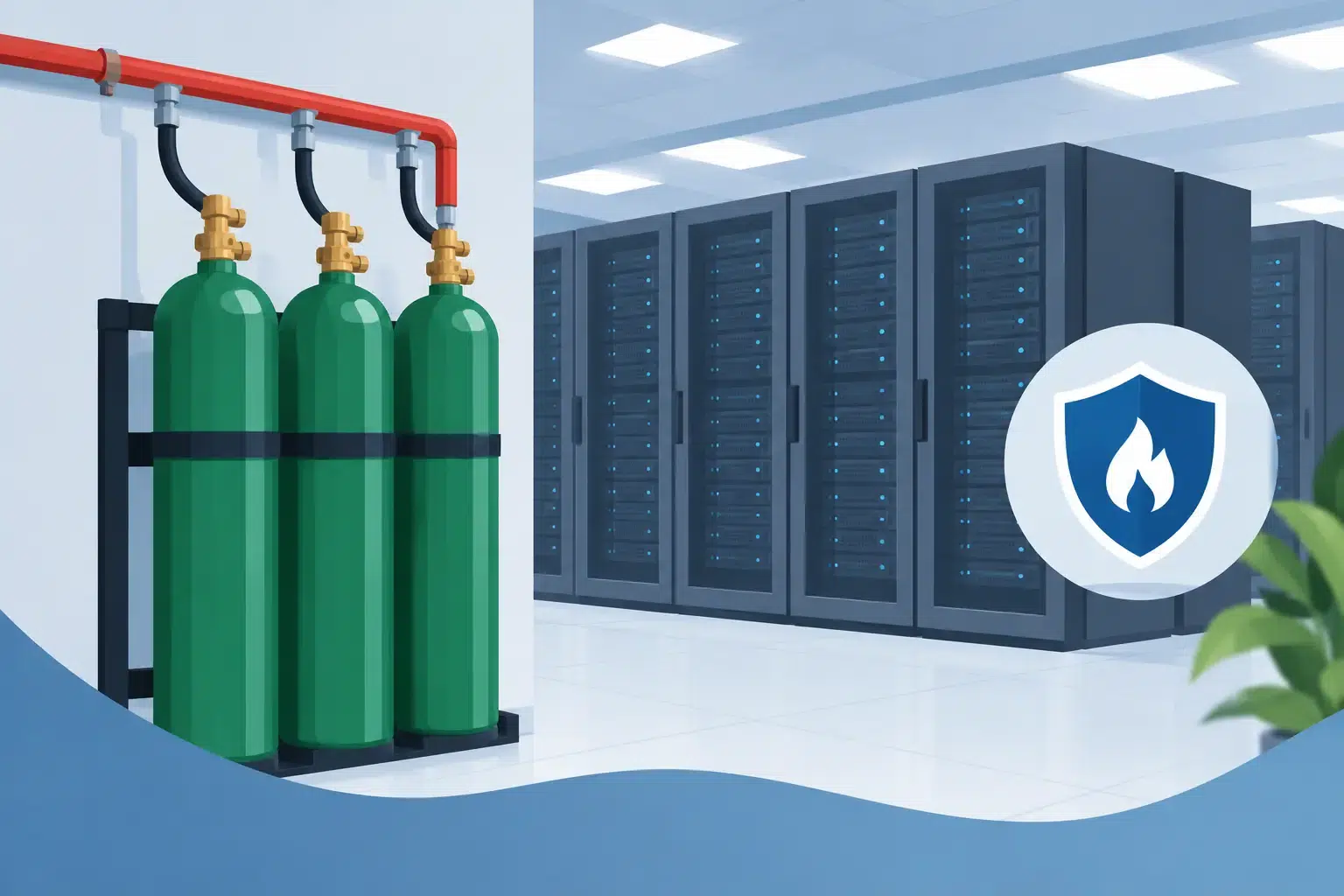
A fire in a server room, control room or electrical switchroom can create a much larger loss than the flame itself. Smoke contamination, corrosive residues, water damage and extended recovery work can all take a critical process offline. This IG55 system review considers whether this inert-gas suppression agent is the right response where protecting equipment, maintaining operations and avoiding unnecessary clean-up matter.
IG55 is not a universal replacement for every suppression system. It is a highly effective option for enclosed, well-defined hazards, but its performance depends on correct room preparation, cylinder storage, pressure relief and safety controls. The quality of the engineering around the agent is as important as the agent itself.
What is an IG55 fire suppression system?
IG55 is an inert gaseous fire-extinguishing agent made from equal parts nitrogen and argon. Both gases occur naturally in the atmosphere, are electrically non-conductive and leave no residue after discharge. Unlike a sprinkler system, it does not introduce water into sensitive electronic or electrical equipment. Unlike some chemical clean agents, it suppresses fire principally by reducing the oxygen concentration within the protected enclosure to a level at which combustion cannot continue.
A typical system comprises high-pressure cylinders, pipework, discharge nozzles, an automatic detection and control system, manual release arrangements, warning devices and pressure-relief venting. Aspirating smoke detection, including VESDA, is often considered where very early warning is needed before a developing fire reaches a more serious stage.
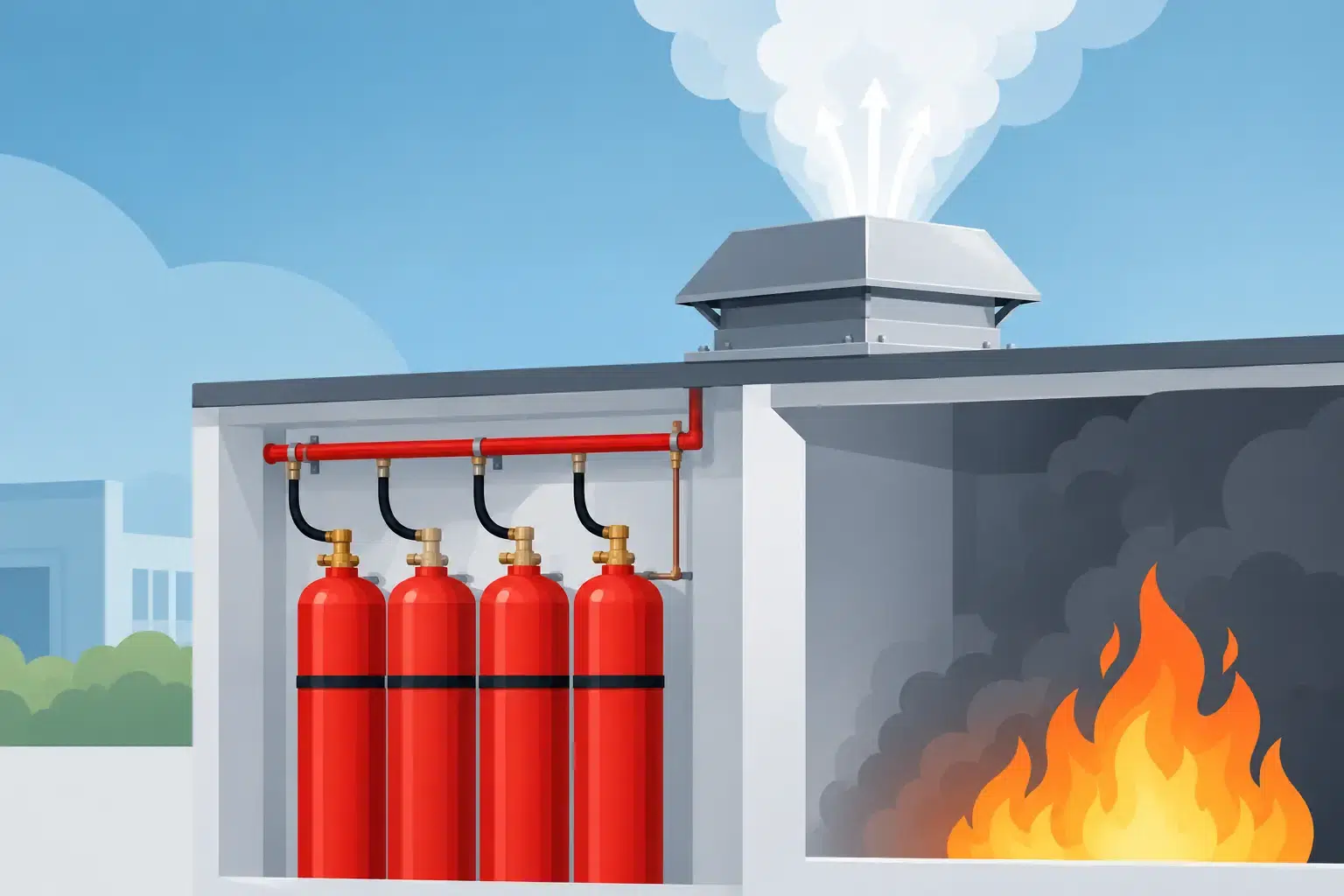
Once the detection logic is satisfied, the system sounds pre-discharge warnings, allows for any configured delay and releases the agent into the room. The protected enclosure must retain the required concentration for the specified hold time. This is why room integrity is a core design and commissioning issue, not an administrative afterthought.
IG55 system review: the practical strengths
The most compelling reason to specify IG55 is clean suppression for critical assets. There is no powder to remove from machinery, no foam to dispose of and no water run-off affecting equipment below or adjacent to the protected room. For organisations with servers, communications equipment, control panels, archives or specialist manufacturing equipment, that can materially reduce the extent of post-incident recovery.
IG55 also has a strong environmental case. The agent has zero ozone-depletion potential and zero global-warming potential. For organisations reviewing legacy HFC-based suppression arrangements or pursuing environmental targets, inert gas can provide a clear route away from agents with a higher climate impact.
Its constituent gases are readily available and the agent itself does not degrade over time inside correctly maintained cylinders. That supports long-term confidence in agent availability and avoids concerns around the changing regulatory position of some fluorinated gases. Cylinders, valves, hoses and control equipment still require planned inspection and maintenance, but the extinguishing medium is inherently stable.
The system is suitable for a broad range of enclosed Class A and Class B fire risks. Common applications include data centres, server rooms, UPS rooms, switchrooms, telecommunications spaces, process-control rooms, museums, laboratories and protected industrial enclosures. In these settings, preventing a fire from becoming a business interruption event is often the primary objective.
The trade-offs that need honest consideration
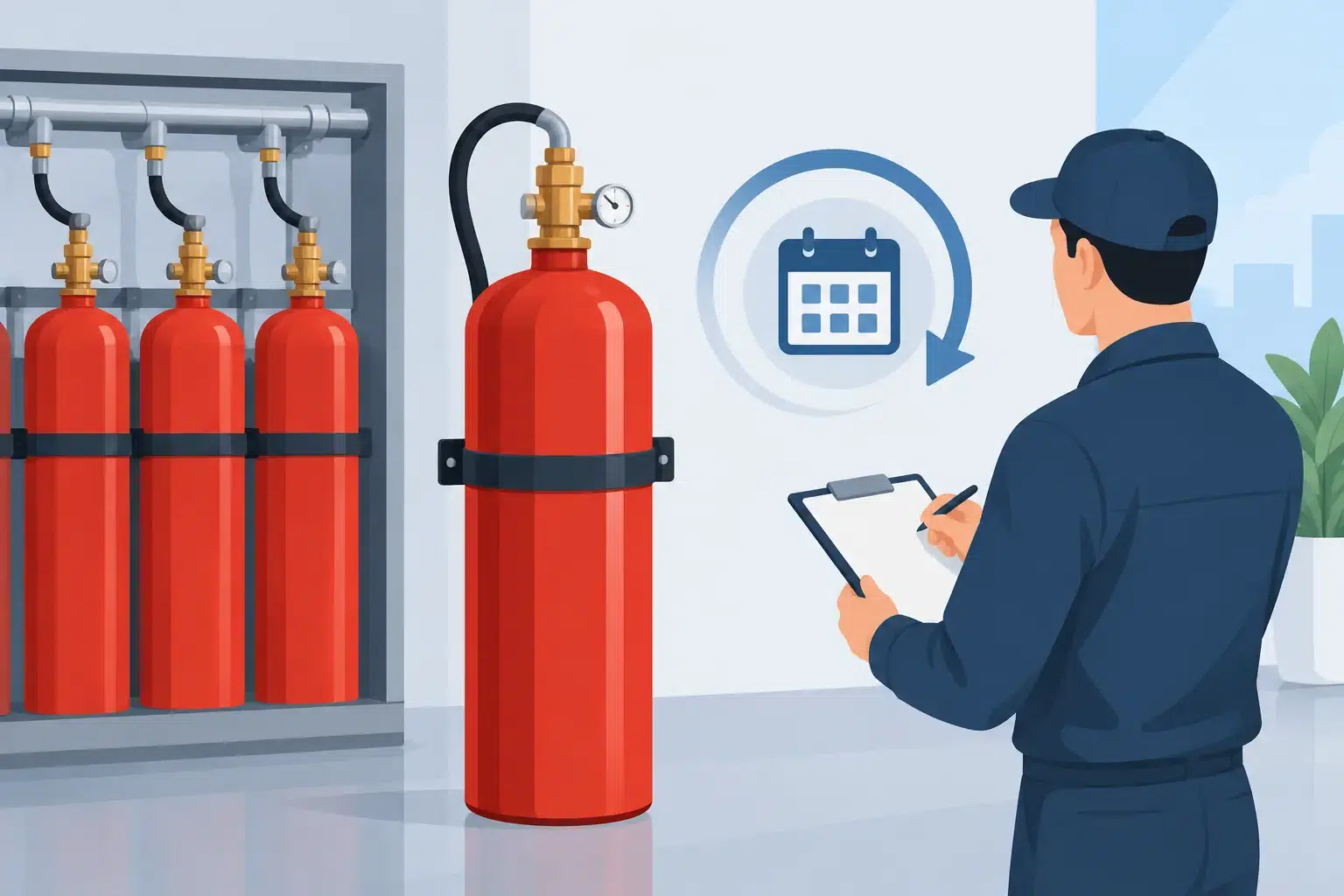
An IG55 installation needs physical space. Because inert gases are stored at high pressure and relatively large agent quantities may be needed, the cylinder bank can be substantial compared with certain clean-agent alternatives. A dedicated cylinder room may be preferable, particularly where the protected space is compact or valuable floor area is limited.
The discharge also creates a significant pressure change within the enclosure. Properly sized pressure-relief vents are required to protect walls, ceilings, doors and other building elements. This must be calculated for the actual room, discharge rate and construction, rather than treated as a standard item.
Room leakage is another defining issue. Doors, cable penetrations, raised floors, ceiling voids, dampers and service openings can all compromise retention. A room-integrity test verifies whether the enclosure is likely to hold the extinguishing concentration for the required duration. If it does not, sealing work or design adjustments are needed before the system can be accepted as effective.
Occupancy must be assessed carefully. IG55 reduces oxygen to an extinguishing concentration, so personnel safety procedures, audible and visual alarms, abort controls, signage and emergency planning are essential. Inert gas systems can be designed for normally occupied spaces where the relevant design conditions are met, but that does not remove the need for a project-specific risk assessment. A frequently occupied office with multiple uncontrolled openings presents different challenges from an access-controlled electrical room.
Finally, gas suppression does not remove the need for sound detection, compartmentation and incident response. The system is designed to control a fire within a defined volume. It will not correct a fire that has spread through unsealed building voids, nor will it address the root cause of an electrical fault or overheating plant.
Where IG55 is a good fit
IG55 is often a strong choice where the protected risk is enclosed, asset value is high and water damage would be unacceptable. A data-centre operator may need to preserve hardware and minimise disruption to hosted services. A manufacturer may need to protect a control room that keeps a production line operating. A facilities team may need a solution that satisfies insurer expectations without creating a major clean-up burden after a discharge.
It can also suit projects where environmental policy has a direct influence on agent selection. However, environmental credentials should not be used in isolation. The available storage area, enclosure integrity, room volume, occupancy pattern and required discharge performance all affect whether IG55 is the best engineering answer.
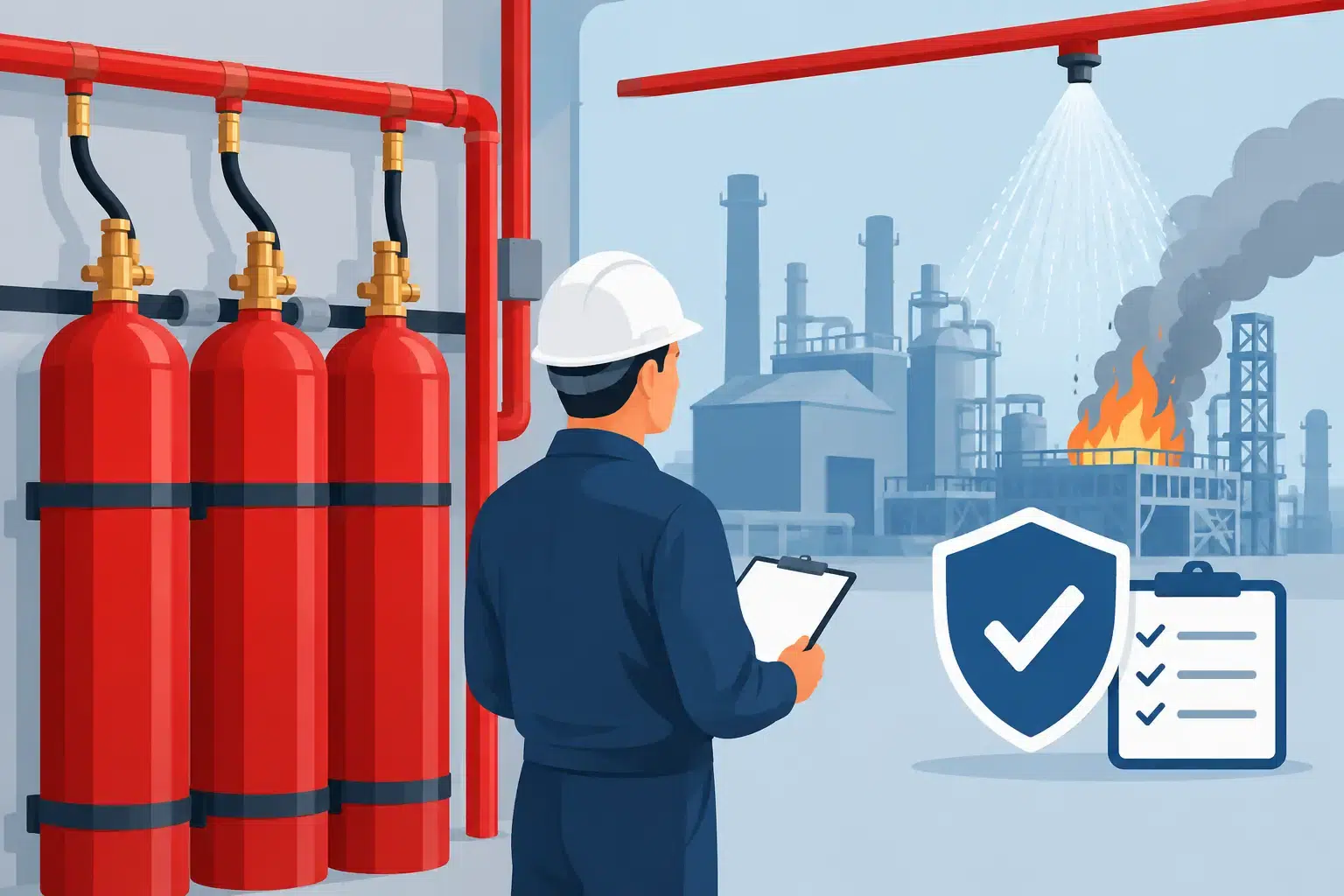
For very small rooms with constrained storage, a clean-agent system may be more practical. For open industrial hazards or deep-seated risks, water mist, sprinklers, foam, dry powder or carbon dioxide may be more appropriate depending on the fuel, process and occupancy. Carbon dioxide, for example, can be highly effective in certain industrial applications but requires particularly stringent consideration of life safety. There is no single agent that is best for every room.
Design and compliance checks that make the difference
A credible IG55 proposal should begin with a survey of the actual hazard, not simply a room volume calculation. The designer needs to understand the fire load, ventilation arrangement, ceiling and floor voids, cable routes, equipment layout, occupancy and operational priorities. A server room with cooling units that continue to run after discharge needs different interfaces from a sealed archive room.
System design should be prepared in accordance with the applicable requirements, commonly including BS EN 15004 and ISO 14520 for gaseous fire-extinguishing systems, alongside relevant British Standards, fire strategy requirements, insurer conditions and manufacturer approvals. The final design must address agent concentration, nozzle placement, pipe sizing, discharge time, hold time, pressure relief, detection logic and control interfaces.
Cause-and-effect planning is especially important. On confirmed fire detection, the system may need to stop air-handling equipment, close dampers, release doors where appropriate, send alarms to a monitored location and control plant shutdown. Each action should be agreed with the people responsible for building services and operations. A technically correct gas system can still underperform if ventilation continues to extract the agent or if the protected enclosure cannot be secured.
Before handover, the installer should commission the detection and release controls, verify alarms and interfaces, demonstrate operation to responsible staff and complete a room-integrity test. Documentation should clearly explain isolation procedures, reset arrangements, emergency actions and maintenance requirements. These are not minor handover items: they determine whether site teams can respond confidently years after installation.
Maintenance after installation
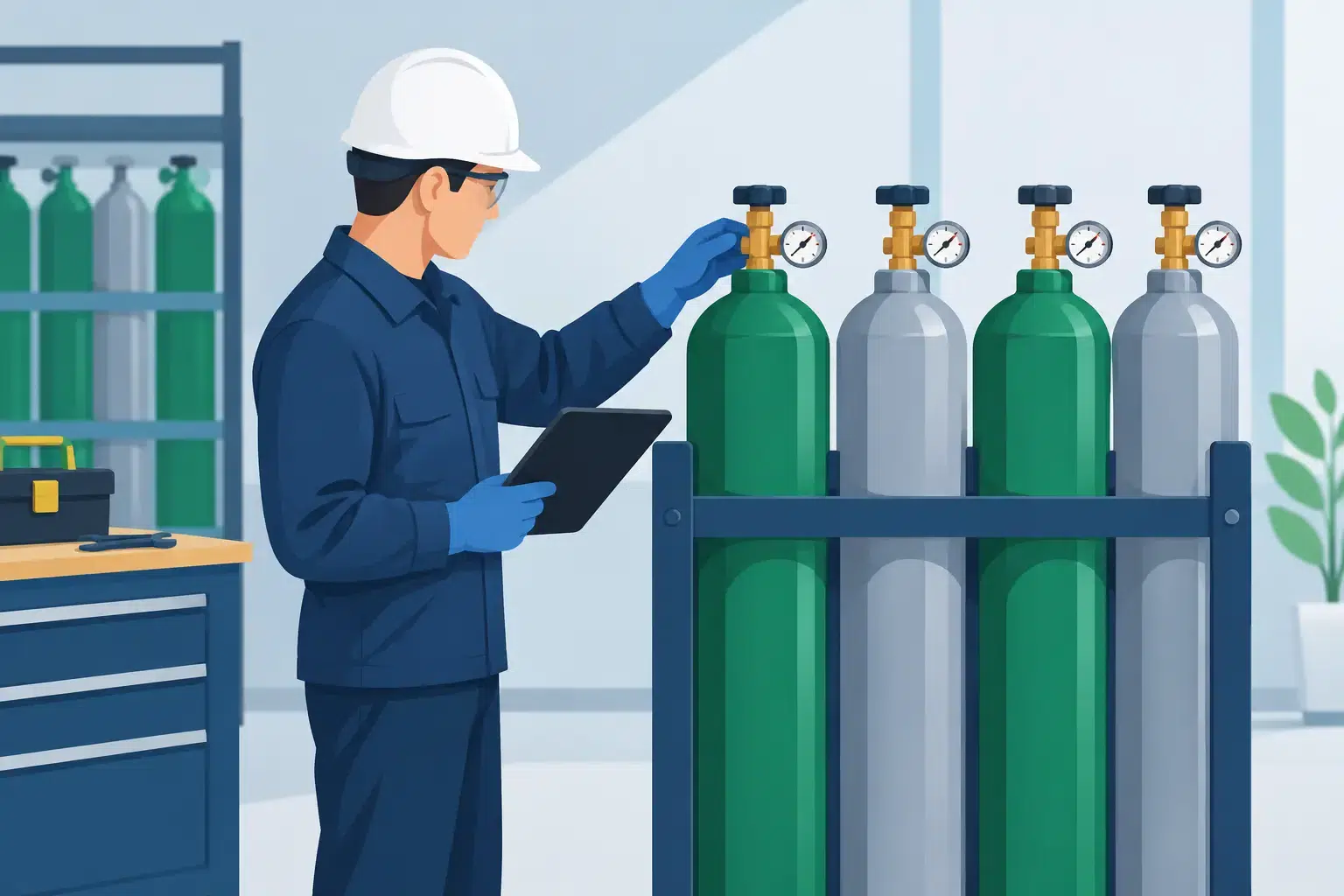
An IG55 system is life-safety infrastructure, so planned maintenance is essential. Inspections should cover cylinder condition and pressure, hoses, actuators, pipework, nozzles, control panels, detectors, alarms, manual controls, abort stations, signage and pressure-relief provisions. Any change to the protected room should trigger review. New cable penetrations, altered ceilings, replacement doors or changes to ventilation can invalidate the room-integrity assumptions made at design stage.
Service support also matters when a system has discharged, been isolated following an alarm or requires repair. The priority is not only to refill cylinders. The cause of activation must be understood, affected equipment checked and the complete protection arrangement returned to service in a controlled manner.
Is IG55 the right choice?
IG55 is a dependable, clean and environmentally responsible suppression agent for enclosed spaces containing high-value or safety-critical assets. Its strongest case is where downtime and secondary damage are expensive, the room can be properly sealed and the project allows for cylinder storage and pressure relief.
The decision should be based on a detailed risk discussion rather than a preference for a particular agent. Active Fire Suppression can assess the enclosure, process risks and continuity requirements, then take responsibility from system design through installation, integrity testing, commissioning and ongoing maintenance. The most useful next step is to examine the room as it is used in practice, because that is where the right suppression solution becomes clear.

Leave A Comment
You must be logged in to post a comment.