

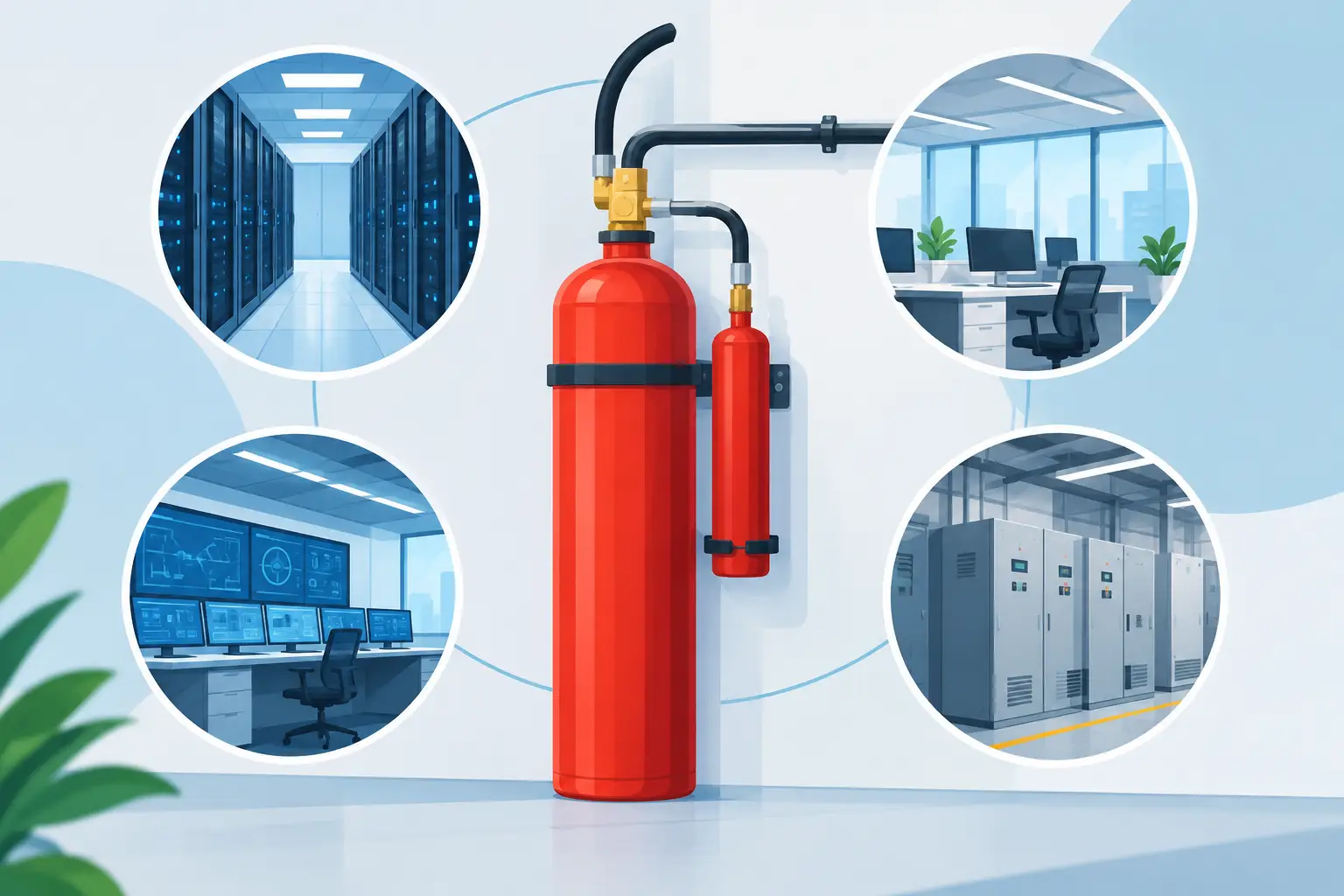
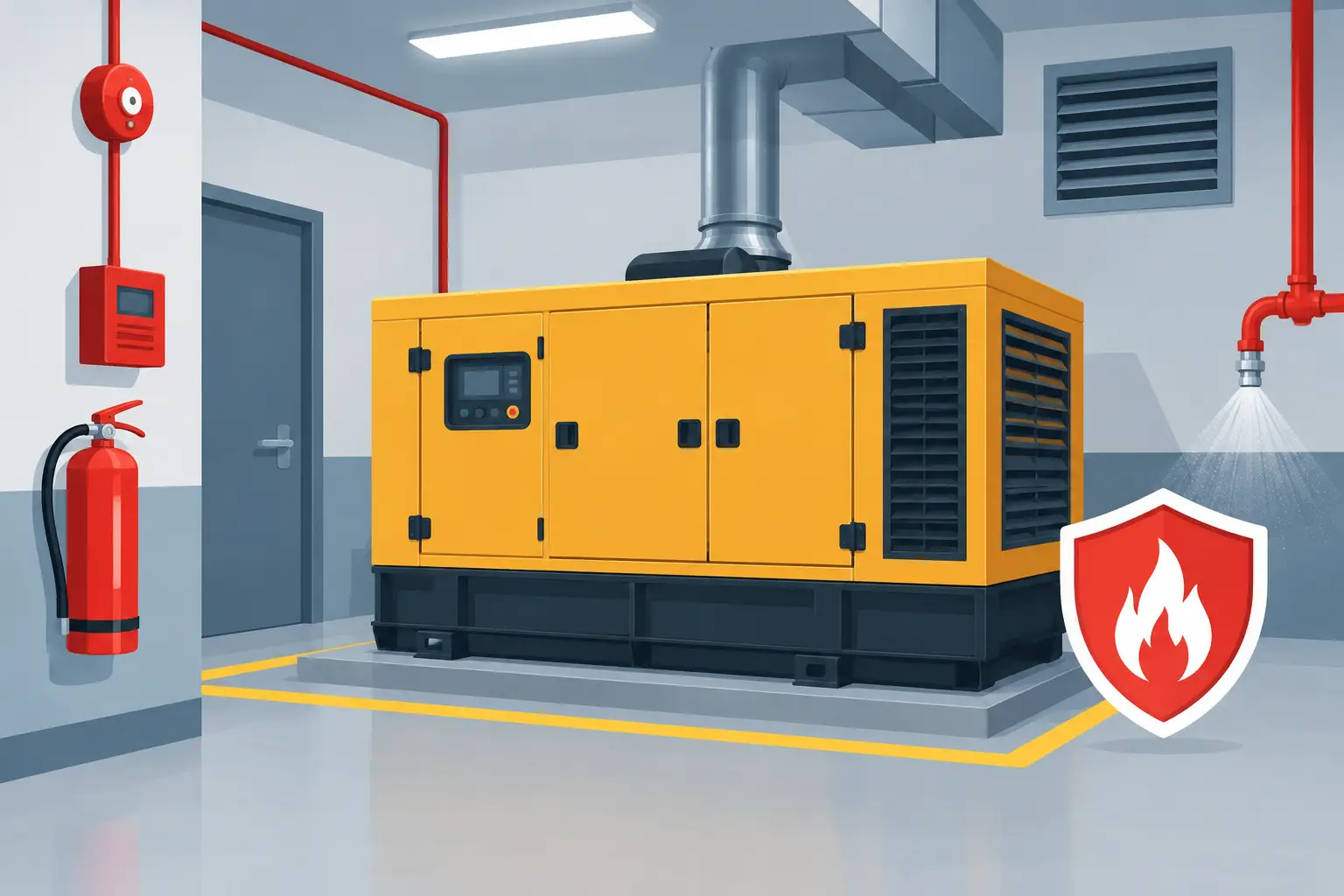
A fire in a server room, control room or electrical switchroom can become a business-continuity incident long before flames cause structural damage. Smoke contamination, corrosive residues and water from conventional firefighting can take critical equipment out of service for days or weeks. Clean agent fire suppression is designed for these environments: it detects a developing fire and discharges an extinguishing gas quickly, without leaving residue behind.
For UK organisations responsible for high-value assets and safety-critical operations, the question is not simply whether a clean agent system can put out a fire. It is whether the chosen system protects people, equipment and operational continuity while meeting the requirements of the room, the insurer and the relevant standards.
What clean agent fire suppression does
Clean agent systems use gaseous extinguishing agents that are electrically non-conductive and leave no powder, foam or water residue after discharge. They are commonly used where water damage would be unacceptable or where manual clean-up after a discharge would create significant downtime.
Depending on the agent, a system controls fire by removing heat from the flame or by interrupting the chemical reaction that sustains combustion. Typical clean agents include HFC227ea, often known as FM-200 or FE-227, and FK-5-1-12, widely recognised through the Novec 1230 name. Both can be effective for suitable Class A, B and C fire risks when engineered at the correct concentration.
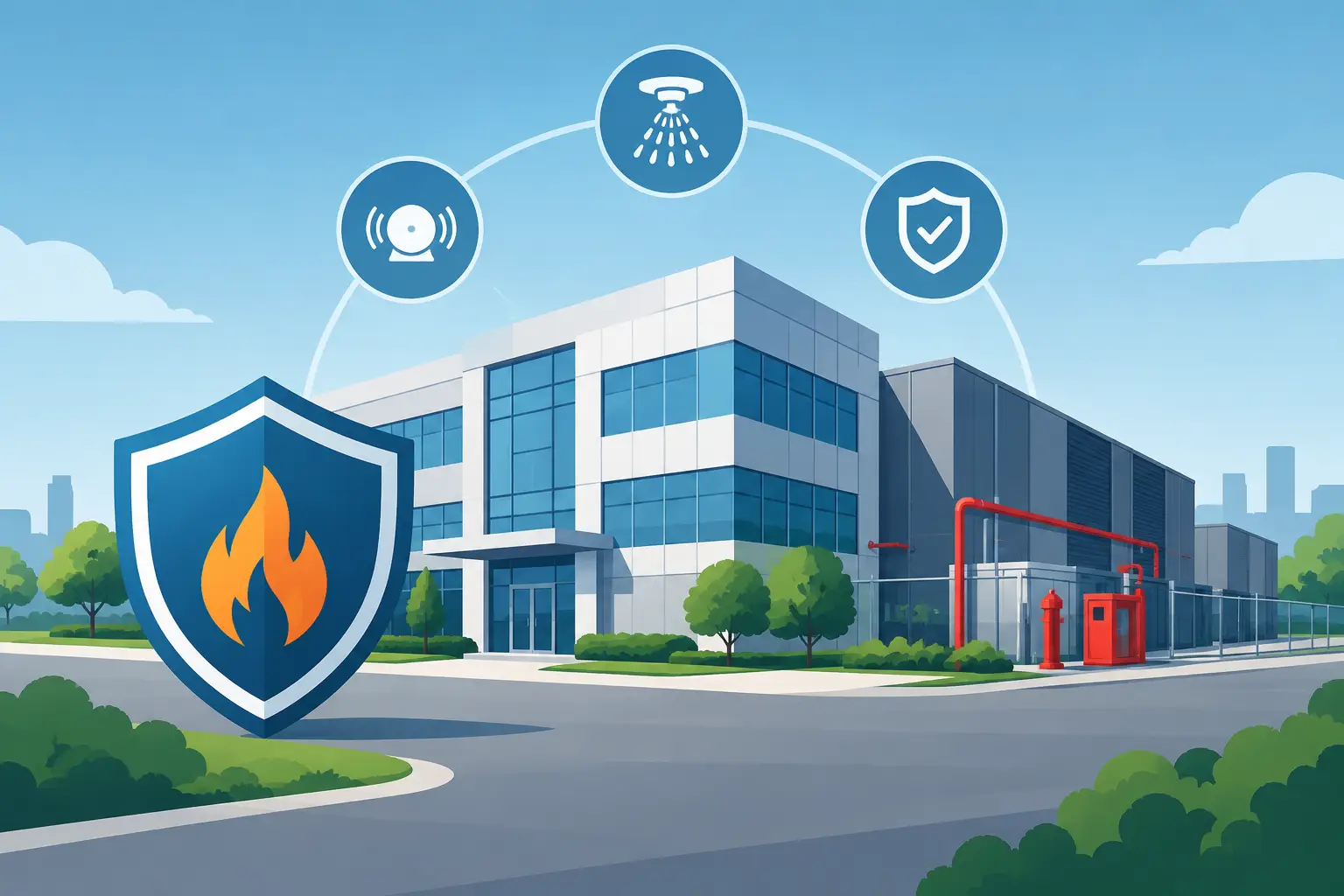
The system is not a replacement for good housekeeping, fire detection or emergency procedures. It is one part of an integrated arrangement. Detection identifies the fire at an early stage, the control panel verifies the alarm condition, warnings allow people to leave where necessary, and the suppression system discharges into the protected enclosure.
Where clean agent systems are a strong fit
The strongest case for clean agent suppression is usually a small to medium enclosed room containing assets that are sensitive to water, contamination or extended outage. Typical applications include server rooms, data halls, communications rooms, electrical switchrooms, control rooms, archive stores, laboratory spaces and specialist industrial equipment enclosures.
For an IT environment, the value is not only in avoiding water on racks and electrical equipment. A fast, automatic response can limit smoke spread and allow the organisation to begin recovery sooner. In a manufacturing setting, protecting a control system or electrical distribution room may prevent a localised fire from stopping an entire production line.
However, agent selection should never be based on the equipment alone. The construction and use of the room matter just as much. A room with frequent access, large openings, unsealed service penetrations or a permanently occupied workforce may need a different design approach. Inert gas, water mist, local-application protection or changes to the enclosure itself may be more appropriate in some cases.
The room is part of the system
A gaseous extinguishing agent must reach and maintain its design concentration for long enough to control the fire. This is why room integrity is fundamental, rather than an optional final check.
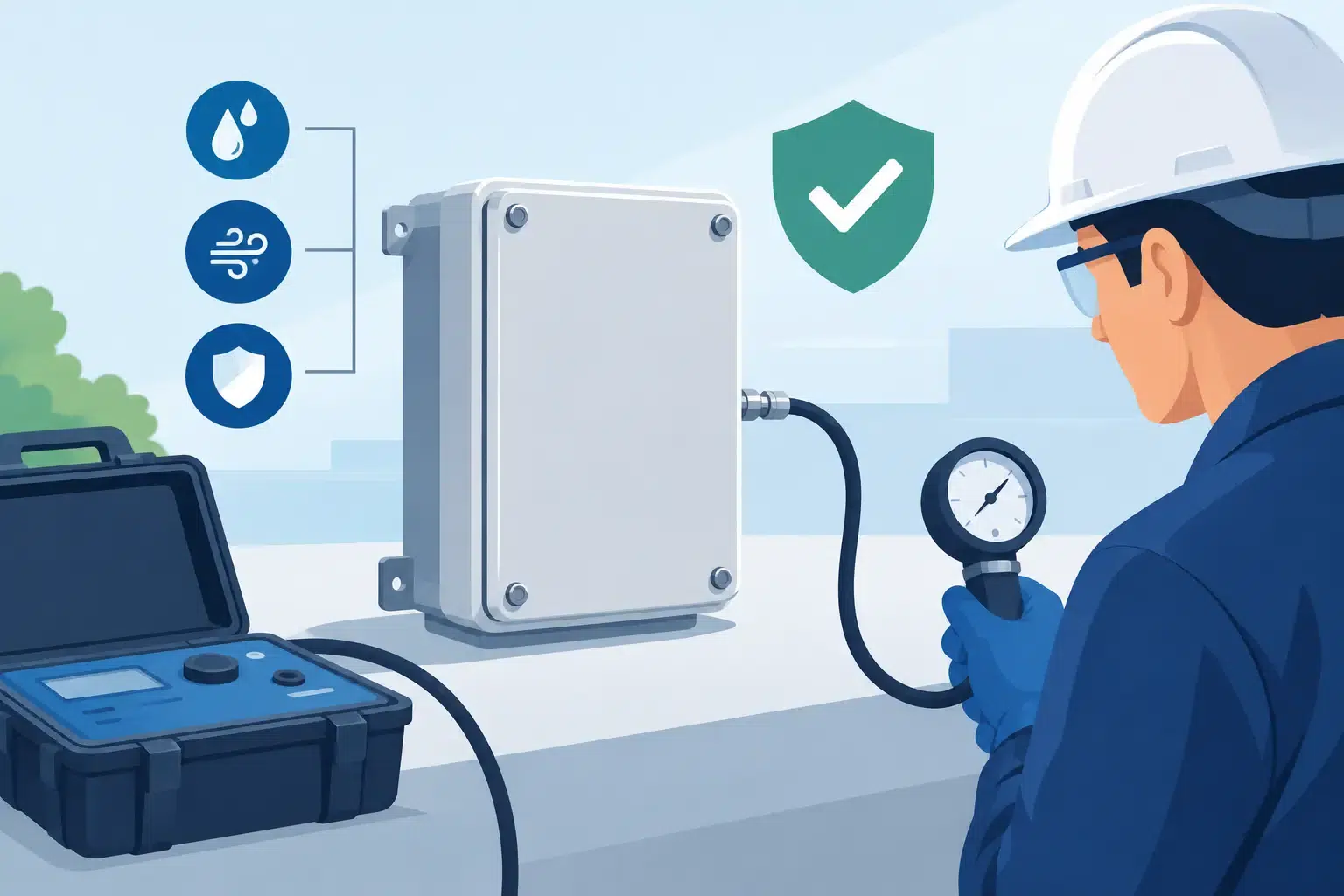
Before installation, a specialist should assess walls, ceilings, floors, doors, dampers, cable routes and other penetrations. Following installation, a room-integrity test, often called a door-fan test, helps confirm whether the enclosure will retain the agent for the required hold time. If the room leaks excessively, the system may discharge correctly but fail to deliver the intended protection.
Pressure relief also needs careful consideration. Releasing gas into a sealed enclosure can create pressure changes that could damage lightweight partitions, suspended ceilings or doors. Correctly sized over-pressure vents manage this effect and form an essential part of a properly engineered installation.
Detection, controls and safe discharge
Early, dependable detection is central to the performance of a clean agent system. Many critical rooms use a staged detection strategy, such as two independent detector signals before automatic release. This reduces the risk of an unwanted discharge while preserving the speed needed to intervene before a fire grows.
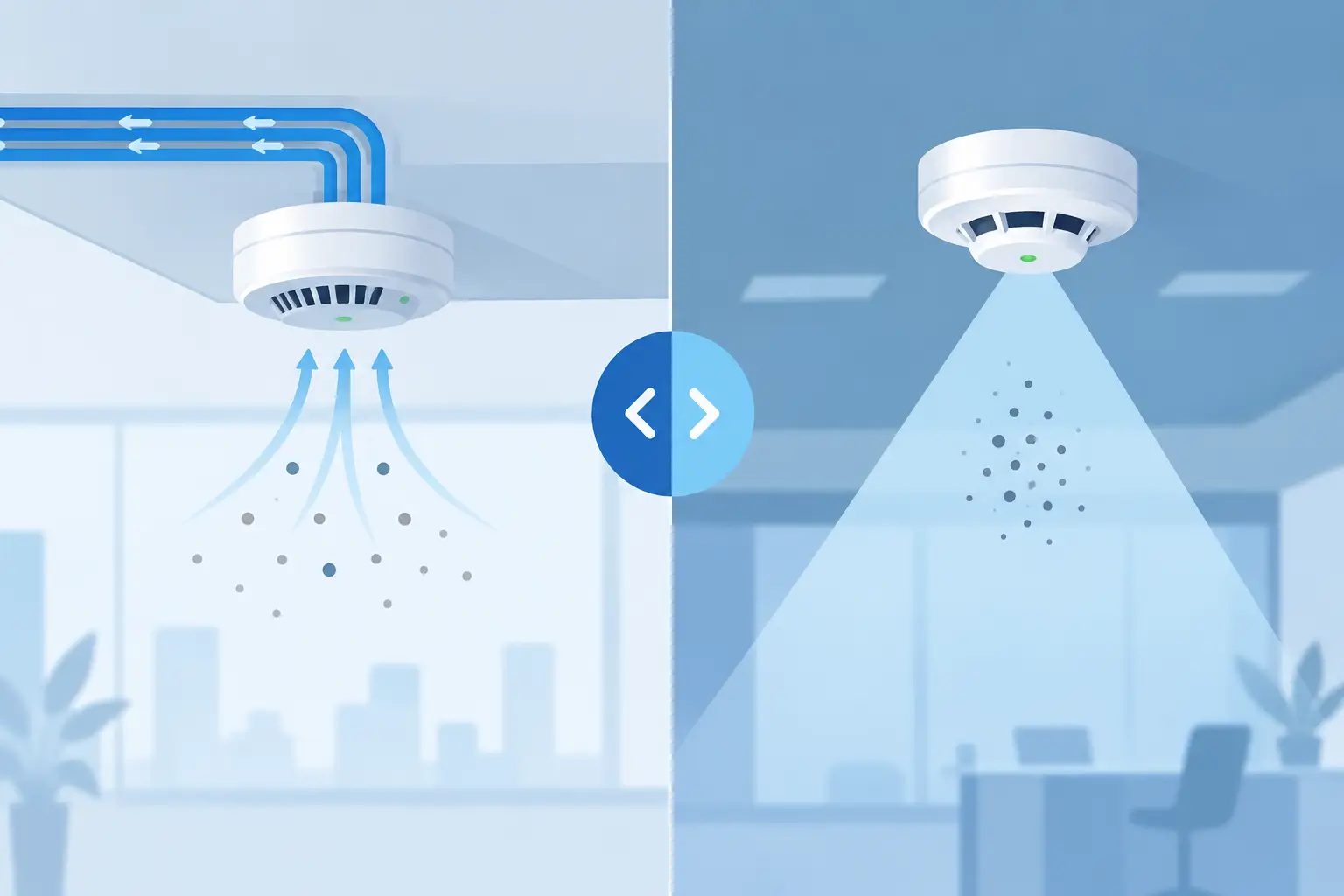
Very early warning smoke detection, including aspirating systems such as VESDA, can identify small quantities of smoke before conventional point detection operates. It can be particularly valuable in data and electrical environments, where an overheating connection or failing component may give warning well before visible flame develops.
The release sequence should be designed around how the room is occupied. Audible and visual alarms, time delays, manual release stations, abort controls and shutdown interfaces all require clear coordination. Air-conditioning and ventilation systems may need to shut down or dampers close before discharge, otherwise agent concentration can be lost through the ventilation path.
For occupied spaces, life safety comes first. Agent concentration, exposure time, means of escape, warning arrangements and operating procedures must be assessed against the relevant guidance. Clean agents are often selected partly because they can be used in normally occupied enclosures at designed concentrations, but this does not remove the need for a project-specific safety assessment.
Choosing between clean agents and inert gases
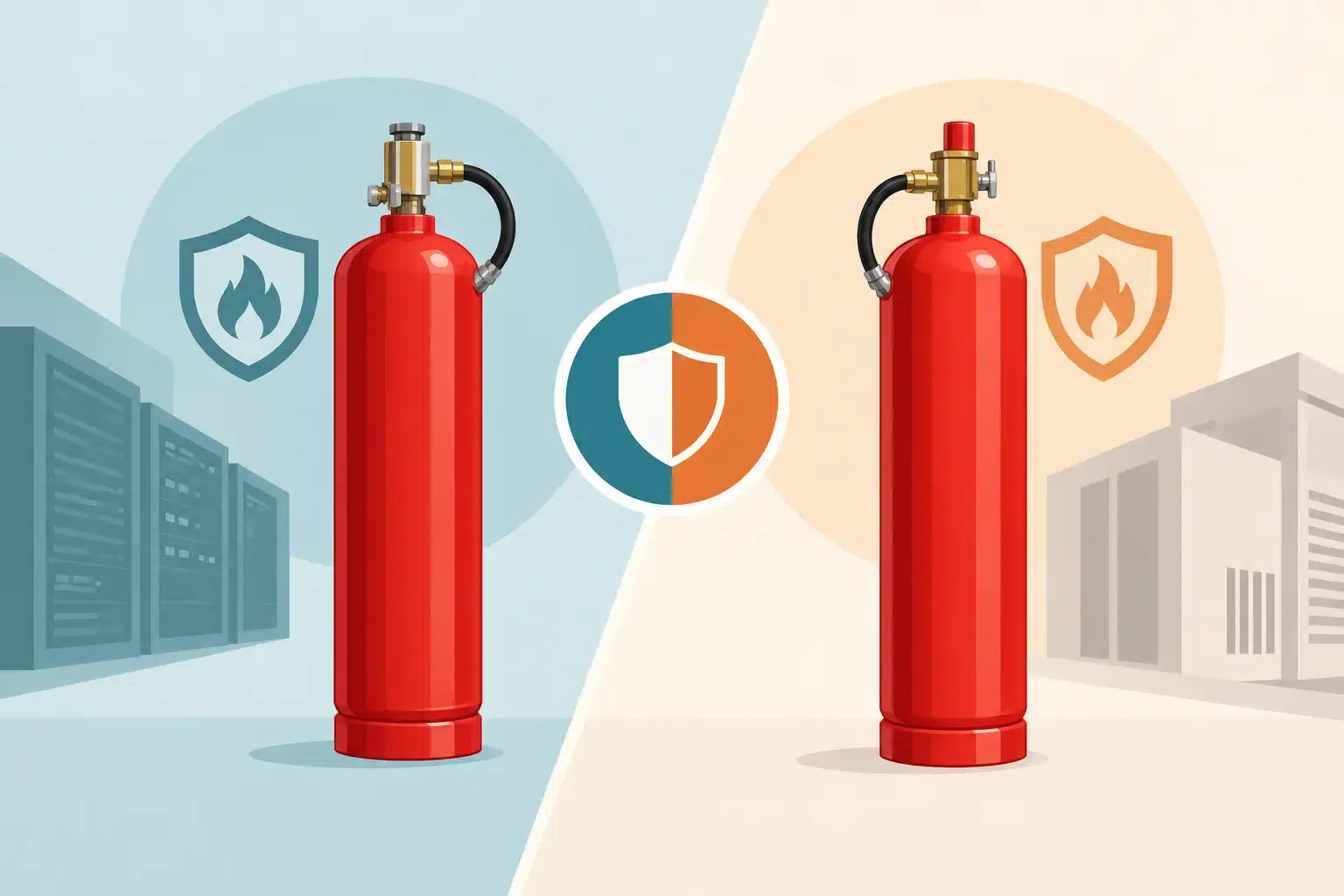
There is no universal “best” gaseous suppression agent. Clean agents can offer a compact cylinder footprint and lower storage pressure than inert gas systems, which can be useful where plant-room space is limited. They are also widely understood in applications where rapid restoration of equipment is a priority.
Inert gas systems, including IG55, IG541, IG01 and IG100, reduce oxygen concentration to a level at which combustion cannot continue. They need more cylinder storage volume, but may be preferred where an organisation’s environmental policy, client specification or long-term agent strategy points towards an inert solution.
Environmental considerations deserve direct discussion. HFC-based agents remain subject to regulatory and market considerations, and their suitability can depend on the project, availability and the operator’s environmental commitments. FK-5-1-12-based systems have different environmental characteristics, while existing installations also require practical consideration of servicing, agent availability and future support. A responsible recommendation considers the whole lifecycle, not merely the lowest initial price.
Carbon dioxide remains highly effective for some unoccupied or tightly controlled industrial hazards, but its life-safety implications mean it is not a direct substitute for a clean agent system in normally occupied rooms. The right decision follows a risk assessment, not a product preference.
Standards-led design is not paperwork
A suppression system is only as effective as the engineering behind it. Design should account for the fire hazard, enclosure volume, ceiling voids, floor voids, obstructions, nozzle locations, cylinder storage, pipework routing and the required extinguishing concentration. A quick volume calculation alone is not enough.
In the UK, clean agent systems are typically designed and installed in accordance with applicable standards such as BS EN 15004 and ISO 14520, alongside the requirements of the building’s fire strategy, insurer and any relevant client standard. The detection and control elements must also be coordinated with the appropriate fire detection, electrical and building-services requirements.
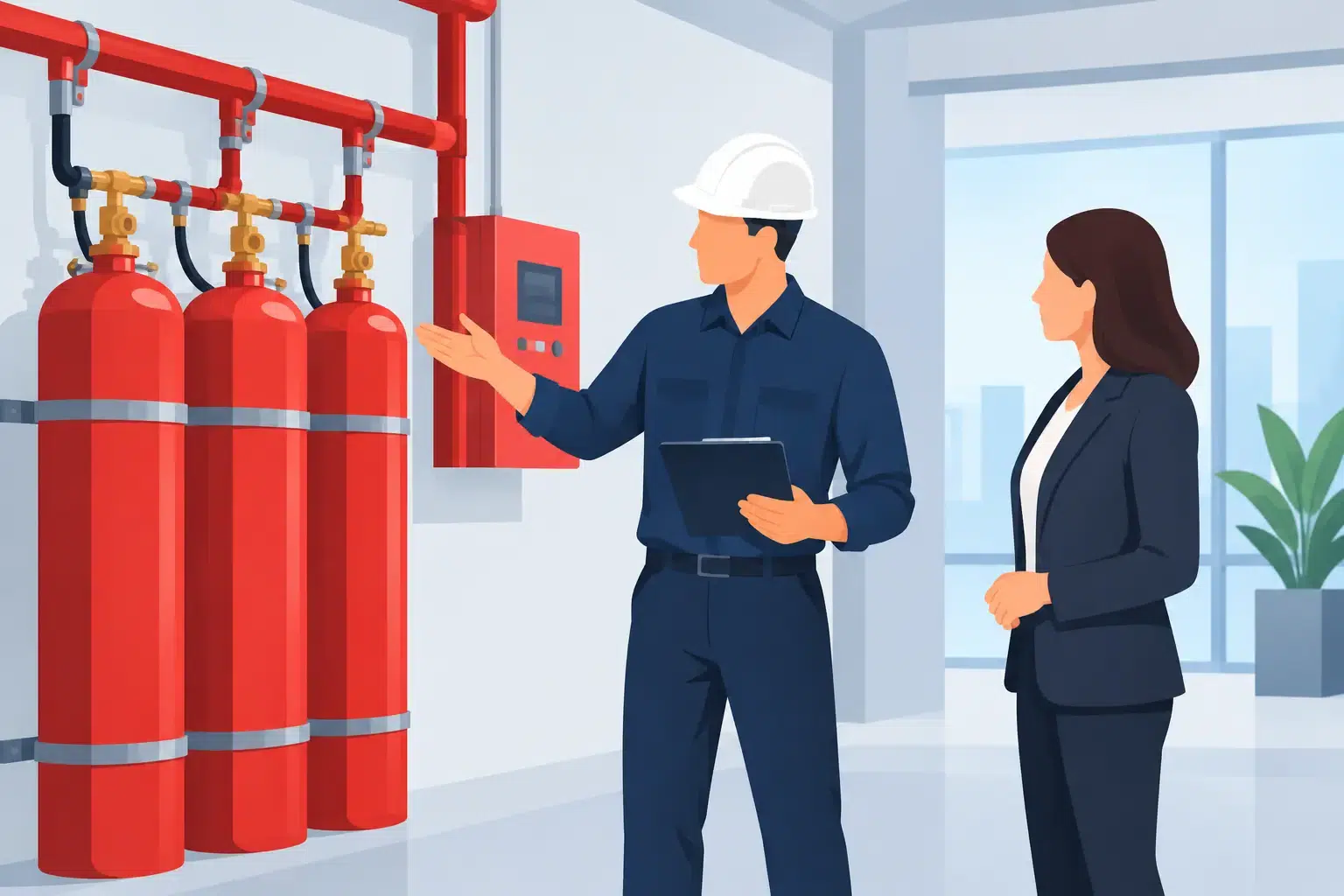
Commissioning should prove more than that the panel lights up. It should include functional testing of detection zones, alarms, release logic, interfaces, shutdowns, manual controls and fault monitoring. Site teams should understand what will happen during an alarm, how to respond, and who is authorised to reset or isolate the system.
Maintenance protects the original investment
Once installed, a clean agent system needs regular inspection and maintenance to remain dependable. Changes that appear minor can undermine performance: a new cable penetration, replacement door, altered ceiling, additional rack, damaged detector or disabled damper can all affect the protected enclosure or release sequence.
Planned servicing should check cylinders, pipework, nozzles, detection, controls, warning devices, interfaces and enclosure condition. Room-integrity testing should also be repeated at appropriate intervals and after material alterations. Where equipment is ageing or an agent strategy changes, a specialist can advise on repair, service exchange, upgrade or replacement options before an urgent fault becomes a business risk.
The most useful starting point is a practical discussion about the room, the assets it supports and the consequences of losing it. With the right agent, enclosure and maintenance plan in place, clean agent protection becomes a controlled response to a specific risk rather than a generic item on a compliance checklist.
Leave A Comment
You must be logged in to post a comment.