

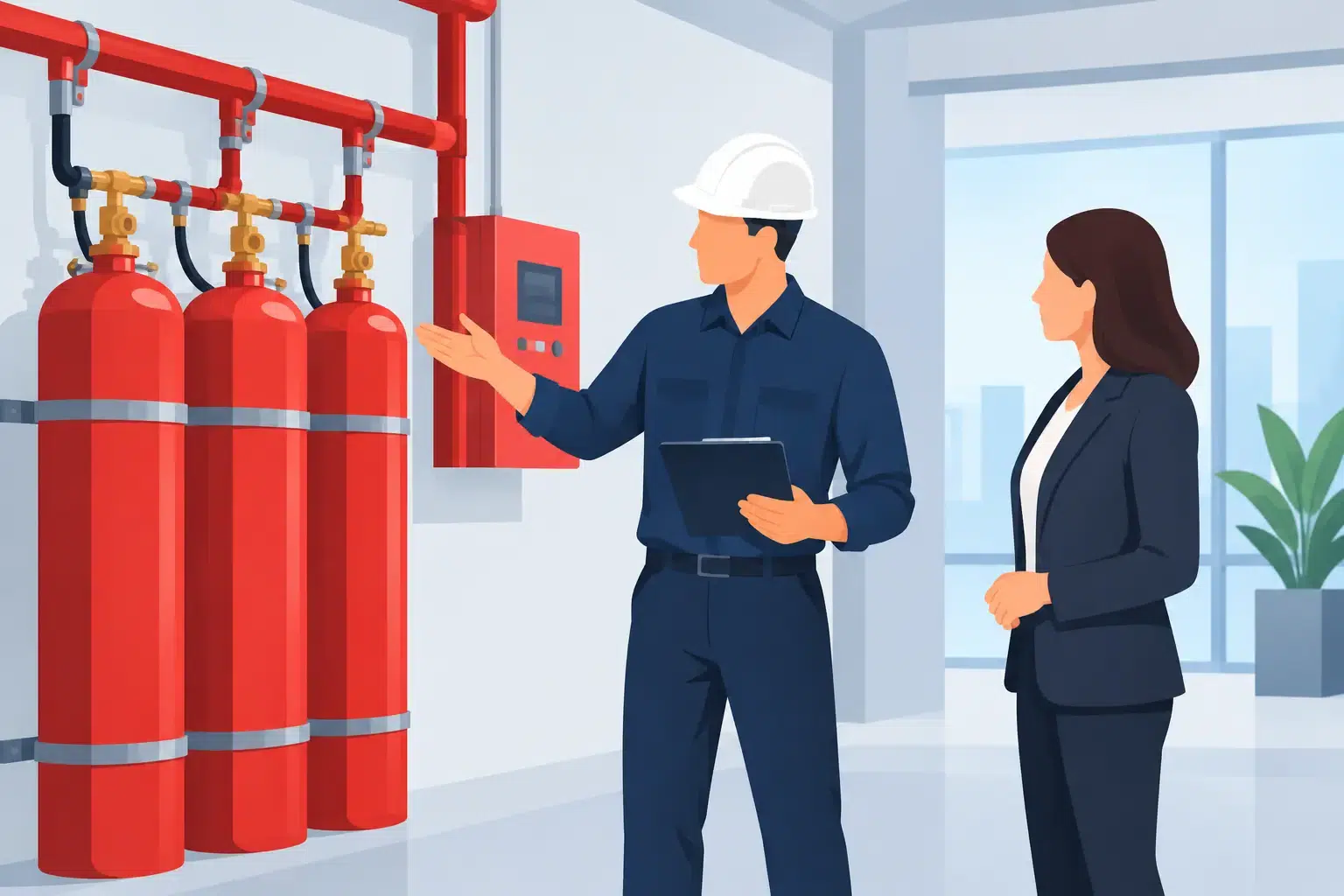
A server room can be back online after a minor electrical fault. It is far harder to recover after smoke contamination, sprinkler water damage or an uncontrolled fire has shut down the equipment that keeps the business operating. Fire suppression contractors should therefore be selected for more than their ability to fit cylinders, detectors and pipework. They need to understand what the protected space does, what failure would cost and how the complete system will perform when it is needed.
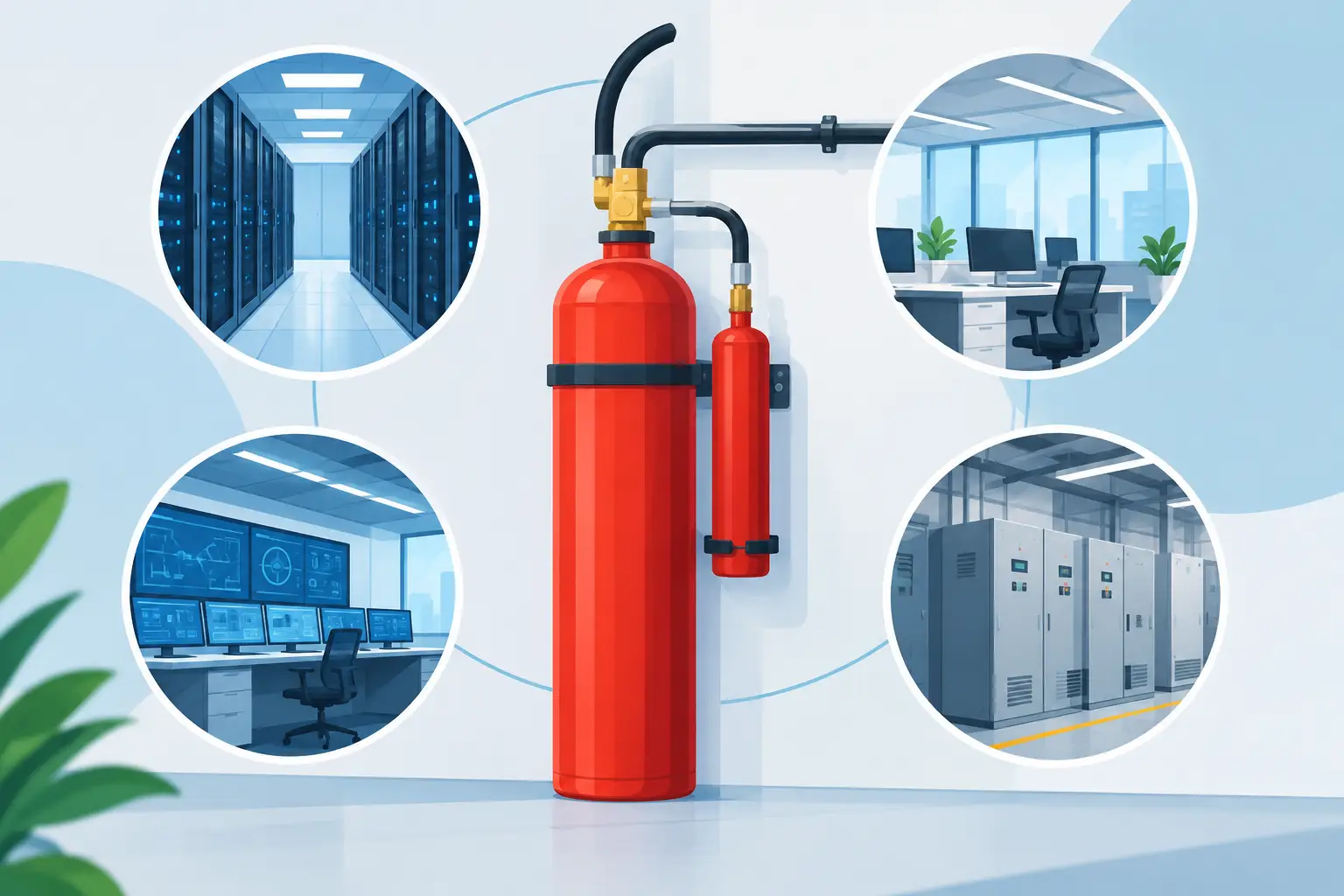
For data centres, control rooms, manufacturing plant, battery rooms, commercial kitchens and specialist equipment enclosures, automatic suppression is an investment in continuity. The right system can control a developing fire quickly while avoiding unnecessary damage to critical assets. The wrong specification, however, can leave gaps in protection, create costly rework or introduce an agent that does not suit the risk or occupancy.
What fire suppression contractors should own
A specialist contractor should take responsibility for the protection strategy from the first risk discussion through to ongoing maintenance. That means looking beyond the agent itself. Fire class, room volume, enclosure leakage, ventilation, electrical shutdowns, escape arrangements, occupancy, insurer conditions and environmental requirements all affect the final design.
A general fire-safety provider may be well placed to supply extinguishers, alarms or emergency lighting. A dedicated suppression contractor brings a different depth of engineering when a discharge must work first time, in a defined concentration, within a specific enclosure. This matters where a few minutes of interruption can mean lost production, damaged stock, contractual penalties or loss of customer confidence.
The contractor should also coordinate the interfaces that can make or break a system. Detection must trigger correctly, alarms and warning devices must provide people with enough notice to leave, ventilation and dampers may need to close, and plant shutdowns need to be planned around the operational risk. The releasing control panel is not an isolated item of equipment. It is part of a carefully sequenced response.
Start with the risk, not the catalogue
There is no single best extinguishing agent. A system for a normally occupied data hall has different priorities from one protecting an unoccupied industrial enclosure, a commercial kitchen or a flammable-liquid process. Sound advice starts with the fire scenario and the business consequence, then works towards the appropriate method of suppression.
Inert gas systems, including IG55, IG541, IG01, IG100 and INERGEN®, reduce oxygen concentration sufficiently to control combustion while maintaining conditions that allow people to evacuate safely when designed correctly. They can be a strong choice for areas containing electronic equipment and high-value assets, but cylinder storage space, structural loading and discharge pressures need consideration from the outset.
Clean-agent systems such as Novec 1230 and HFC227ea, also known as FM200 or FE227, are often considered where space is limited or rapid discharge is required. Agent availability, environmental policy and the expected service life of the installation should be discussed openly, particularly where an organisation has specific sustainability commitments or insurer expectations.
CO2 remains highly effective for certain industrial hazards, particularly where people are not normally present during discharge. Its life-safety implications are significant, so the design must give particular attention to safeguards, warning arrangements, lock-off procedures and operating discipline. Wet-chemical systems are purpose-designed for commercial cooking risks, while dry-powder solutions can suit particular process and machinery applications. The practical question is not which system is most familiar. It is which system addresses the actual hazard without creating unacceptable operational compromises.
Detection and enclosure performance are part of suppression
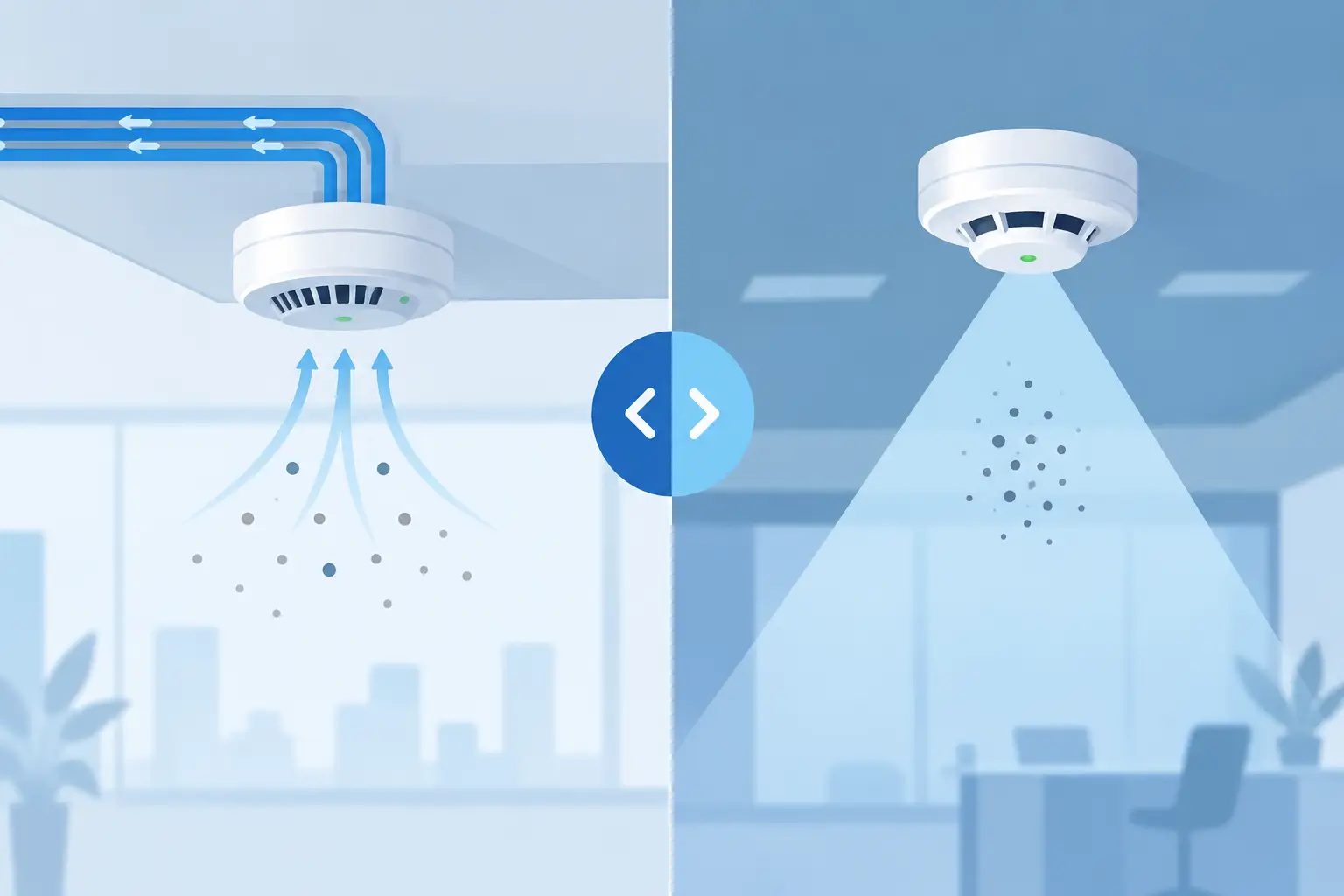
An extinguishing agent cannot protect a room effectively if a fire is detected too late or the required concentration cannot be held. Early warning systems, including aspirating smoke detection such as VESDA, can identify incipient smoke before a conventional detector responds. Flame detection may be appropriate where a flame can develop rapidly or smoke detection is less reliable.
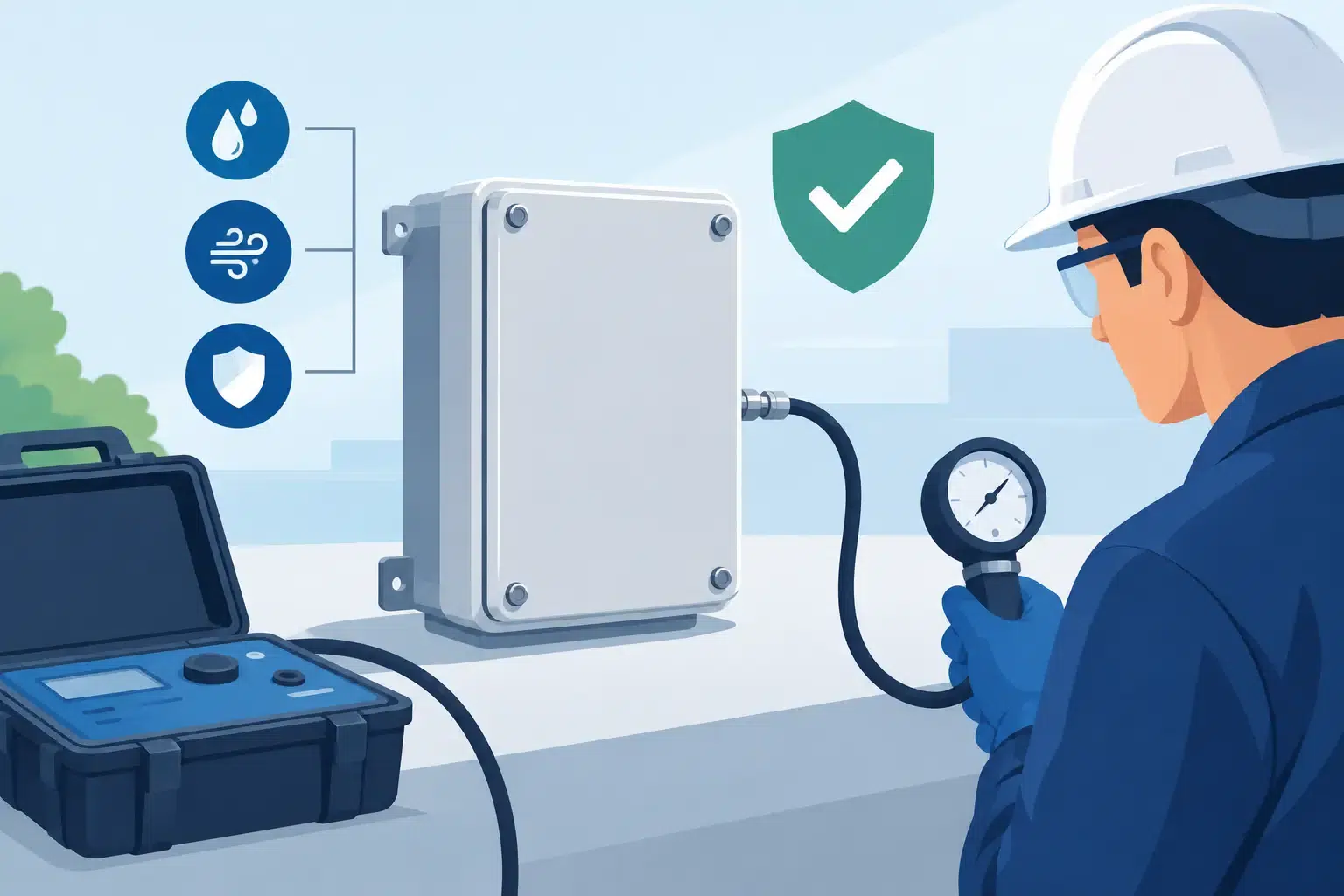
For total-flooding gaseous systems, room integrity is equally important. Open cable penetrations, poorly sealed ceiling voids, door gaps and unplanned ventilation paths can allow agent to escape before it has completed its hold time. A competent contractor will identify sealing requirements during design, arrange room-integrity testing after installation and explain what building changes could affect future performance.
This is one reason price comparisons based solely on cylinder quantity or installation labour can be misleading. A lower initial figure may exclude building works, cause-and-effect programming, over-pressure vents, testing, commissioning or the remedial work needed to achieve enclosure integrity. A complete scope is easier to budget for and considerably easier to manage.
Design for the site that exists
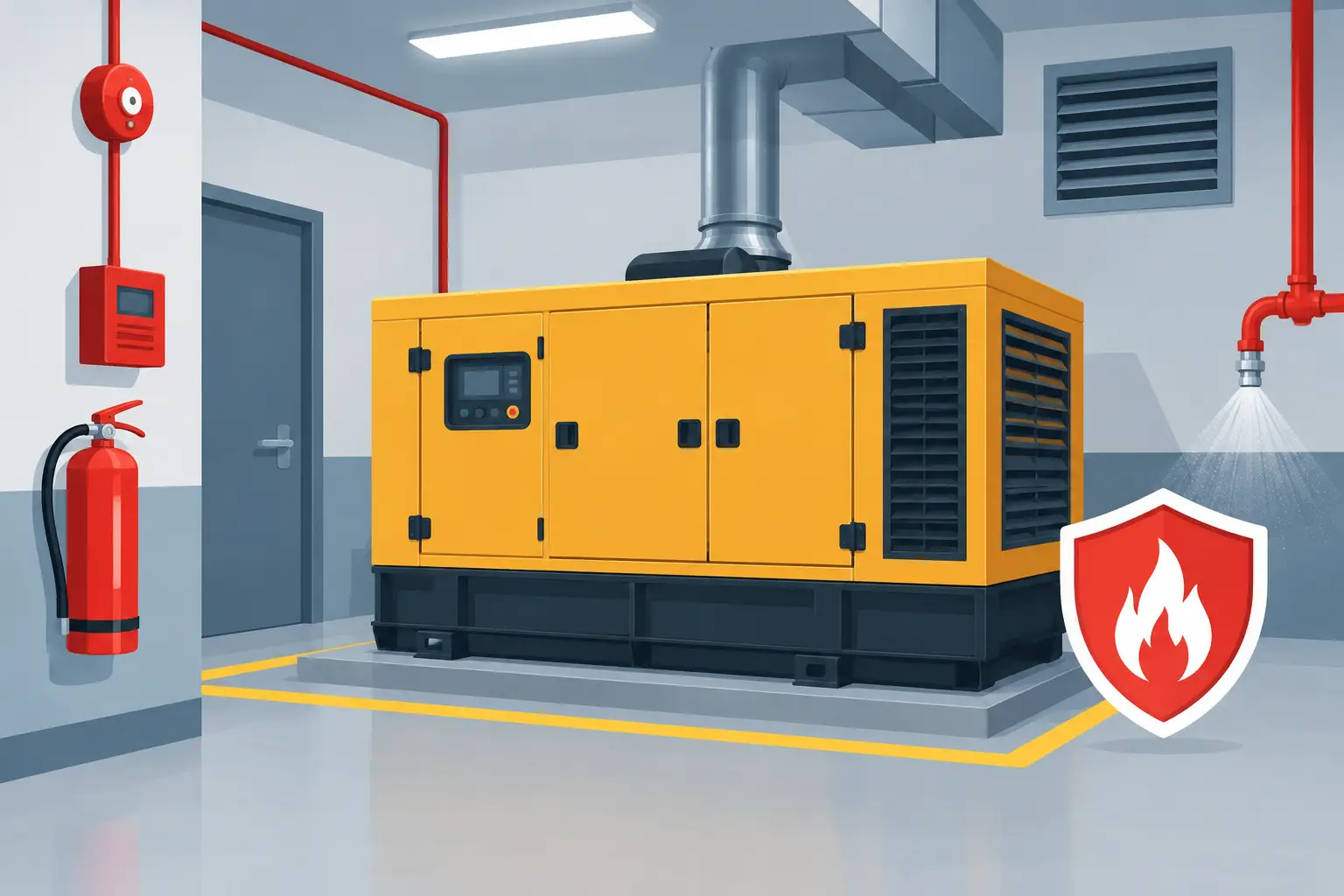
The strongest designs reflect real operating conditions rather than ideal drawings. Is the room occupied around the clock? Are doors routinely held open? Is there a raised floor or ceiling void? Does a generator, air-conditioning unit or process machine introduce airflow that could spread smoke or disrupt agent concentration? Can cylinders be located nearby and safely accessed for inspection?
These details shape system performance and installation practicality. They also affect downtime during works. In a live data centre or production facility, the contractor should plan installation in phases, coordinate isolation periods and protect the operation from avoidable disruption. Commissioning is not merely a final sign-off exercise. It should include functional testing, demonstration of the sequence of operation and a clear handover to the people who will manage the system day to day.
Relevant UK, European and NFPA standards provide the framework for system design, installation and maintenance, but standards compliance should not become a vague promise. Ask how the contractor will apply the relevant standard to the particular room, agent and hazard. The answer should be clear enough for facilities, operations and insurance stakeholders to understand.
Questions to ask before appointing a contractor
Before making a decision, it is worth testing whether the proposed supplier can support the full life of the system rather than just the installation package. Useful questions include:
- Who will complete the risk assessment, detailed design and cause-and-effect schedule?
- Which extinguishing agent is proposed, and why is it suitable for the hazard, occupants and continuity requirements?
- What room sealing, ventilation shutdown or over-pressure relief work is included?
- How will the system be tested, commissioned and demonstrated before handover?
- What inspection, maintenance, repair and emergency support will be available after installation?
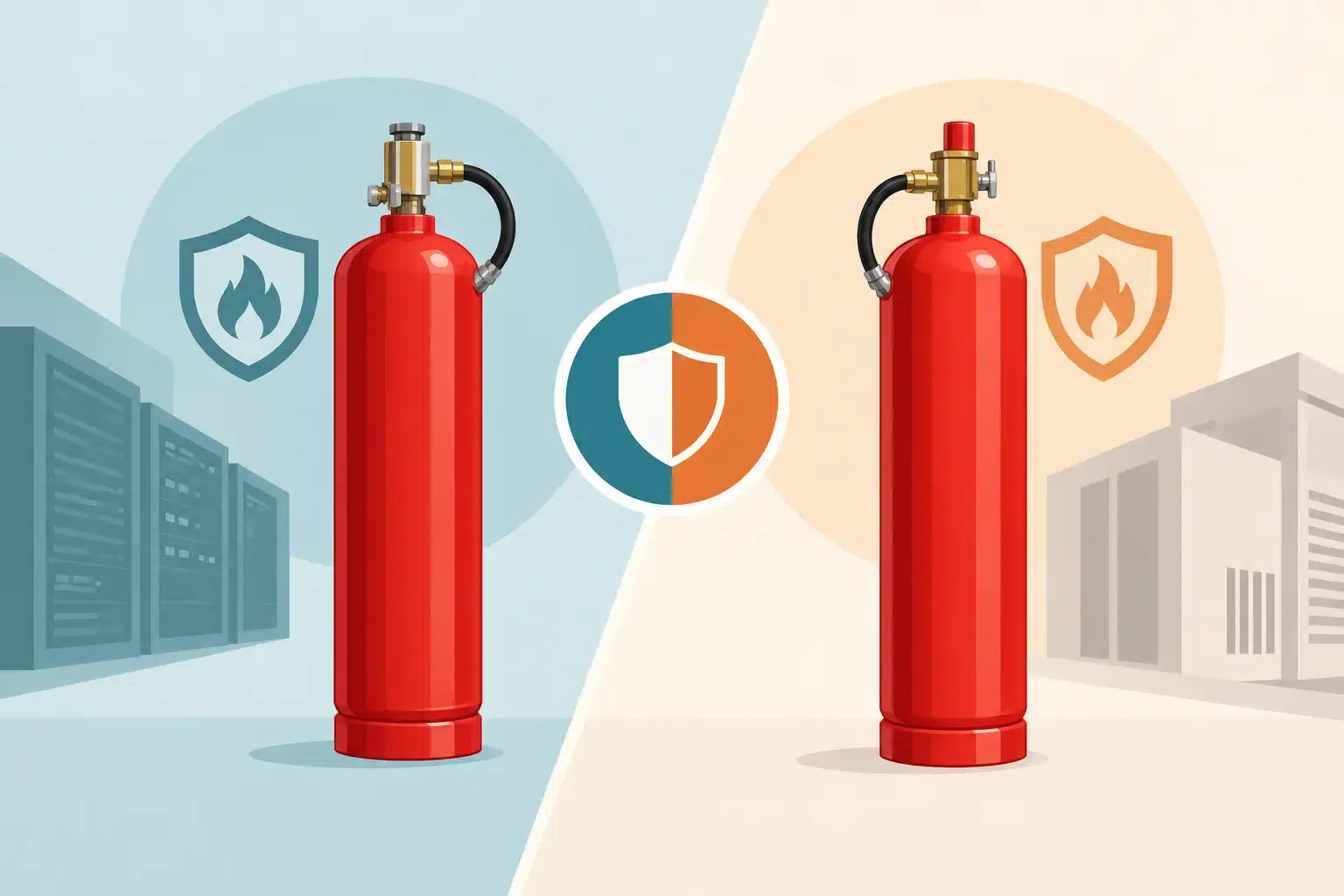
The quality of the response often reveals more than a proposal document. A specialist should be willing to explain trade-offs. For example, inert gas may offer a preferred environmental route but require more cylinder space, while a clean agent may better suit a constrained technical room. A contractor who presents only one option without discussing the site conditions may be specifying around their stock rather than your risk.
Maintenance protects the original investment
Suppression systems are life-safety infrastructure, not fit-and-forget equipment. Cylinders, actuators, detection devices, control panels, warning signs, manual release stations and interfaces all need planned inspection and testing. The enclosure itself also needs attention, particularly after IT changes, cable installations, refurbishments or alterations to air-conditioning.
A maintenance provider should know the system installed, maintain accurate records and be able to respond when a fault threatens protection availability. Service exchange arrangements, access to replacement components and a clear escalation route can be as valuable as the original installation when an operational issue arises. If a system has discharged, the recovery plan should cover inspection, agent replacement, reset, investigation and a return to protected status without unnecessary delay.
Active Fire Suppression Ltd approaches these projects as an integrated engineering responsibility: from early discussions and technical design through installation, room-integrity testing, commissioning and long-term support. That continuity helps prevent important details being lost between survey, installation and maintenance teams.
When critical assets or processes are at stake, appoint a contractor prepared to examine the difficult details before a fire exposes them. A well-designed system should give your team confidence to keep operating, not leave them wondering whether protection will perform when it matters most.
Leave A Comment
You must be logged in to post a comment.