


A protected server room can look complete long before it is ready to protect the business. Cylinders may be installed, detection may be live and the control panel may show no faults, yet a change to the room layout, cable routes or ventilation can prevent an FM200 system from holding the required extinguishing concentration. That is why FM200 compliance questions need to be addressed as an operational issue, not treated as paperwork at handover.
FM200, also known as HFC227ea or FE227, is a clean-agent suppressant widely used where water damage, smoke contamination and downtime pose major risks. It can be an effective choice for data rooms, control rooms, archives and specialist equipment spaces, but only when the system, enclosure and maintenance arrangements work together.
FM200 compliance questions to ask before sign-off
The first question is not simply whether the equipment carries an approval mark. It is whether the installed system has been designed for the specific hazard, room volume and operating conditions it is expected to protect.
In the UK, gaseous fire suppression systems are commonly designed, installed and maintained with reference to the BS EN 15004 series, alongside the applicable manufacturer instructions and project specification. The wider fire-risk duties affecting a premises, insurer requirements and any client standards also matter. A system can meet a design standard on paper but still be unsuitable if its interfaces, enclosure or operational procedures have been overlooked.
Is the agent quantity calculated for the actual room?
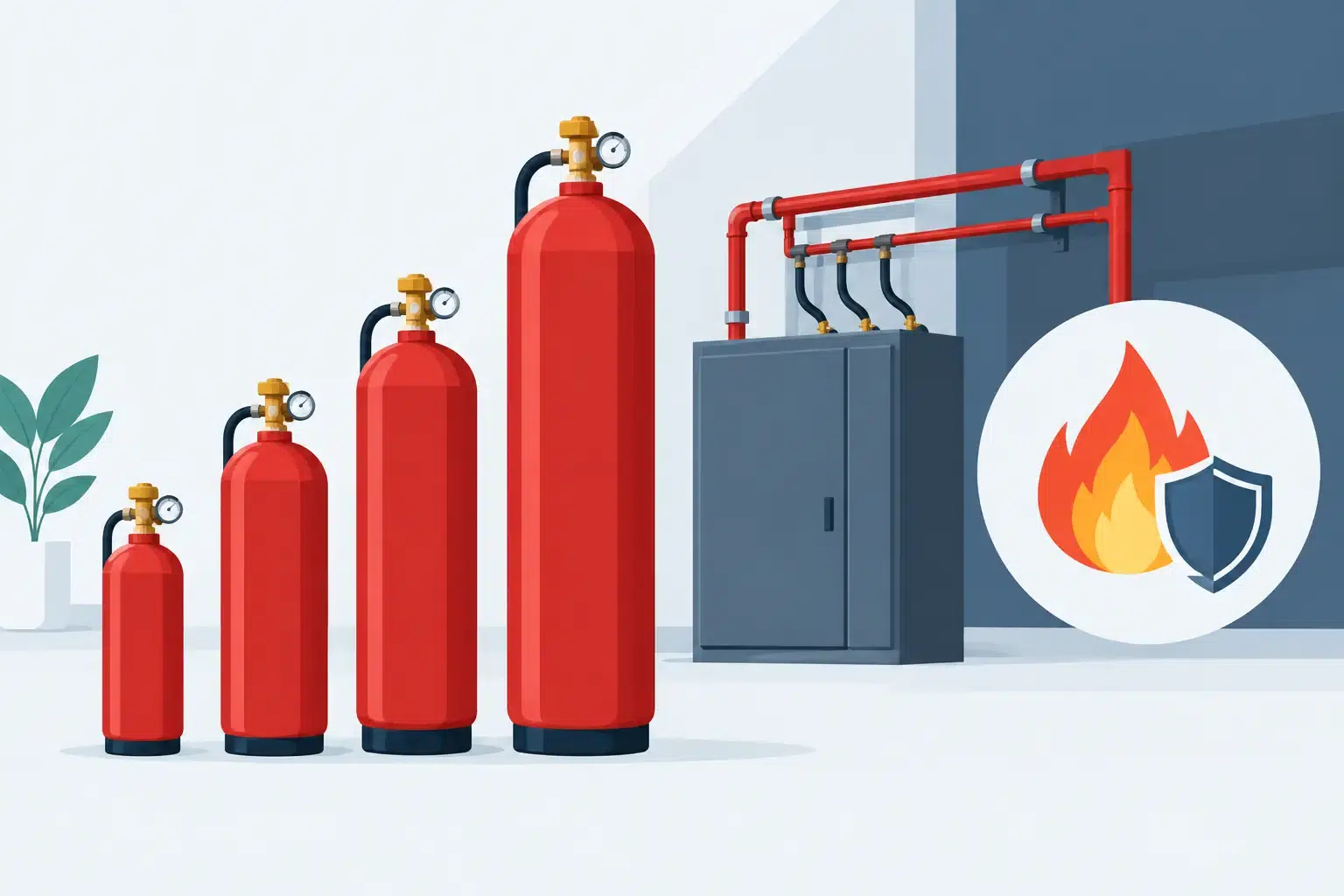
FM200 cylinder quantities are calculated to achieve a design concentration in a defined volume. The calculation must account for the protected room, raised floors, suspended ceilings and connected voids where agent could travel. It must also consider ambient temperature and the anticipated fire risk.
This is a frequent point of failure after a refurbishment. A new ceiling void, an equipment enclosure, a partition wall or a relocated air-handling unit can change the protected volume or create a path for agent loss. Treat any material alteration to the room as a reason to review the suppression design, rather than assuming the original cylinder bank remains adequate.
The fire class is relevant too. A system protecting electrical equipment or a server environment may have very different assumptions from one protecting a process hazard involving flammable liquids. Agent selection and concentration should be based on the risk assessment and engineering design, not on a preference for a familiar product name.
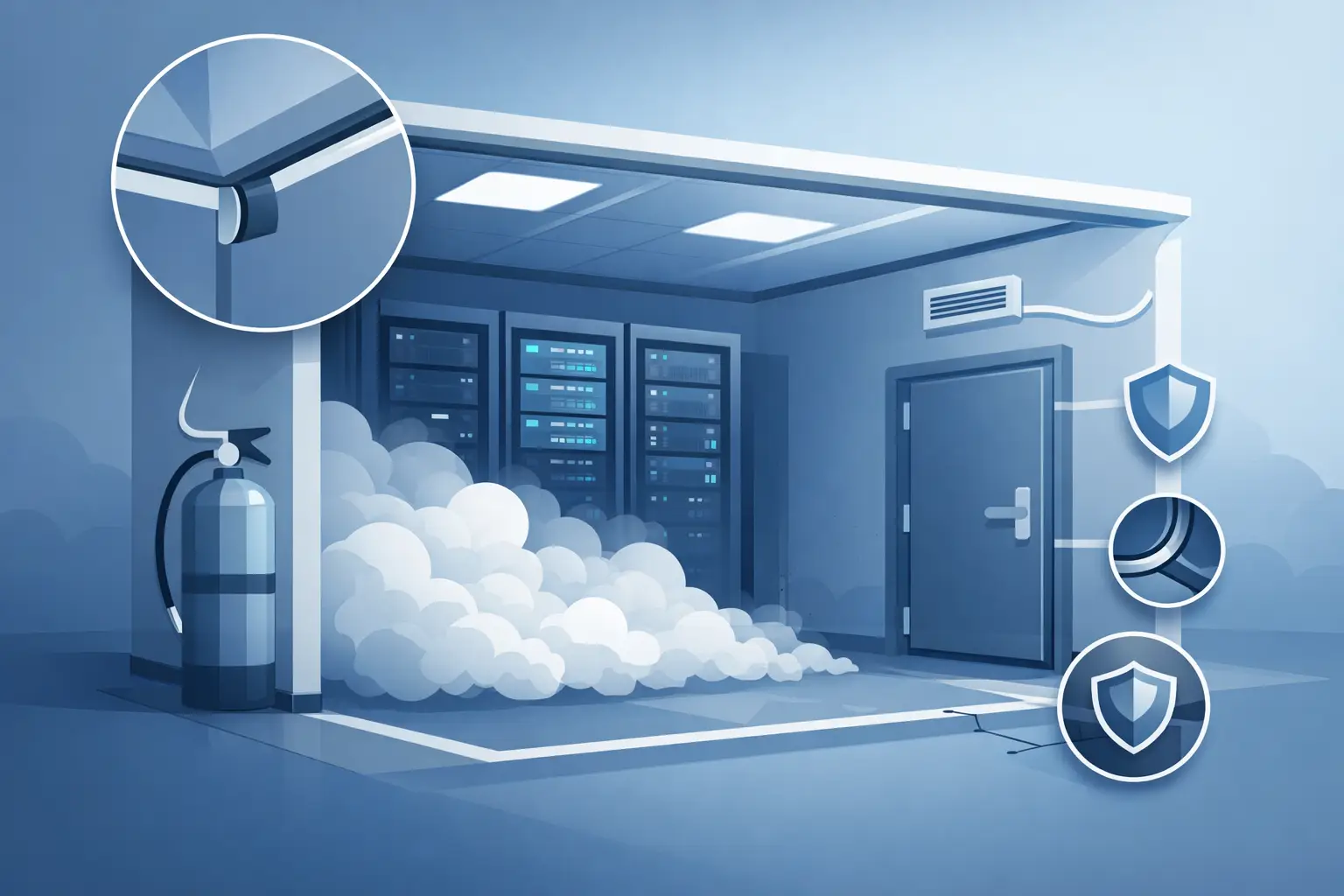
Will the enclosure retain the agent long enough?
Achieving the correct concentration at discharge is only part of the requirement. The enclosure must retain that concentration for the required hold period, commonly assessed against a ten-minute retention target where applicable to the system design standard and hazard.
A room-integrity test, often called a door fan test, assesses likely leakage from the protected enclosure. It can reveal problems around door seals, cable penetrations, floor voids, dampers and service openings before a fire event exposes them. It does not replace correct system design or commissioning, but it is essential evidence that the room can support the design intent.
Room integrity is not a one-off task. New containment, data cabling, pipework and building-services work can compromise it quickly. Facilities teams should ensure that contractors understand which penetrations require approved sealing and that changes are recorded for review.
Are ventilation shutdown and pressure relief addressed?
Open ventilation can remove extinguishant from the room at the point it is most needed. The system cause-and-effect strategy should therefore identify air-conditioning units, supply and extract fans, dampers and other openings that must shut down or close before discharge. The same logic must be proved during commissioning, not merely shown on a drawing.
Conversely, a rapid gaseous discharge can create pressure changes within the enclosure. Where calculations identify the need, correctly sized over-pressure relief vents protect the room structure and help preserve the performance of the suppression system. The vent location, air path and condition need consideration throughout the life of the installation, particularly where external building works may affect the discharge route.
Is the release sequence safe for people in the room?
FM200 systems must be designed with occupant safety in mind. Detection, warning devices, time delays, manual release controls, abort arrangements and emergency procedures need to reflect how the room is actually used.
For an intermittently occupied electrical room, the approach may differ from a continuously staffed control room. The design must consider exposure limits, egress routes and the time people need to leave safely. Audible and visual pre-discharge warnings should be recognisable in the local environment, including in noisy plant spaces or where hearing protection is routinely worn.
Staff do not need to become suppression engineers, but they should know what a pre-discharge warning means, how to leave the area and who is authorised to investigate after an event. A demonstration at handover, followed by sensible refresher awareness, turns a technically compliant system into a usable life-safety measure.
FM200 compliance questions for maintenance and records
A compliant installation needs ongoing attention. The responsible person and facilities team should be able to show what has been installed, how it is maintained and whether changes have affected its performance.
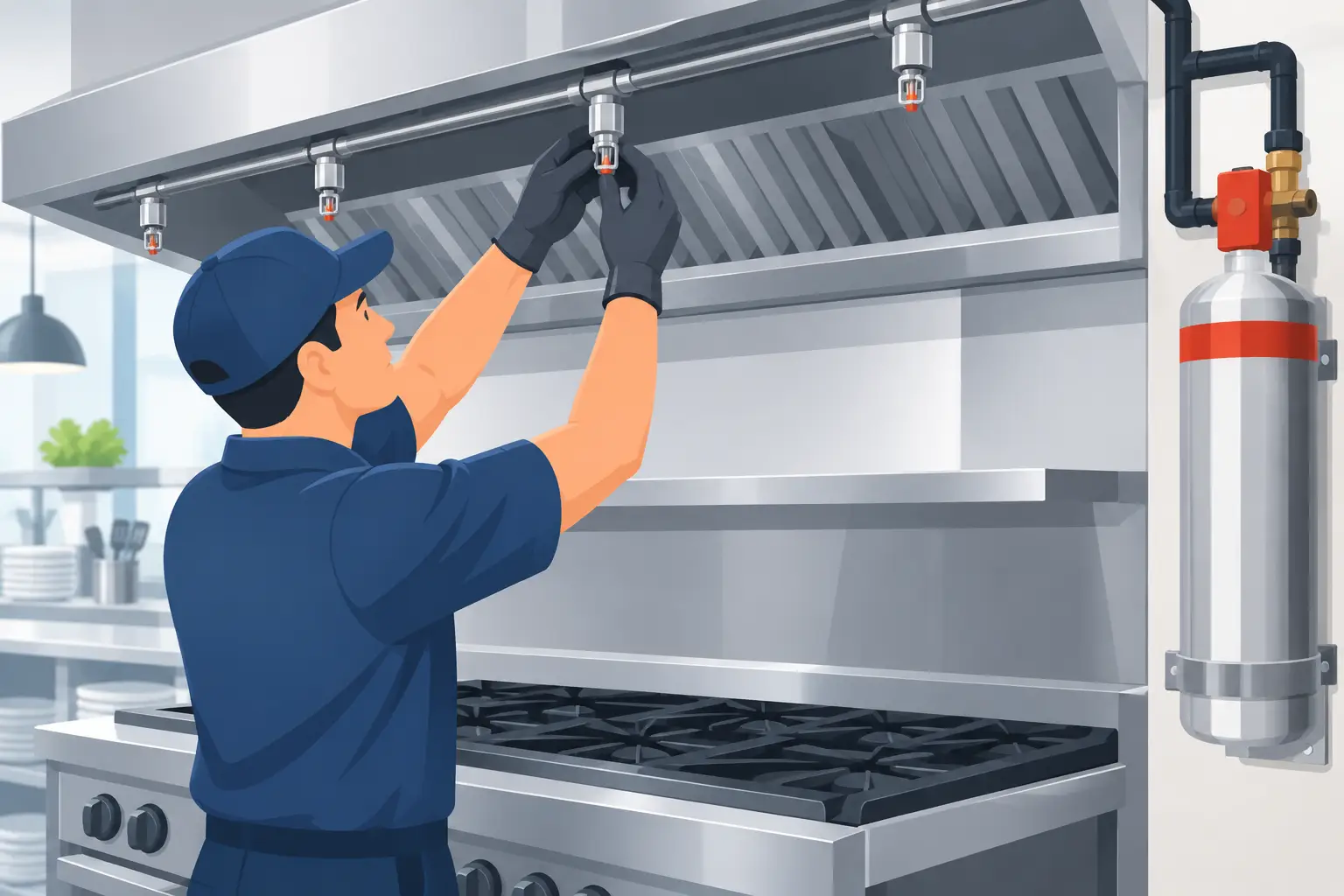
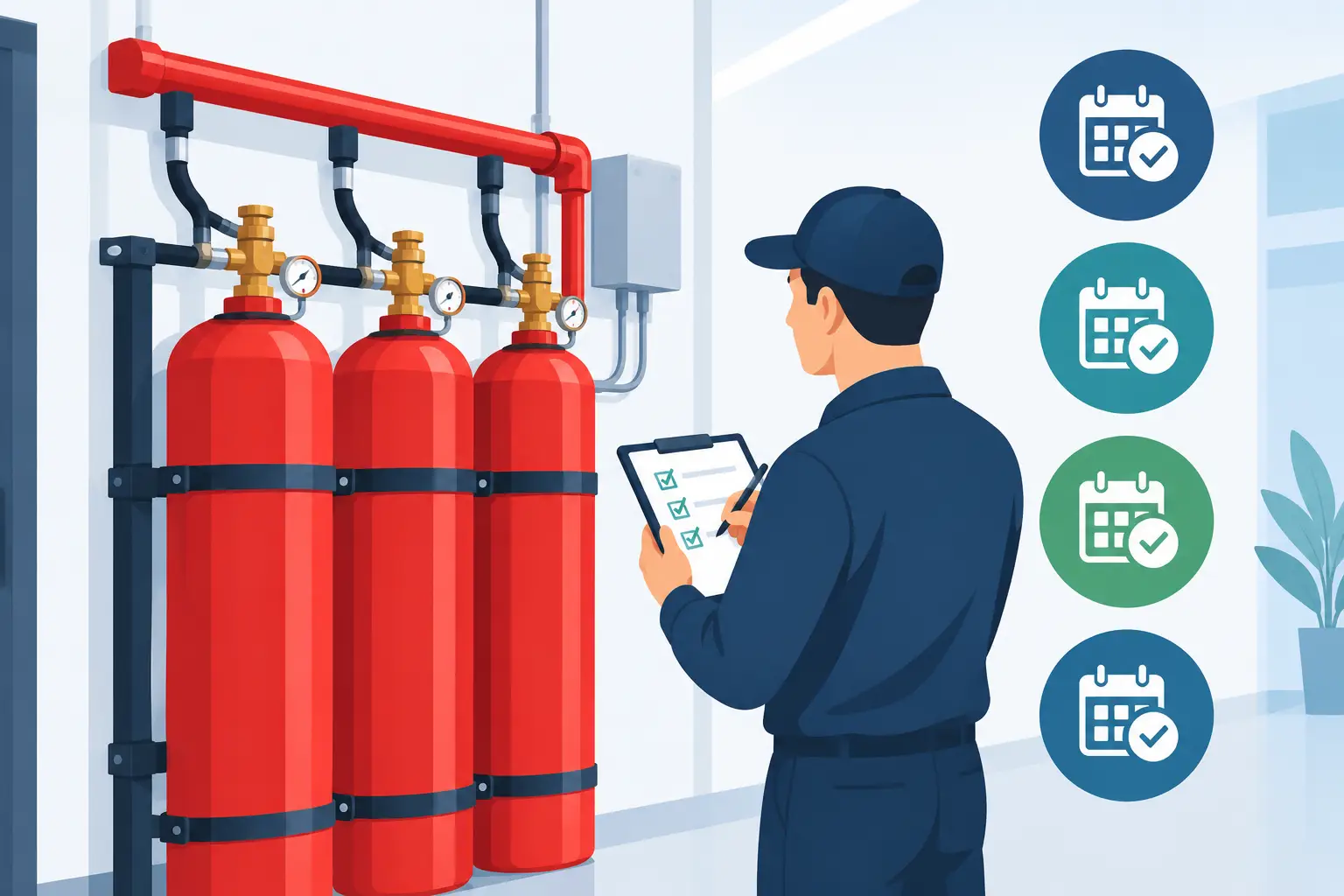
Maintenance normally includes inspection of cylinders, valves, pipework, nozzles, detection equipment, control panels, alarms, interfaces and manual controls. Checks should follow the relevant standard, manufacturer guidance and the maintenance programme for the site. Faults such as low cylinder pressure, disabled detection zones, damaged nozzles or failed interface relays should be resolved promptly, with clear records of the action taken.
The following documents should be available and kept current:
- system design and as-fitted drawings, including protected volumes and nozzle locations;
- hydraulic and agent quantity calculations, plus commissioning and functional test records;
- room-integrity test reports and details of subsequent enclosure alterations;
- maintenance records, fault reports, cylinder service history and training or demonstration records.
These records are useful for audits and insurers, but their greater value is practical. When a control panel fault occurs at 2am or an IT upgrade changes the room, accurate records allow the right decision to be made quickly.
What are the UK F-gas considerations?
HFC227ea is a fluorinated greenhouse gas. Its use brings environmental and lifecycle considerations that should be considered alongside fire performance, occupant safety and continuity requirements.
The applicable UK F-gas regime places duties around the prevention of emissions, appropriate servicing and, in certain circumstances, leak checking by suitably certified personnel. Exact obligations depend on the equipment and refrigerant quantity expressed in carbon dioxide equivalent, so this should be verified against the current regulations rather than assumed from a generic maintenance schedule.
For many existing FM200 installations, the immediate question is not whether a system must be removed, but whether it is being maintained responsibly and whether future agent availability, environmental policy and replacement strategy have been considered. A like-for-like refill may be appropriate in some cases; in others, an inert gas or alternative clean-agent solution may better suit the organisation’s long-term requirements. The right answer depends on room constraints, cylinder storage, discharge pressures, occupancy, sustainability objectives and the consequences of downtime.
When should an FM200 system be reviewed?
Review is sensible after any change that could alter the hazard, enclosure or system operation. Typical triggers include a server-room expansion, new penetrations, revised ventilation, a change in occupancy, an altered fire load, replacement control equipment or repeated integrity-test failures.
It is equally sensible to review a system before a lease event, insurer inspection, major IT migration or planned refurbishment. Finding that a pressure vent is undersized or that a damper does not close is far less disruptive before critical equipment is installed than after a fire or failed test.
Active Fire Suppression approaches these reviews as an engineered protection question rather than a box-ticking exercise. The aim is to establish whether the system can detect, warn, release and retain agent as designed, while allowing the site to recover quickly from an incident.
A well-maintained FM200 system should give facilities and operations teams confidence without demanding constant attention. The most useful next step is often to walk the protected room with the design records in hand, identify what has changed since commissioning and resolve the gaps before they become an emergency.
Leave A Comment
You must be logged in to post a comment.