

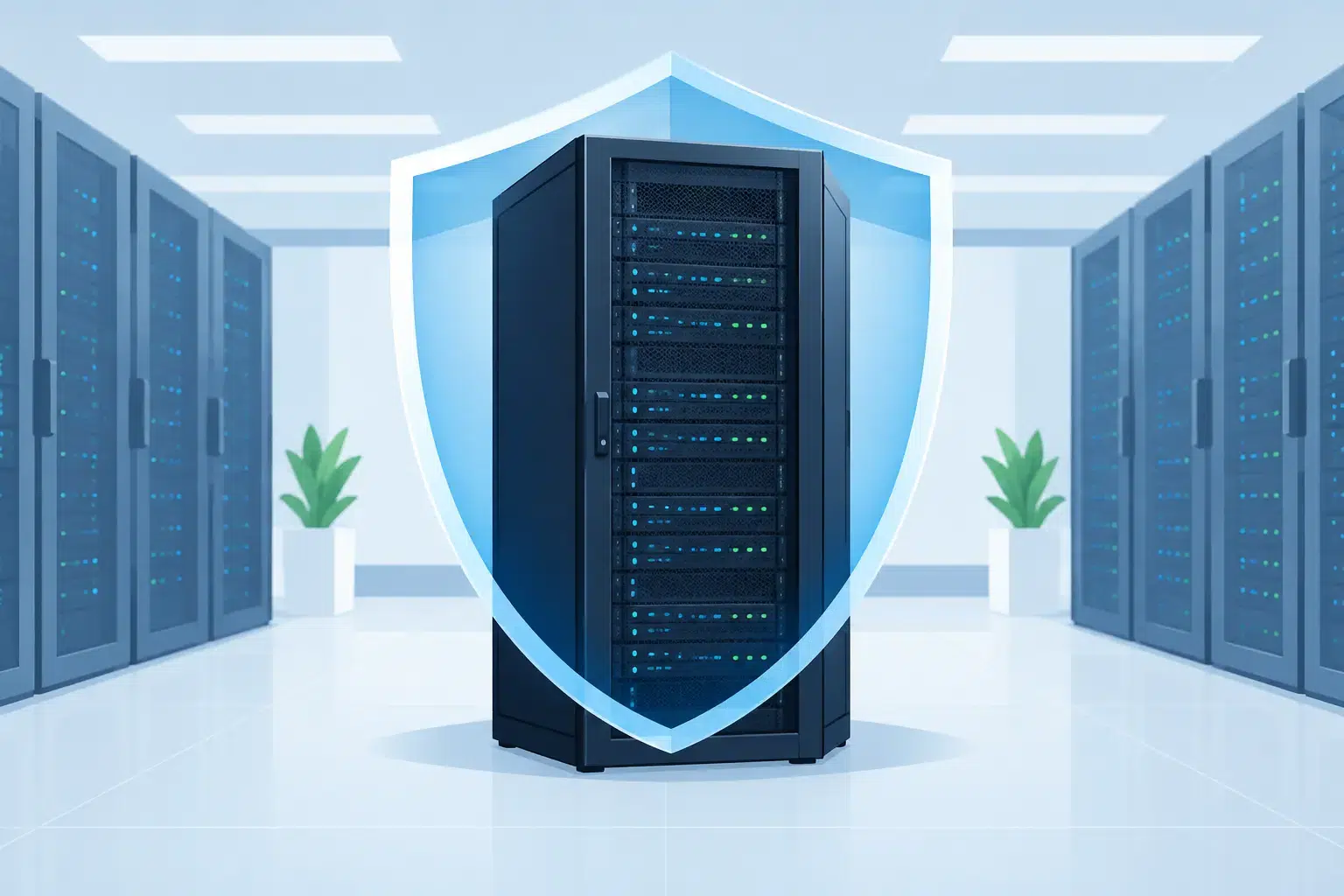
A single server rack can hold the systems that keep an entire site trading: communications, security, production control, customer data and remote access. The best server rack protection is therefore not simply a fire extinguisher beside the cabinet. It is a coordinated system that detects a developing fault early, suppresses fire automatically and limits collateral damage before a small incident becomes a prolonged operational outage.
For UK facilities managers and IT leaders, the right approach depends on the size of the room, the density of equipment, occupancy, insurer requirements and the consequence of downtime. Protection must also work with the building’s wider fire strategy, rather than create unnecessary disruption or conflict with other life-safety systems.
What the best server rack protection needs to achieve
A server rack fire can begin with overheating, failing power supplies, damaged cabling, battery faults or electrical arcing. By the time visible flame reaches a conventional point detector, smoke may already have contaminated equipment and caused service interruption. The first objective is early warning, giving the organisation a chance to investigate a fault or isolate affected equipment before fire takes hold.
The second objective is automatic intervention. Critical IT equipment is rarely attended continuously, and a fire can escalate rapidly outside normal working hours. Automatic detection and suppression reduces reliance on a person being present, recognising the alarm and using the right extinguisher safely.
Finally, protection must preserve recoverability. Water may be appropriate within the wider building strategy, but discharge directly onto live electronic equipment can create extensive secondary damage. A properly designed gaseous suppression system can extinguish or control a fire without leaving residue on servers, switches and storage equipment. That distinction can materially affect the time needed to return services to operation.
Room-level or rack-level protection?
The first design decision is whether the risk should be protected at room level, within individual cabinets, or by a combination of both. There is no universal answer.
Room-level suppression is often appropriate for a dedicated server room or data suite with a defined enclosure. The system discharges an extinguishing agent throughout the protected volume, addressing a fire in a rack, underfloor void, ceiling void or ancillary equipment within the room. This approach is particularly effective when the room is sealed and the organisation needs coverage for the whole IT environment rather than a single cabinet.
Rack-level suppression may suit a distributed estate, isolated high-density cabinets or locations where creating a sealed enclosure is impractical. Detection and discharge are focused inside the rack, which can limit the agent quantity required and contain an event close to its source. However, it does not automatically protect external UPS equipment, cable routes or a fire that develops outside the cabinet. In a larger IT room, rack protection may therefore supplement rather than replace room protection.
A site survey should establish where a fire is most likely to start, where smoke can travel and which supporting assets are essential to service continuity. The best server rack protection is the arrangement that closes the real gaps, not the system with the most impressive specification sheet.
Early detection is where protection begins
Very early smoke detection apparatus, commonly known as VESDA, is often valuable in server rooms and data environments. It continuously draws air through sampling pipework and can identify extremely low smoke levels before a standard detector would normally operate. This allows staged alarms: an investigation signal at the earliest indication, a higher-level warning if conditions worsen, and a confirmed fire signal that initiates suppression logic when required.
Traditional optical or multi-sensor detectors still have a role and may be suitable for smaller, lower-risk rooms. The design should account for airflow from cooling systems, hot and cold aisles, raised floors and suspended ceilings. Air movement can dilute or carry smoke away from a detector, so detector location is not an afterthought.
To reduce the risk of an unwanted discharge, gaseous systems commonly use coincident detection. Two independent detection signals, often from separate zones or technologies, are required before the release sequence begins. The control panel then provides pre-discharge alarms and a time delay, allowing people to leave the protected area and authorised staff to investigate where safe.
Choosing a clean agent or inert gas system
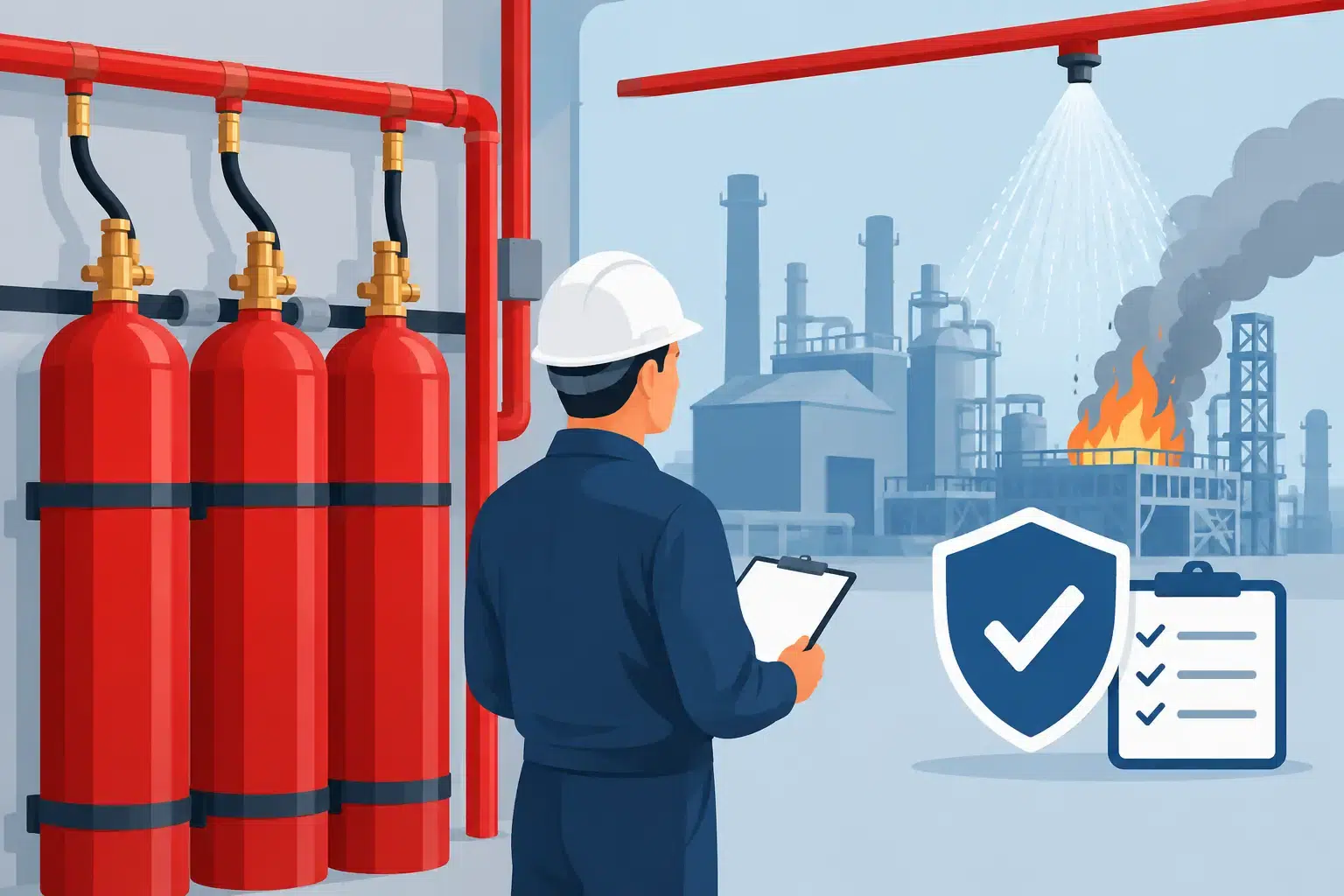
Clean-agent and inert gas systems are widely used for electronic equipment because they leave no residue. Each agent has different storage, environmental, occupancy and design considerations.
Novec 1230 has been a familiar option for occupied IT rooms because it is stored as a liquid, discharged as a gas and uses relatively compact cylinder storage. Its suitability now requires careful assessment against evolving environmental policy and availability considerations. A long-term asset-protection plan should not assume that historic agent choices remain the best option for a new installation.
HFC227ea, also known as FM200 or FE227, is another clean agent used in existing and legacy installations. It can provide effective protection, but its global warming potential means many organisations are considering alternatives when upgrading systems or planning future capacity.
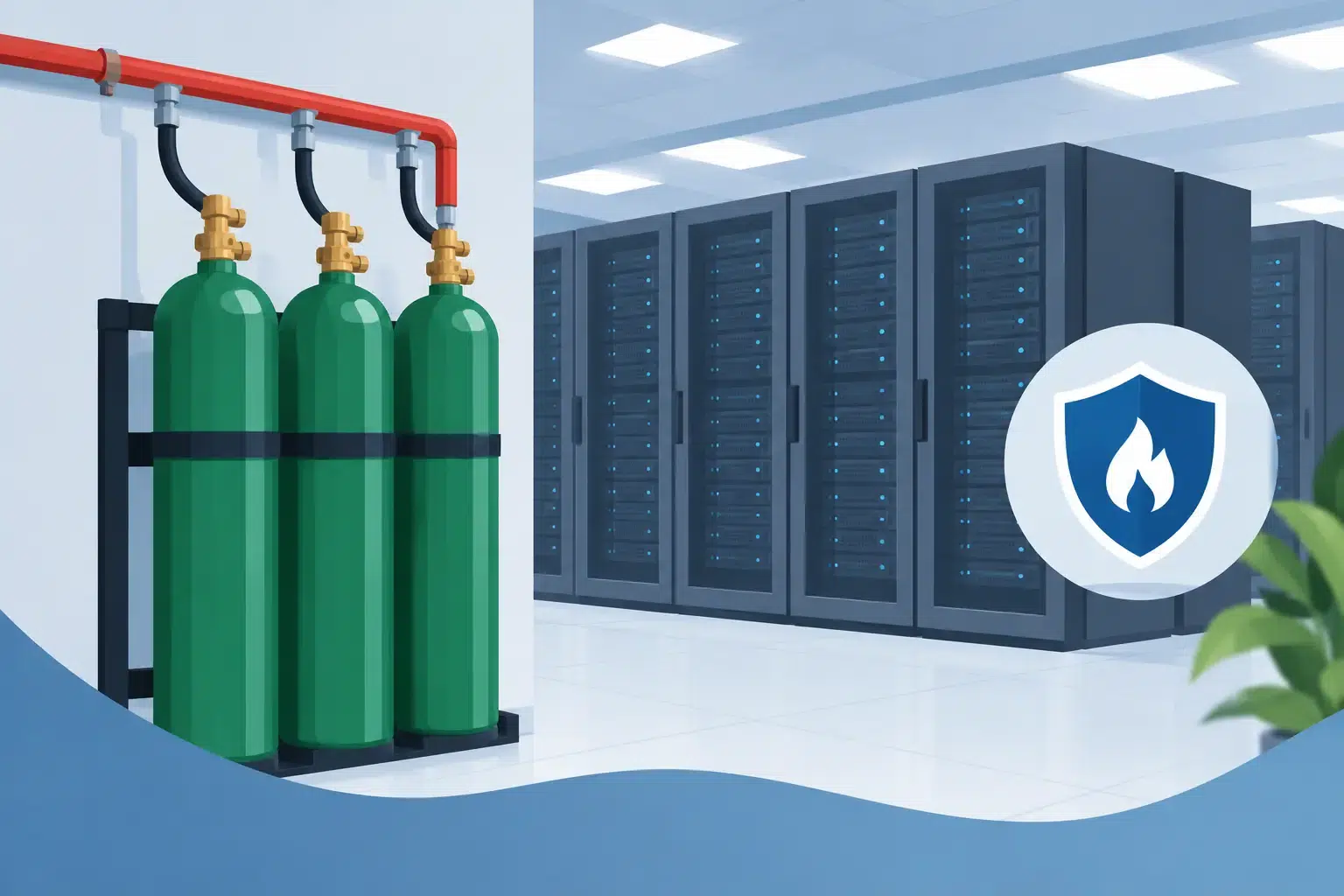
Inert gas agents such as IG55, IG541, IG01, IG100 and INERGEN® extinguish fire by reducing oxygen concentration below the level needed for combustion while maintaining conditions intended to support evacuation. They are naturally occurring gases and can be a strong fit for organisations with environmental objectives or insurer preferences. The trade-off is cylinder space: inert gas systems generally require a larger storage footprint than liquefied agents.
Agent selection should not be made on environmental credentials or cylinder size alone. The room volume, expected personnel access, pressure-relief requirements, pipe routes, discharge noise, cooling shutdowns and future expansion all affect the right answer. A competent designer will calculate the required concentration, verify enclosure performance and explain the operational implications before equipment is ordered.
The enclosure is part of the suppression system
A gaseous system can only maintain an extinguishing concentration if the protected room holds the agent for the required period. Open cable penetrations, unsealed floor voids, poorly fitted doors and gaps around services can allow agent to escape too quickly.
Room integrity testing, often called a fan test, assesses whether the enclosure can retain the calculated concentration. It is not merely a commissioning formality. It identifies practical sealing work that may be needed and provides confidence that a discharge will perform as designed.
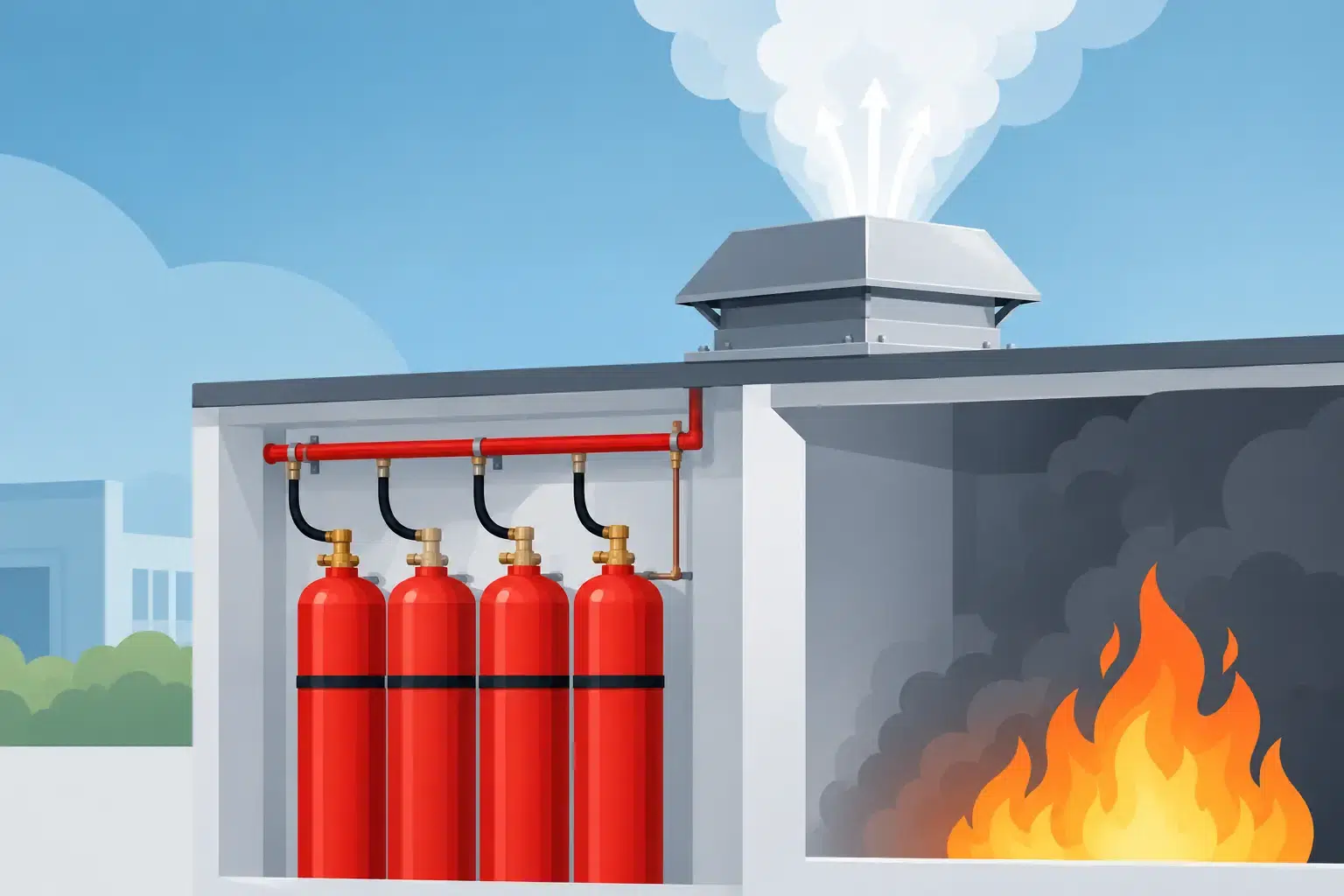
Pressure created during discharge must also be managed. Over-pressure vents may be necessary to protect walls, ceilings, doors and glazing from excessive pressure differentials. This is especially relevant in smaller rooms or where larger quantities of agent are released rapidly. Sealing a room without considering pressure relief is not good engineering.
Controls, shutdowns and people must be planned together
Suppression controls should connect with the wider fire strategy. On confirmed release, the system may need to stop comfort cooling or close dampers to prevent agent loss. It may need to send a signal to a building management system, notify a remote monitoring provider or initiate controlled shutdown procedures for non-essential equipment.
These actions require judgement. Immediately removing power from every item may interrupt critical services unnecessarily, while leaving a faulted electrical source energised can undermine the suppression strategy. The right cause-and-effect plan is agreed with the IT, electrical and facilities teams, documented clearly and demonstrated during commissioning.
Occupant safety remains paramount. Sounders, visual indicators, abort controls where appropriate, manual release stations and clear signage must be selected and positioned for the actual users of the space. Staff should understand what the alarms mean, where to exit and why they must not re-enter until the area has been declared safe.
Standards, testing and maintenance protect performance
A system is only as dependable as its design evidence and ongoing condition. Gaseous fire-extinguishing systems are commonly designed and installed in line with BS EN 15004, with relevant requirements for fire detection, electrical interfaces and the building’s fire-risk arrangements also considered. Project requirements may additionally be shaped by insurer standards, customer specifications or sector-specific obligations.
Commissioning should prove more than the presence of cylinders and detectors. It should include verification of detection logic, alarms, shutdowns, control-panel indications, discharge circuits, pressure relief and, where specified, room-integrity performance. A demonstration gives operational teams a practical understanding of how the system behaves without placing equipment at risk.
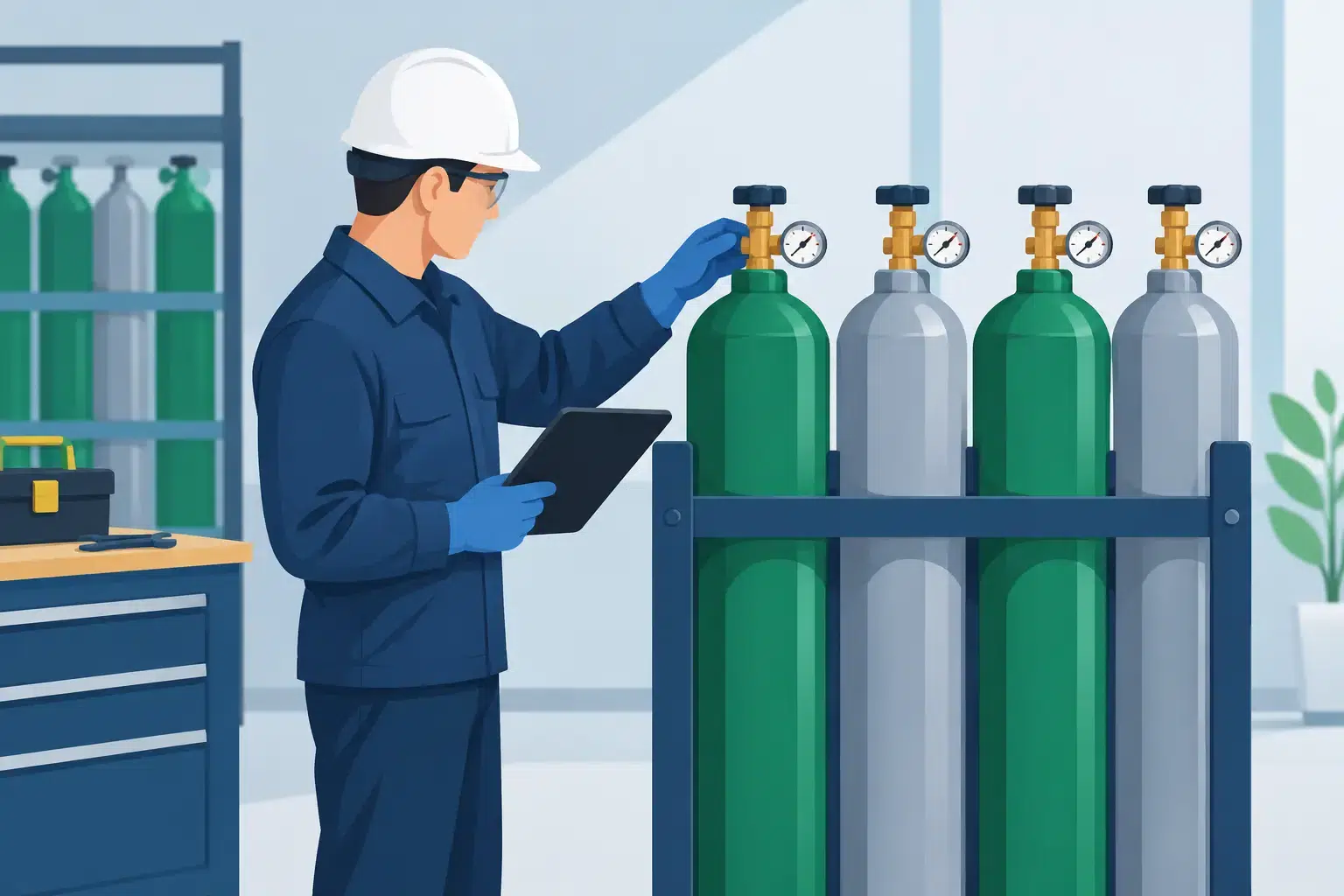
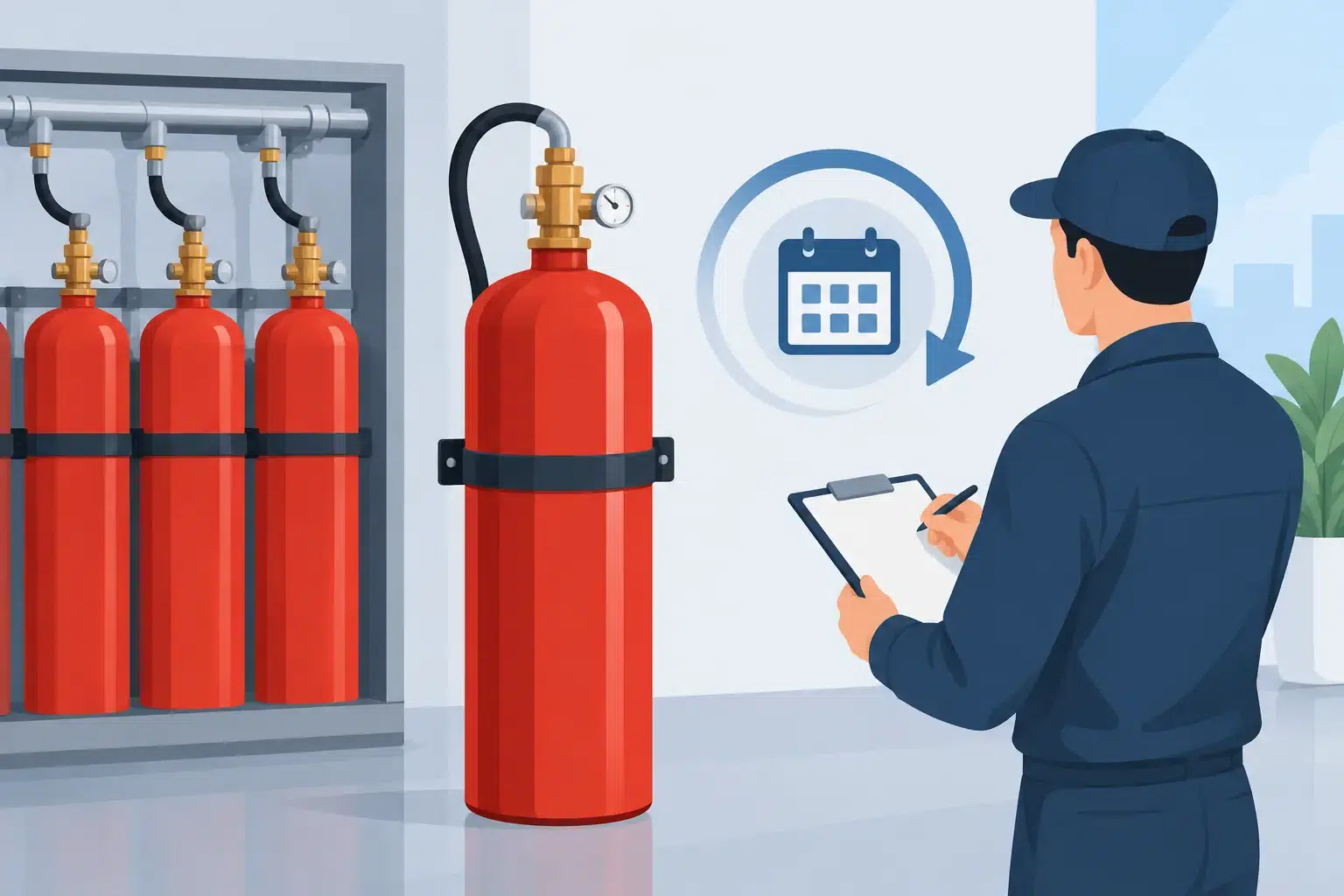
Thereafter, planned maintenance is essential. Detectors can become contaminated, interfaces can change after IT upgrades, cylinders require inspection and alterations to cabling or cooling can compromise room integrity. Any refurbishment, new rack installation or change to the room layout should trigger a review of the protection design.
A practical route to better server rack protection
Start by mapping the consequence of failure, not just the value of the racks. Identify which services would stop, how quickly customers would be affected and whether replacement hardware would restore operations without loss of data or configuration. Then assess ignition sources, airflow, enclosure condition and people’s use of the space.
From there, a specialist can develop a coordinated solution covering early detection, agent selection, discharge design, controls, integrity testing and maintenance. Active Fire Suppression Ltd can take responsibility from initial risk discussion through design, installation, commissioning and ongoing support, helping ensure that protection remains aligned with the way the site actually operates.
A well-protected server environment gives teams more than a response to fire. It gives them a credible plan for protecting critical services when the equipment they rely on most is at its most vulnerable.

Leave A Comment
You must be logged in to post a comment.