

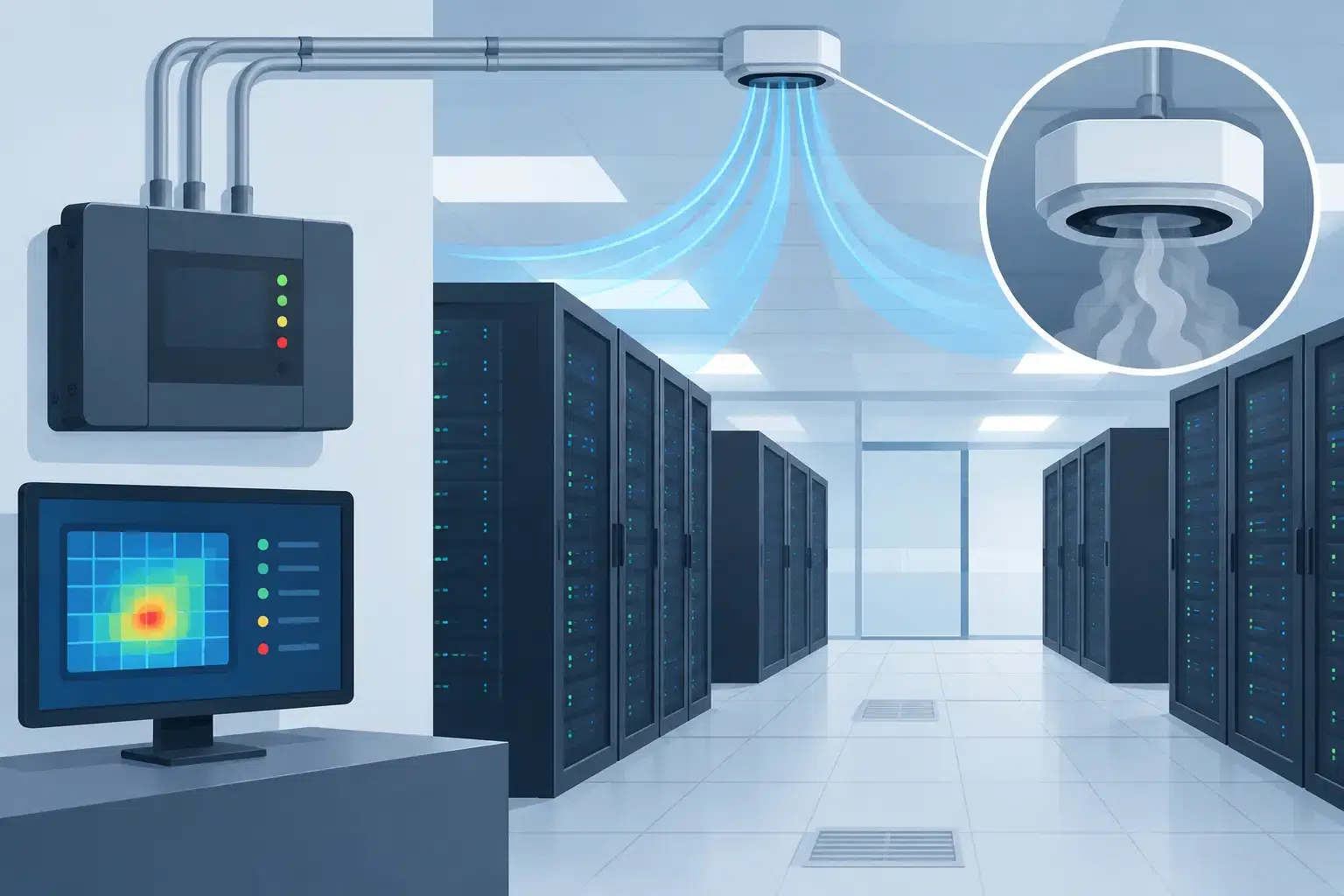
A smouldering cable fault in a server rack may produce barely visible particles long before there is flame, heat or a conventional point detector alarm. In a room where a few minutes of outage can disrupt operations, damage equipment or compromise customer service, that early warning window matters. So, how does VESDA detection work? It continuously draws air from the protected space through a network of sampling pipes and analyses it for very low levels of smoke.
VESDA is a widely recognised form of aspirating smoke detection (ASD). Rather than waiting for smoke to rise to a detector on the ceiling, it actively samples air from carefully positioned points around the risk. This can provide earlier and more controlled warning, allowing a facilities or operations team to investigate, isolate equipment or initiate a planned response before a developing fault becomes a damaging fire.
How does VESDA detection work?
A VESDA detector uses a small aspirator to draw air through a pipe network. The pipes are installed across the room, within ceiling or floor voids, inside cabinets or close to equipment where smoke may first develop. Small holes, or sampling points, are positioned to collect representative air from the protected area.
The sampled air passes through a filter before entering a highly sensitive detection chamber. Within that chamber, a laser-based optical system measures light scattered by smoke particles. Clean air produces a baseline reading. As smoke concentration increases, the detector identifies the change and reports it as a measured level rather than simply waiting for a fixed alarm condition.
This sensitivity is what separates aspirating detection from many standard point smoke detectors. A conventional detector is often intended to identify a fire once smoke has reached its sensing element in sufficient quantity. VESDA can identify the much lower concentrations associated with overheating insulation, failing power supplies or slow-burning materials at an earlier stage.
The detector also supervises the air-sampling system. It monitors airflow so that a blocked sampling hole, damaged pipe, disconnected section or unexpected leak can be identified. That supervision is essential: an early-warning system is only useful if the system can demonstrate that it is still sampling the intended area.
Alarm levels turn early warning into action
A key benefit of VESDA detection is that it can be configured with several alarm thresholds. Exact terminology and response arrangements depend on the detector, fire strategy and site requirements, but a typical sequence includes Alert, Action, Fire 1 and Fire 2 levels.
An Alert signal may indicate an unusually low level of smoke and prompt investigation without interrupting operations. At Action level, the building management team may attend immediately, inspect equipment and prepare for escalation. Fire alarm levels can then activate wider life-safety measures, shut down relevant plant, close dampers or signal a fire alarm control panel.
Where automatic gaseous suppression is installed, the release sequence must be engineered carefully. Detection may be configured using confirmed detection, often called coincidence or cross-zoning, before an extinguishing agent is released. This helps reduce the chance of an unwanted discharge while retaining the benefit of early smoke recognition. The correct approach depends on the enclosure, occupancy, operational risk, insurer requirements and the chosen extinguishing agent.
Early warning does not automatically mean immediate agent discharge. In many data rooms, control rooms and industrial spaces, the preferred outcome at the earliest alarm stage is a controlled investigation that prevents escalation without affecting critical processes. In other applications, the fire strategy may require rapid automatic intervention. The detection and suppression design should reflect that difference rather than applying a standard arrangement to every room.
Why sampling-pipe design matters
The detector is only one part of the system. Pipe layout determines where air is drawn from, how quickly samples reach the detector and whether the design covers the actual fire risk. A well-designed installation considers room geometry, airflow from cooling systems, ceiling height, obstructions, likely ignition sources and the location of high-value equipment.
In a data centre, for example, smoke may be diluted or redirected by high air movement. Sampling may be needed in the room, return-air paths, ceiling voids, underfloor voids and equipment cabinets. In a battery room, the strategy must account for ventilation, the equipment arrangement and the specific hazards presented by the battery technology. In an industrial enclosure, dust, heat and process contaminants may influence the selected detector sensitivity and filtration arrangement.
Pipe networks are designed and verified so that the transport time from the furthest sampling point remains acceptable. If smoke takes too long to reach the detector, the early-warning advantage is reduced. Conversely, placing sampling points without considering airflow can lead to slow or unrepresentative sampling. This is engineering work, not simply a matter of fitting pipe at regular intervals.
Where VESDA detection is most effective
VESDA is particularly valuable where smoke damage, unplanned shutdown or delayed recovery would cost more than the detector system itself. Typical applications include server rooms, data centres, telecommunications facilities, control rooms, electrical switchrooms, archives, clean environments, museums and high-value manufacturing areas.
It is also useful where conventional detection is difficult to maintain or may be too slow because of the environment. High ceilings, large enclosed volumes and strong ventilation can make early smoke detection more challenging. Aspirating systems can position the detector itself in an accessible location while the pipework reaches the areas that need monitoring.
That said, VESDA is not automatically the right choice for every building. In dirty, humid or steam-heavy environments, the system must be selected and configured carefully to avoid contamination and unwanted alarms. Filters, pipework maintenance, sensitivity settings and the suitability of sampling locations all need consideration. For some risks, flame detection, heat detection or another detection method may be a better primary solution, or may work alongside aspirating detection as part of a layered fire strategy.
Integration with fire suppression systems
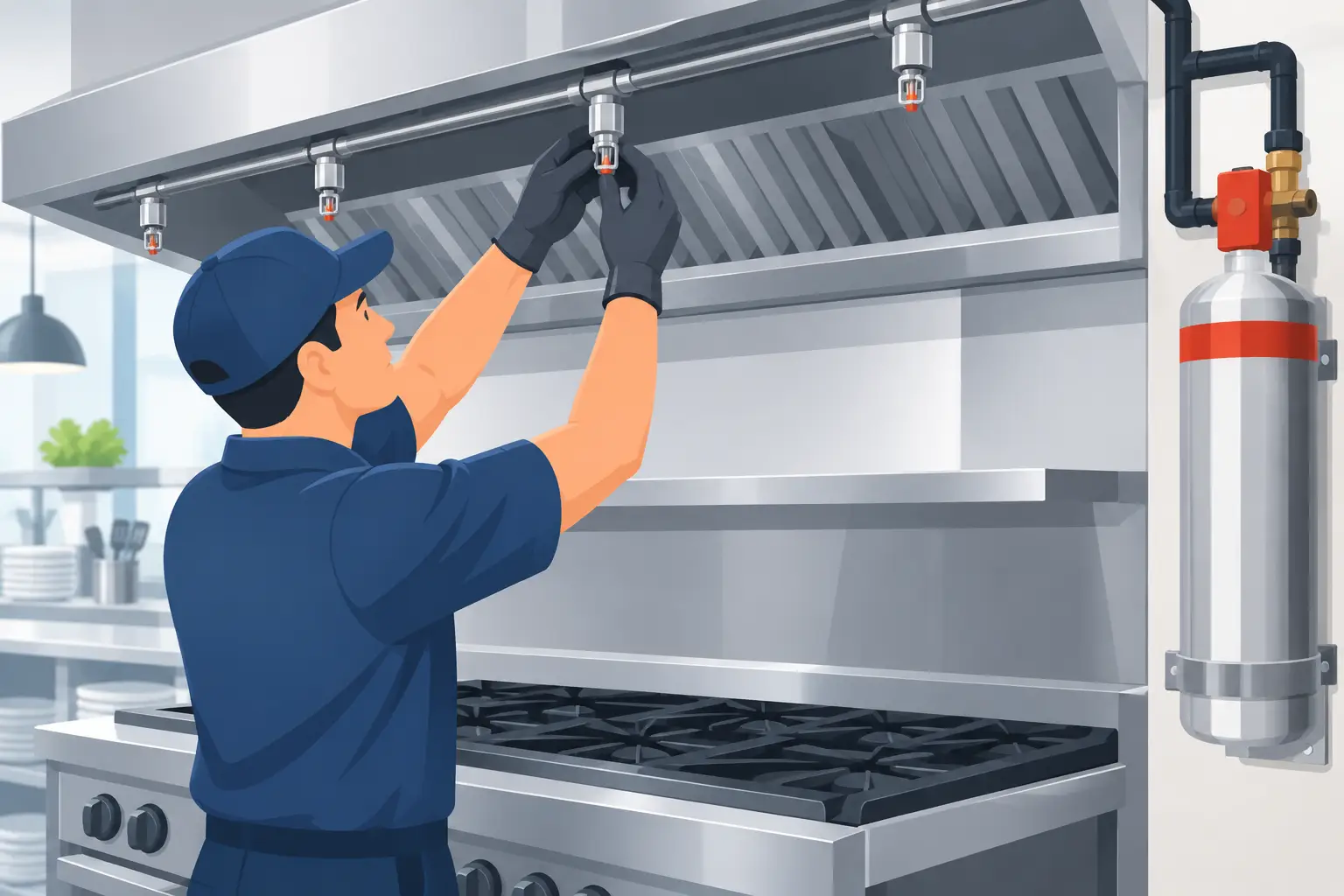
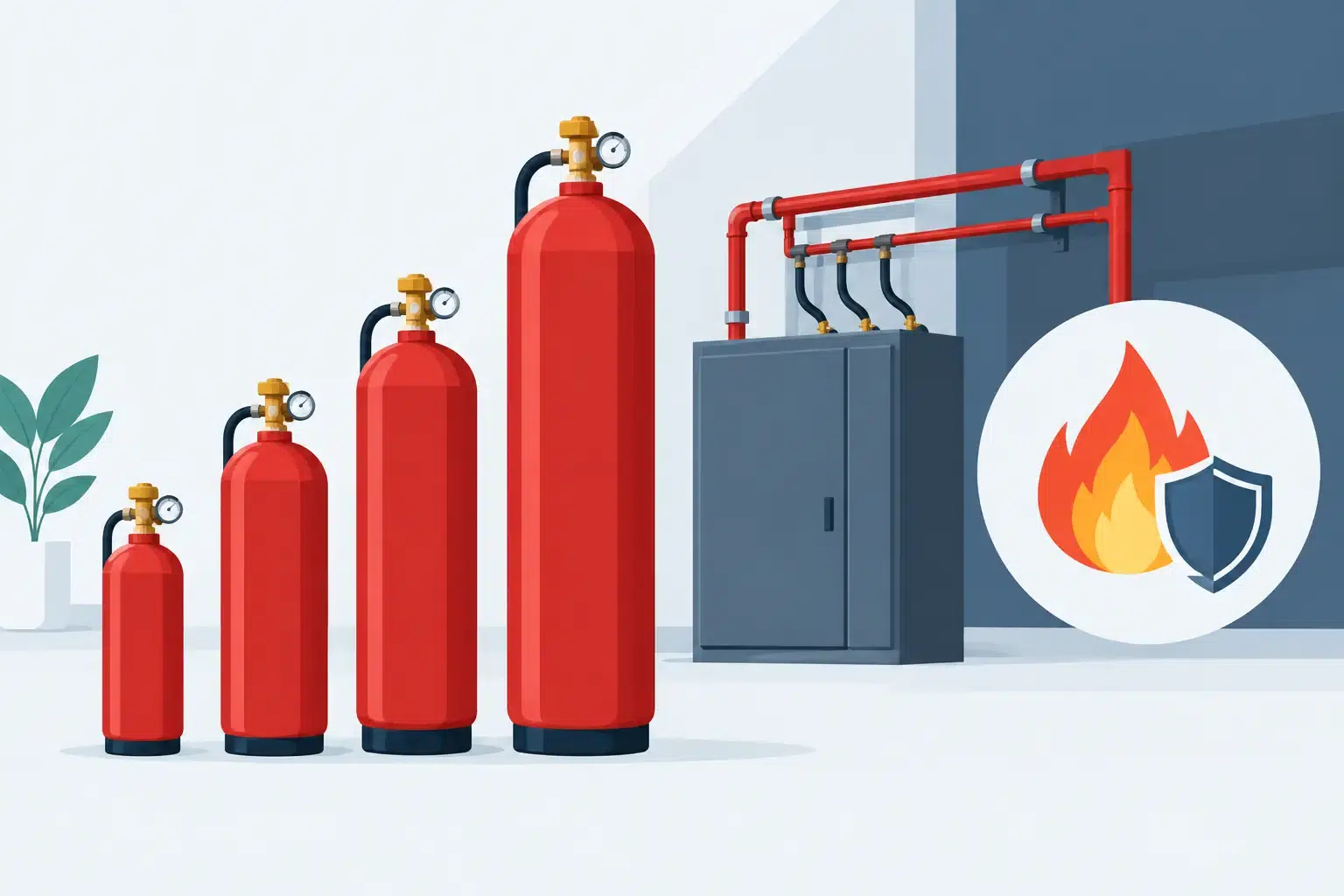
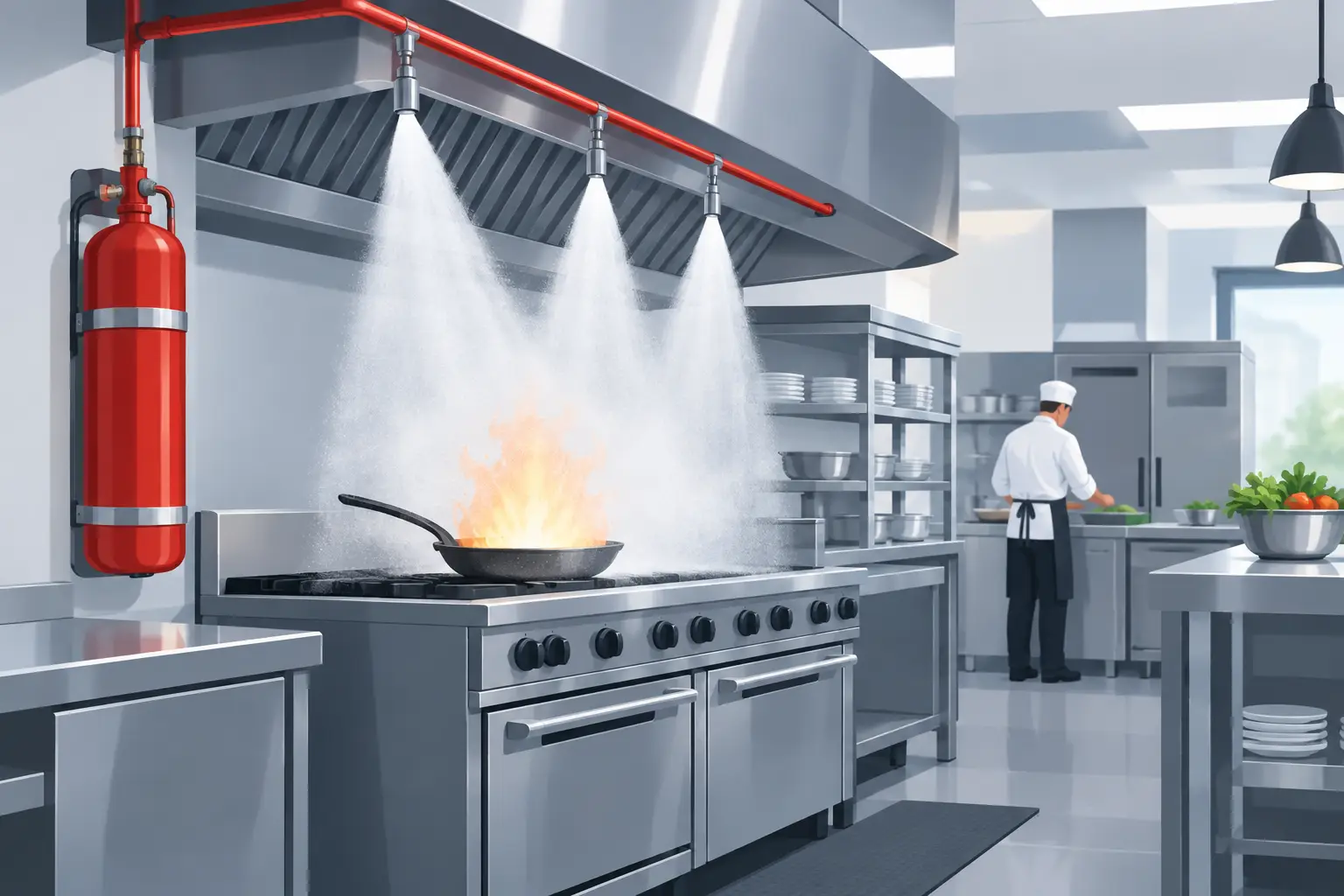
Early smoke detection is often specified alongside clean-agent, inert-gas or other automatic suppression systems. The purpose is straightforward: detect a developing event early enough to control it before fire, soot, corrosive smoke or water from manual firefighting causes significant loss.
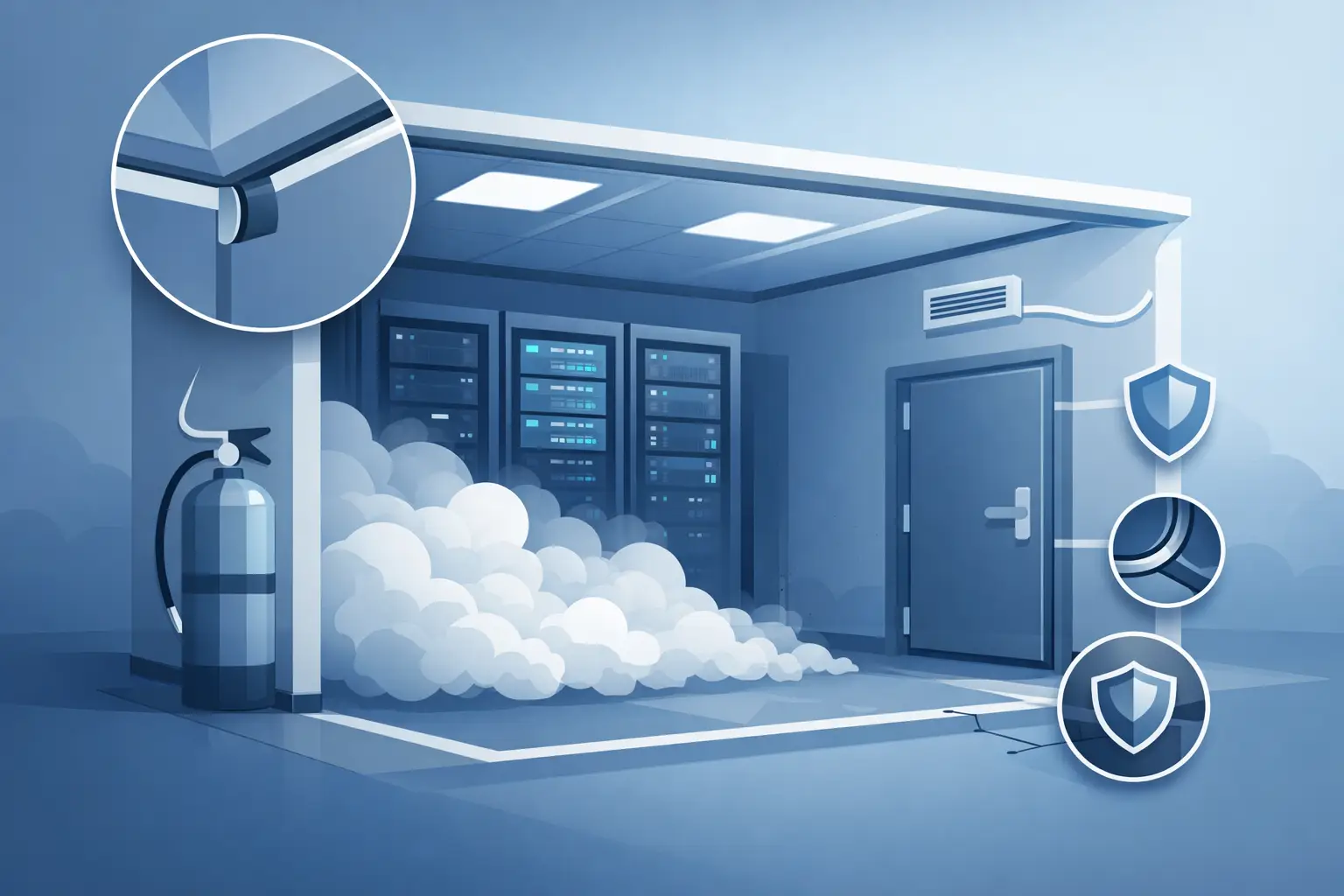
However, detection should never be treated separately from suppression. Before agent release, the control system may need to stop air-handling equipment, close dampers, sound warning alarms, operate visual indicators and allow a delay for people to leave the enclosure. The protected room may also require sealing and an integrity test to demonstrate that the extinguishing concentration can be retained for the required holding period.
The detection arrangement must therefore work with the cause-and-effect programme, fire alarm system, suppression control panel and site operating procedures. A poorly coordinated system can create false confidence: it may detect smoke quickly, but fail to deliver the right alarm, shutdown or release action when it matters.
For occupied spaces, the safety of people remains the first consideration. Agent selection, warning arrangements, abort controls and emergency procedures must all be addressed within the wider fire strategy. Business continuity is strengthened by good engineering, but it cannot take precedence over life safety.
Testing and maintenance keep sensitivity meaningful
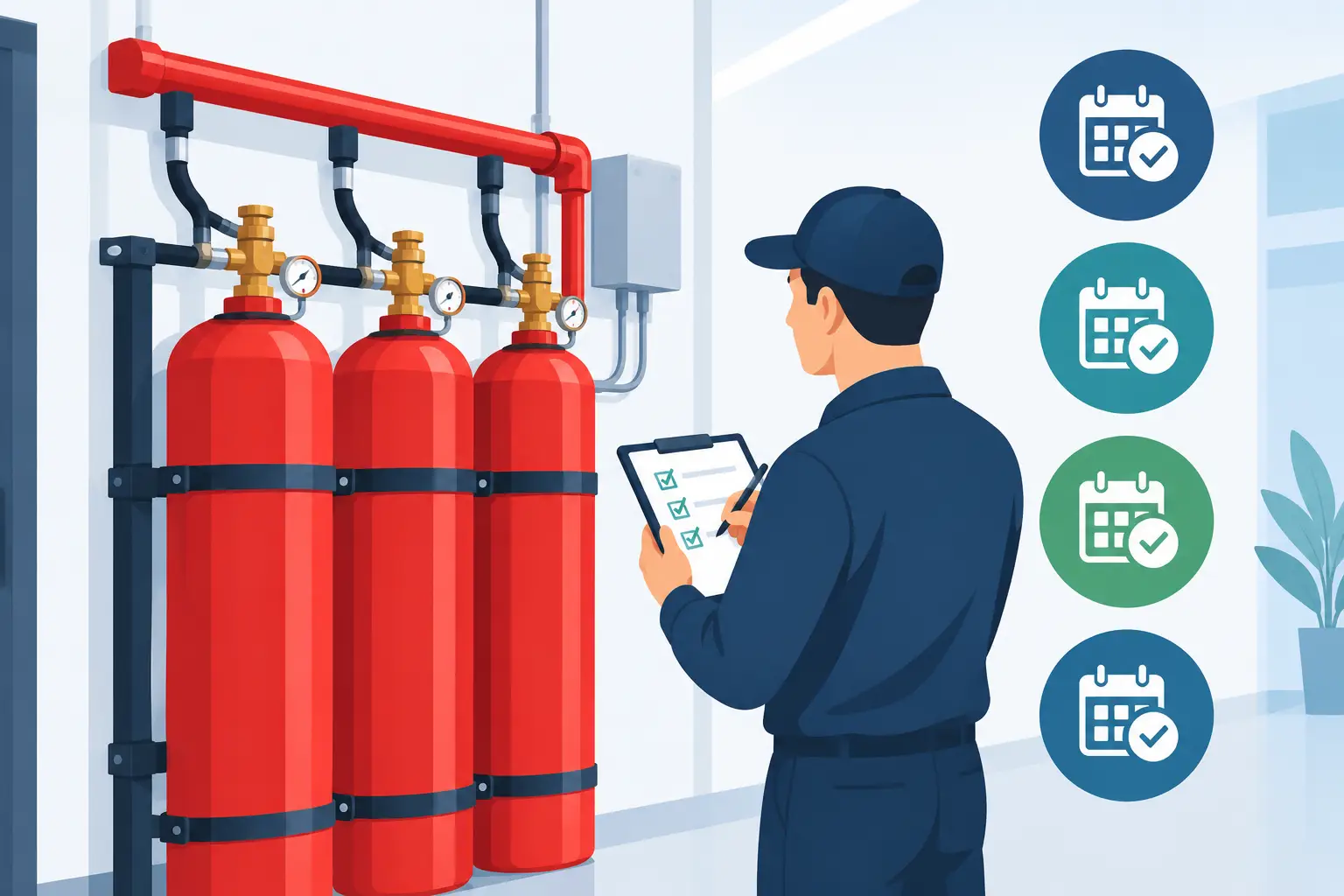
A VESDA system needs routine inspection and maintenance just as any other life-safety system does. Sampling holes and pipework require checking for blockage, damage or alteration. Filters need replacement at appropriate intervals, and airflow readings must be reviewed. Detector performance, alarm outputs and interfaces with suppression controls should be tested in accordance with the maintenance plan and applicable standards.
Changes to the room deserve particular attention. New racks, partitions, cooling units, cable routes or production equipment can alter airflow and the way smoke travels. A system that was appropriate at commissioning may need adjustment after an operational change. This is especially relevant in data environments and manufacturing sites, where layouts can evolve without a formal review of the fire strategy.
Commissioning should confirm more than whether a panel displays an alarm. It should verify pipe integrity, airflow, alarm thresholds, transport times, control outputs and the agreed cause-and-effect sequence. Documentation should give the responsible person a clear record of what the system is designed to do and how staff should respond to each alarm stage.
For organisations protecting critical assets, the practical question is not simply whether VESDA can detect smoke. It is whether the sampling design, alarm response and suppression interfaces are matched to the way the site actually operates. A properly engineered system gives teams valuable time to make the right decision before a small fault becomes a prolonged outage.

Leave A Comment
You must be logged in to post a comment.