

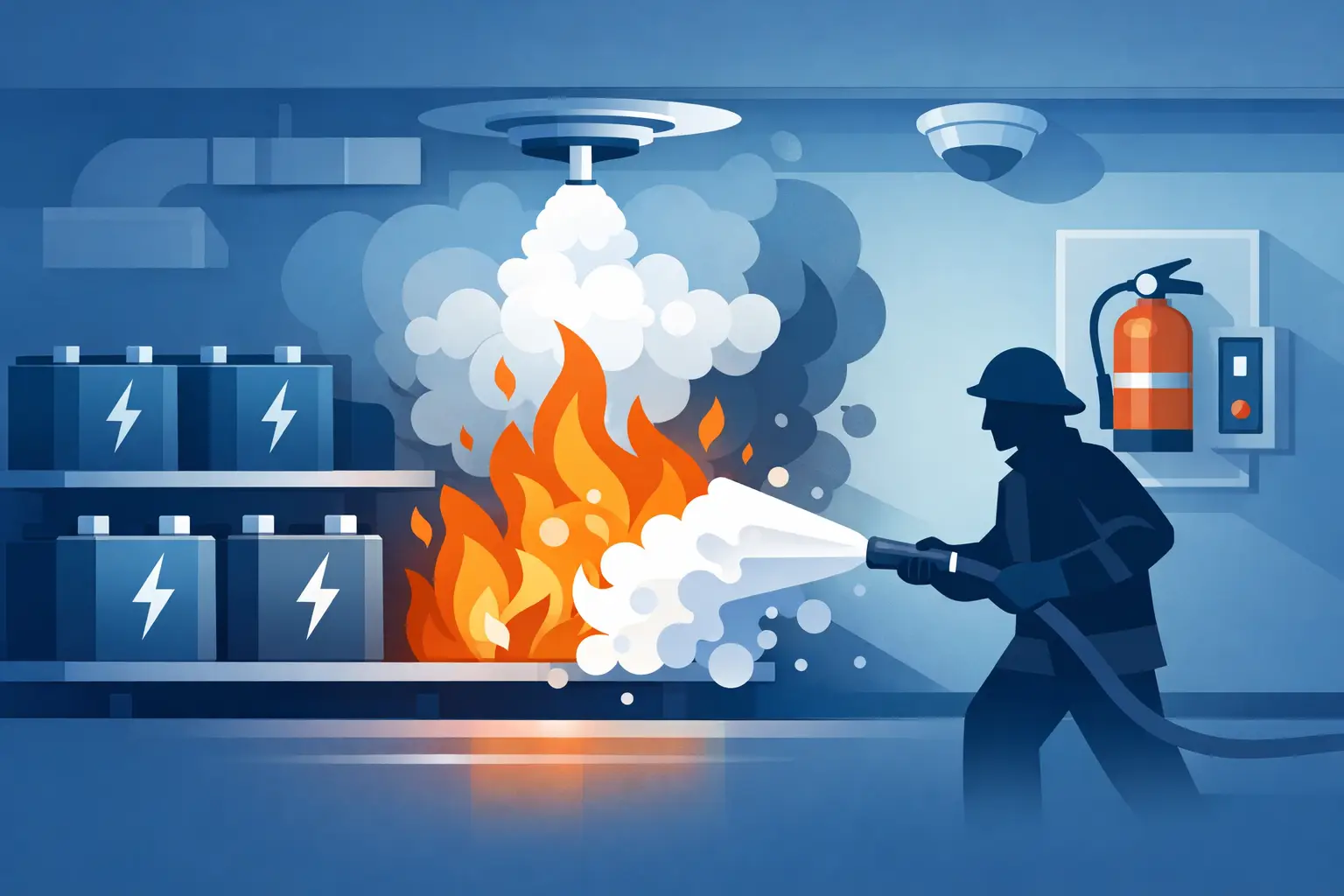
A battery room can support an entire operation for years without drawing attention. Then a fault, charging issue or failing cell creates heat, gas and smoke in a confined space, putting standby power, critical equipment and personnel at risk. Effective battery room fire suppression is therefore not simply a matter of fitting an extinguisher or connecting an alarm: it is an engineered response to the battery chemistry, room layout, ventilation and the consequences of losing power.
For sites relying on UPS systems, emergency lighting, telecoms equipment, data infrastructure or process continuity, the objective is clear. Detect the earliest signs of an incident, control its development safely and preserve the wider operation wherever possible.
Why battery rooms need a different fire strategy
Battery risks vary considerably. Traditional valve-regulated lead-acid and flooded lead-acid batteries can release hydrogen during charging. Hydrogen is highly flammable and, if allowed to build up, can create an explosion risk. A fire strategy for these rooms must therefore account for adequate ventilation, gas detection where required and the control of ignition sources, as well as fire detection and suppression.
Lithium-ion battery installations present a different challenge. A damaged or defective cell can enter thermal runaway, producing intense heat, flammable gases and potentially rapid fire spread between cells or modules. The event may continue to develop within the battery even after visible flames have been knocked down. This means a gaseous system that is highly effective for an electrical or surface fire may not, on its own, provide the cooling needed to stop propagation within lithium-ion battery equipment.
The right system depends on what is in the room, how the battery is housed, whether people may be present, and the level of continuity the site needs to maintain. Treating every battery room as if it carries the same risk is a costly mistake, either through under-protection or an unsuitable specification.
Detection must provide early, reliable warning
A conventional point smoke detector can be appropriate in some battery rooms, but it may not provide the earliest practical warning where air movement, room volume or equipment layouts dilute smoke. Aspirating smoke detection, including VESDA systems, samples air continuously and can identify very low levels of smoke before an incident becomes a developed fire.
Early warning has operational value. It gives facilities and engineering teams time to investigate abnormal conditions, isolate charging equipment, transfer loads where possible and begin a managed response. In critical environments, this is often the difference between a contained incident and an unplanned shutdown.
For lithium-ion installations, detection may need to consider more than smoke. Heat, off-gas and flame detection can each have a role, depending on the battery technology and enclosure design. Battery management system alarms should also be considered as part of the overall cause-and-effect strategy, not as a substitute for independent fire protection.
Detection must be positioned and commissioned around real airflow and risk conditions. A detector installed in the wrong place, or a system with unclear alarm actions, can leave a well-funded installation poorly protected.
Selecting battery room fire suppression
Suppression agent selection starts with the expected fire scenario rather than a preferred product. The system must protect people first, then assets and operational continuity. It must also meet the room conditions and the requirements of the insurer, responsible person and relevant standards.
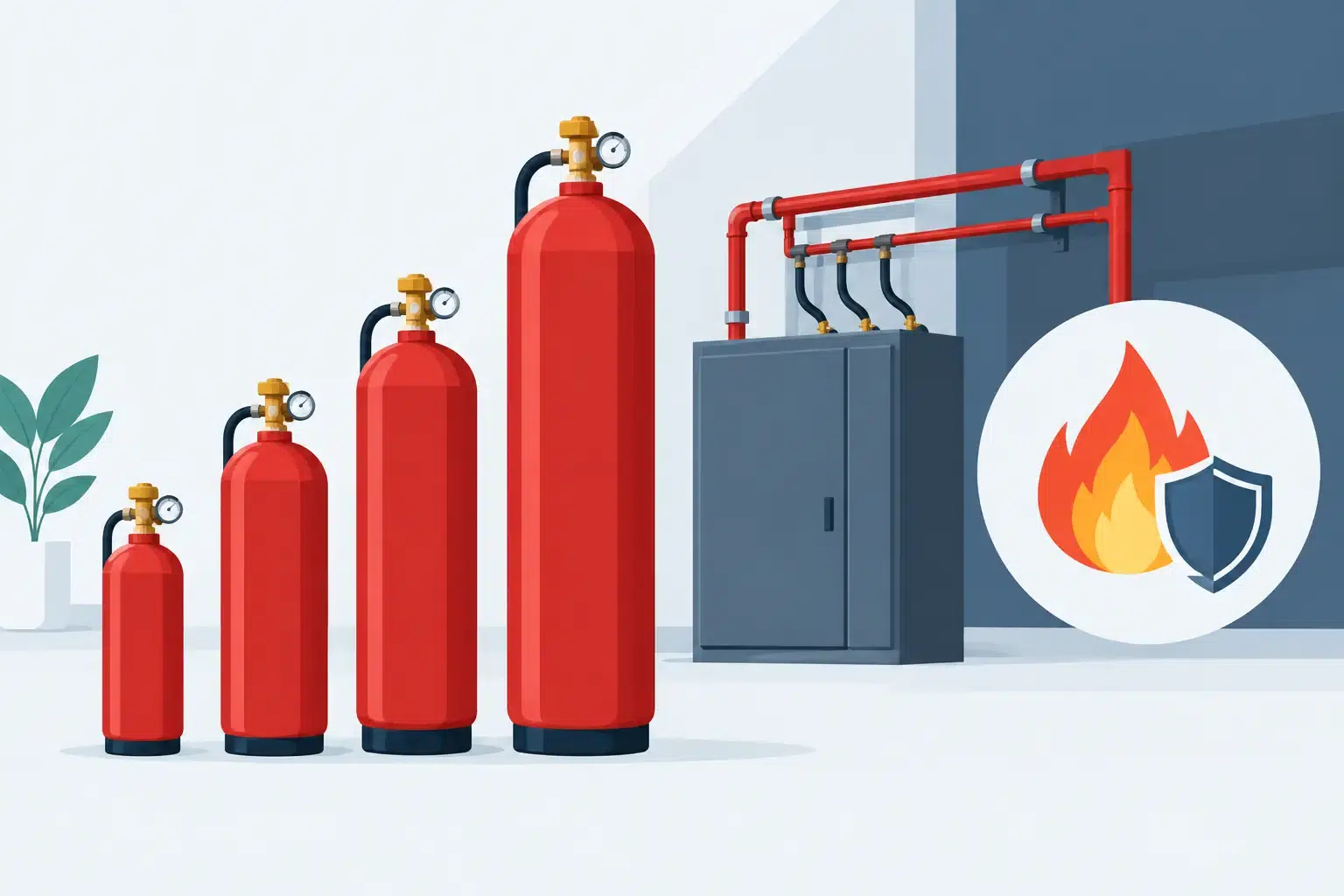
Inert gas systems, such as IG55, IG541, IG01 and IG100, reduce the oxygen concentration in an enclosed room to a level at which combustion cannot continue. They leave no residue and are well suited to many occupied electrical and critical-equipment spaces. Their cylinders require space, and the protected enclosure must be sufficiently sealed to retain the design concentration for the required hold time.
Clean agents such as HFC227ea may be considered for certain enclosed applications where rapid, residue-free suppression is required. Environmental policy, current regulatory expectations, agent availability and the system’s long-term serviceability all need careful review at design stage. A clean-agent system can minimise collateral damage to sensitive equipment, but it is not automatically the right answer for every battery type or failure mode.
Water-based suppression can be essential where cooling is required, particularly for lithium-ion battery risks. Depending on the application, this may involve sprinklers, water mist or a specifically engineered suppression arrangement. Water introduces potential damage to nearby electrical equipment, so the design must balance that consequence against the greater risk of battery fire escalation and prolonged thermal runaway.
Carbon dioxide can be very effective in unoccupied industrial hazards, but its life-safety implications demand stringent safeguards. It is not a routine choice for battery rooms with possible personnel access. Dry powder can provide rapid knockdown in selected applications, although its residue can damage equipment and complicate recovery. Each agent has strengths, limitations and operating conditions that should be openly assessed before specification.
Room integrity, ventilation and pressure relief
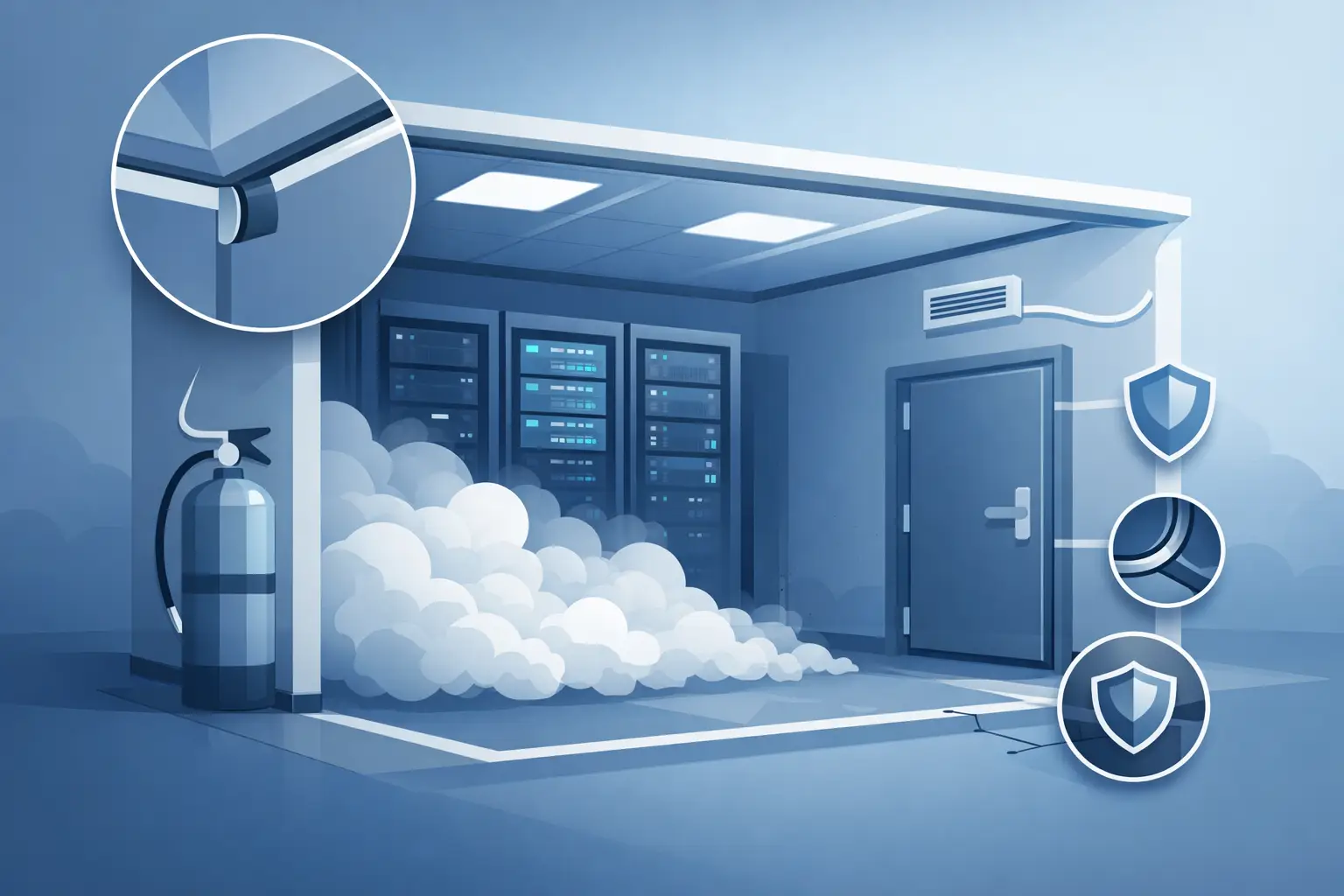
A gaseous suppression system is only as effective as the enclosure that contains it. Cable routes, ceiling voids, raised floors, door gaps and service penetrations can allow agent to escape too quickly. Room sealing is not cosmetic work. It is a fundamental part of achieving the required extinguishing concentration and retention period.
A room integrity test should verify whether the protected enclosure is capable of holding the agent for the required time. If deficiencies are found, they should be corrected before the system is relied upon. Ongoing changes are equally significant: a new cable tray, access panel or ventilation route can compromise a room that previously passed its test.
Ventilation requires particular attention in battery rooms. For lead-acid batteries, ventilation may be necessary to disperse hydrogen. For gaseous suppression, ventilation and air-conditioning plant usually need to shut down automatically on release so the agent is not immediately extracted. These functions must be coordinated through the control system, with clear cause-and-effect programming, manual release arrangements and emergency abort facilities where appropriate.
Discharging an agent into a sealed enclosure can also create pressure changes. Over-pressure vents may be needed to protect walls, ceilings, doors and equipment while maintaining the integrity required for suppression. This is a design calculation, not an afterthought during installation.
Designing for people and continuity
Automatic suppression should be integrated with the site’s operational plan. Alarm stages should define who investigates an early warning, when equipment is isolated, how staff evacuate and what happens to the supported load during a release. A system that extinguishes a fire but unexpectedly removes critical power can still cause serious commercial disruption.
For occupied rooms, warning devices, signage, lock-off arrangements and escape routes require the same attention as the extinguishing system itself. Where batteries are part of a UPS arrangement, facilities managers should understand whether a suppression discharge will affect ventilation, cooling, chargers, battery management controls or the continuity of the protected load.
The best approach is often layered. Early aspirating detection can provide an investigation signal. Confirmed fire detection can initiate shutdowns and release suppression. Suitable cooling or containment measures can address the specific battery hazard. This approach avoids relying on one device or one agent to solve every stage of an incident.
Installation, testing and long-term support
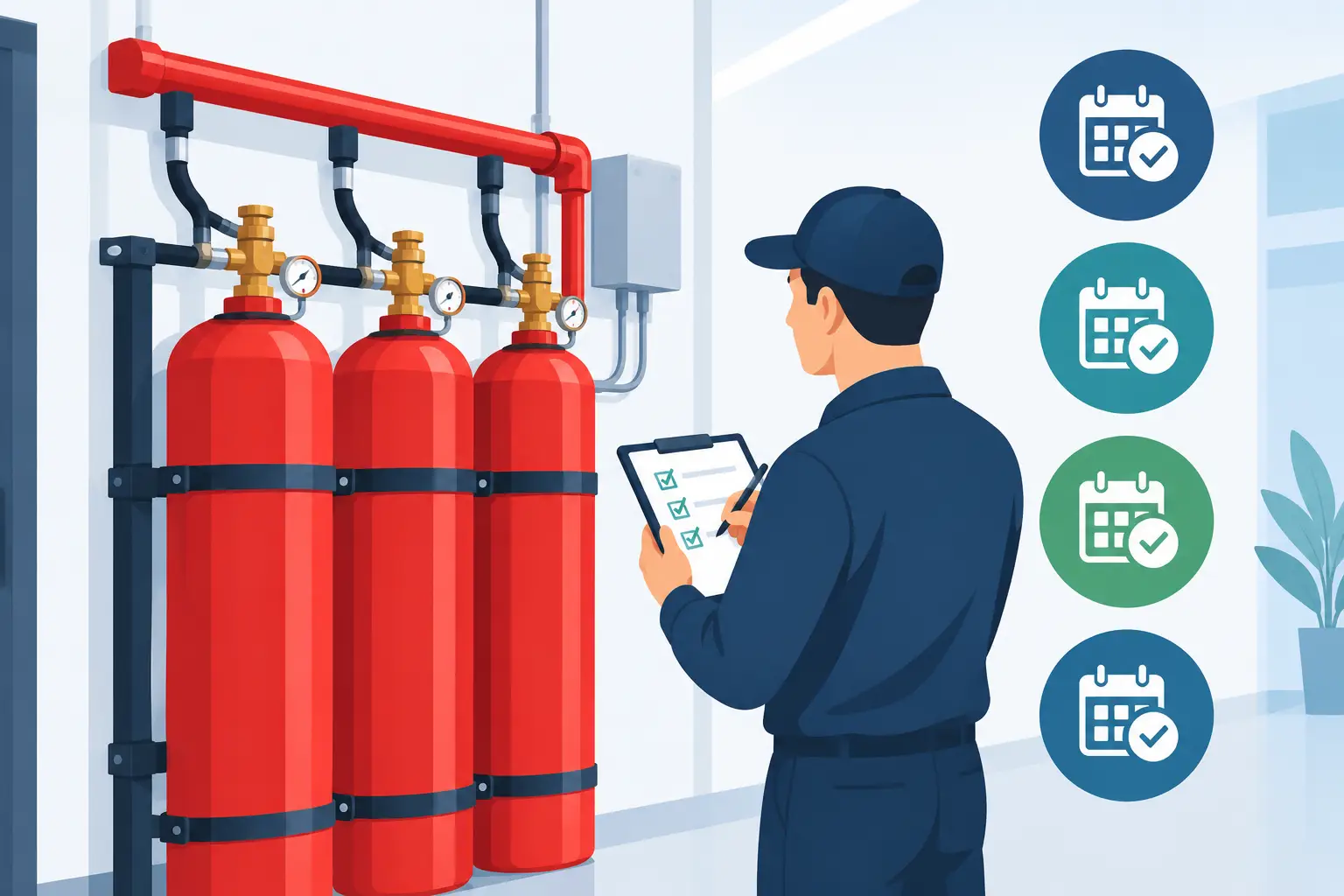
Battery room protection is not complete at handover. Systems need commissioning, functional testing and a clear demonstration so the people responsible for the site know what will happen in an alarm or discharge condition. Detection, suppression controls, dampers, ventilation shutdowns, door releases and building-management interfaces should be tested together.
Maintenance then protects the original design intent. Cylinder pressures, agent quantities, detectors, control panels, manual controls and alarm interfaces all require planned inspection. Room integrity should be reassessed following alterations, and any fault should be addressed promptly rather than carried as an operational risk.
Active Fire Suppression Ltd can take responsibility from risk discussion and technical design through installation, integrity testing, commissioning and ongoing maintenance. That joined-up approach matters when several systems must respond correctly in seconds.
A battery room is a small part of a building, but it may support its most critical function. The practical next step is to assess the batteries, the enclosure and the consequence of failure together, then design protection around the reality of the site rather than a generic specification.


Leave A Comment
You must be logged in to post a comment.