

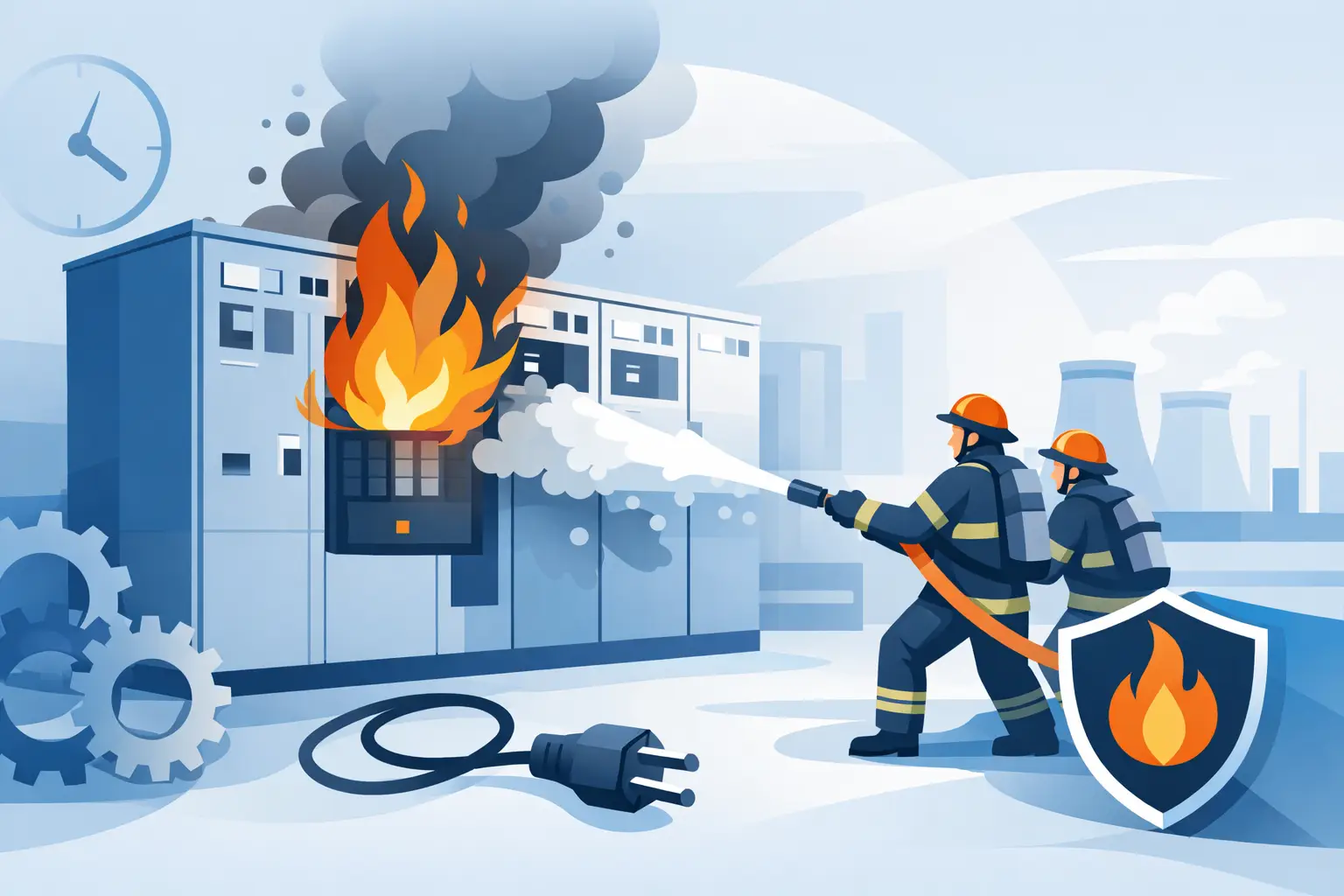
A fault inside a switchboard can move from overheating insulation to a serious fire before anyone reaches the electrical room. By that point, the issue is not limited to replacing a damaged panel. Smoke, corrosive combustion products, water damage and a prolonged outage can affect an entire site. Effective switchgear fire protection is therefore a business-continuity measure as much as a life-safety requirement.
For facilities with critical electrical distribution, the right approach combines risk assessment, early warning, automatic suppression and a clear plan for isolation and recovery. The details matter. A system that is suitable for an occupied switchroom may not be suitable for an unmanned substation, and an extinguishing agent must be selected around the equipment, enclosure and operational risks rather than on headline cost alone.
Why switchgear rooms present a particular fire risk
Switchgear is designed to control and protect electrical power, but it handles substantial fault energy. Loose connections, overloaded components, degraded insulation, cable faults, arcing and mechanical failure can all create excessive heat or an internal arc. In older installations, contamination and poor maintenance can add to the risk.
A fire within a switchboard can be difficult to access safely. Energised equipment restricts how responders can intervene, while the enclosure itself may conceal a developing problem. Even a relatively small fire can produce conductive and corrosive deposits that compromise adjacent equipment, making post-fire testing and reinstatement more complex than the visible damage suggests.
The consequences depend on what the switchgear supports. In a data centre, loss of a distribution board can interrupt IT services despite generator and UPS provision. In manufacturing, it can stop a production line, damage control systems and delay fulfilment. In healthcare, transport, utilities and large commercial premises, electrical failure can affect essential services and safe operation across the building.
Switchgear fire protection starts before suppression
Automatic suppression is valuable, but it should not be the first consideration in isolation. The design process starts by understanding the electrical installation and the role it performs. This includes the room layout, cable routes, likely ignition sources, ventilation, expected occupancy, asset value and the time the operation can tolerate without power.
The most effective schemes pair suppression with very early warning detection. Aspirating smoke detection, commonly known as VESDA, samples air continuously and can identify minute amounts of smoke before a conventional point detector operates. This gives facilities teams an opportunity to investigate an abnormal condition, isolate equipment or transfer loads before the fire develops.
Detection should be arranged in stages. An early warning signal can prompt investigation, while a confirmed fire signal can initiate equipment shutdown procedures and prepare the suppression system for release. Cross-zoned detection or a combination of detection technologies may be used to reduce the risk of an unwanted discharge. The exact cause-and-effect programme should be agreed with site operations, because a poorly planned shutdown can itself create a significant operational event.
For switchgear with a heightened arc-flash risk, specialised optical flame or arc detection may also be appropriate. It can identify the intense light associated with an arc and initiate rapid protective action. This is not a substitute for sound electrical design and maintenance, but it can form part of a layered strategy where speed is critical.
Choosing the right suppression agent for switchgear
The agent must extinguish the fire without creating unacceptable secondary damage, while protecting anyone who may be in or near the area. Water-based systems can be appropriate for some electrical risks once power is isolated, but they are often unsuitable as the primary solution for enclosed, high-value switchgear rooms where residue and downtime are major concerns.
Clean-agent and inert-gas systems are commonly considered because they leave no residue and can protect sensitive electrical equipment. Both have strengths, but they work differently.
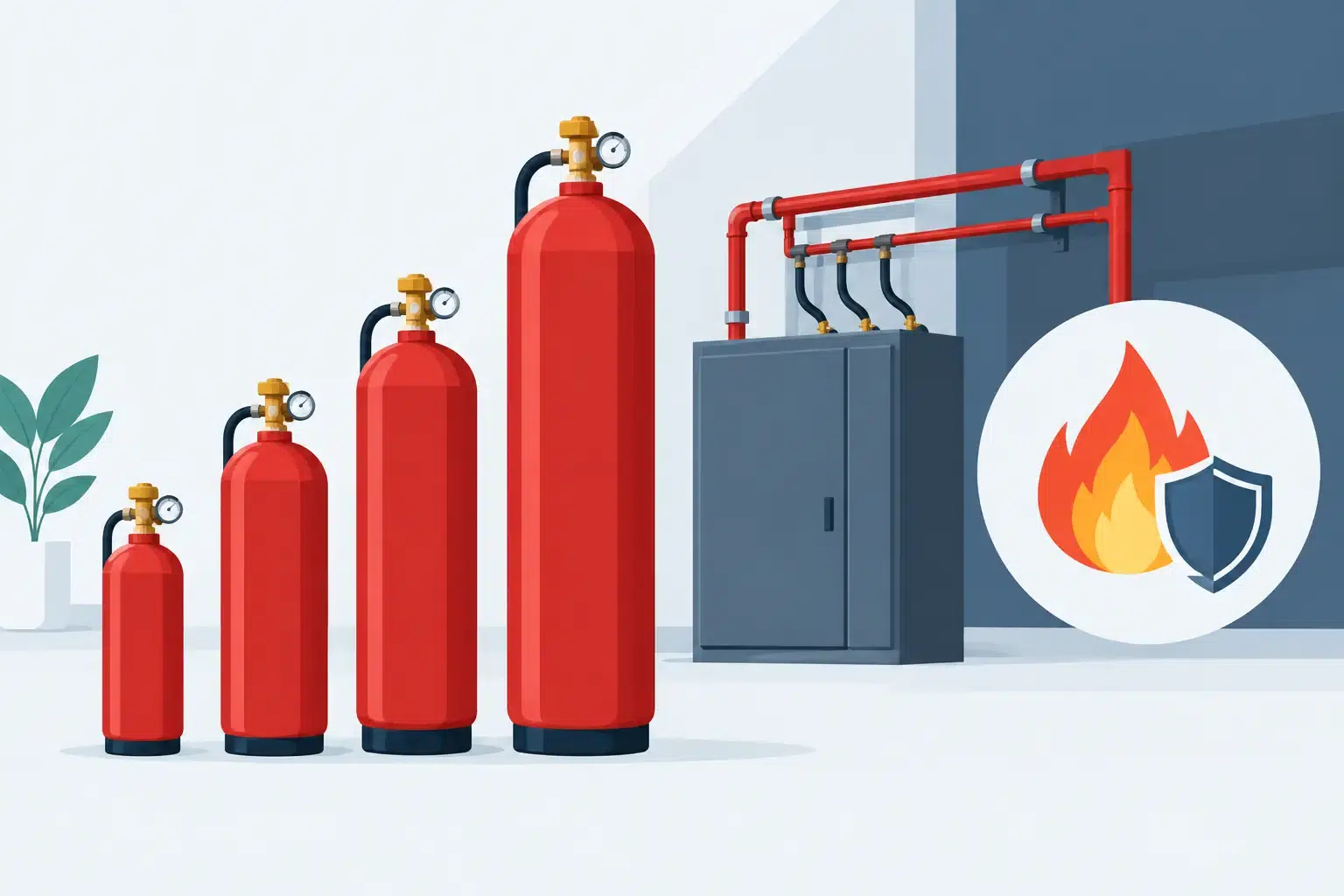
Inert gases such as IG55, IG541, IG01 and IG100 reduce the oxygen concentration in the protected enclosure to a level where combustion cannot continue. They are naturally occurring gases and can be a strong long-term option where environmental policy is a priority. However, they require sufficient cylinder storage space, well-engineered pipework and a room capable of retaining the design concentration.
Clean agents, including HFC227ea systems, can provide effective suppression with a smaller cylinder footprint in some applications. Agent choice must account for environmental obligations, availability and the anticipated service life of the installation. Where Novec 1230 or other clean-agent solutions are under consideration, the project team should review current product availability, manufacturer support and the organisation’s environmental policy before final specification.
CO2 can be highly effective on certain electrical and industrial hazards, but its use demands particular care because it presents a serious risk to people. It is generally better suited to normally unoccupied or tightly controlled spaces, with appropriate alarms, time delays, lock-off procedures and safety measures. It should never be selected simply because it appears to be the lowest-cost route.
The decisive factor is not whether an agent is described as clean or gaseous. It is whether the complete system can achieve and hold its required design concentration in the real room, while supporting safe evacuation and the site’s recovery plan.
Room integrity is part of system performance
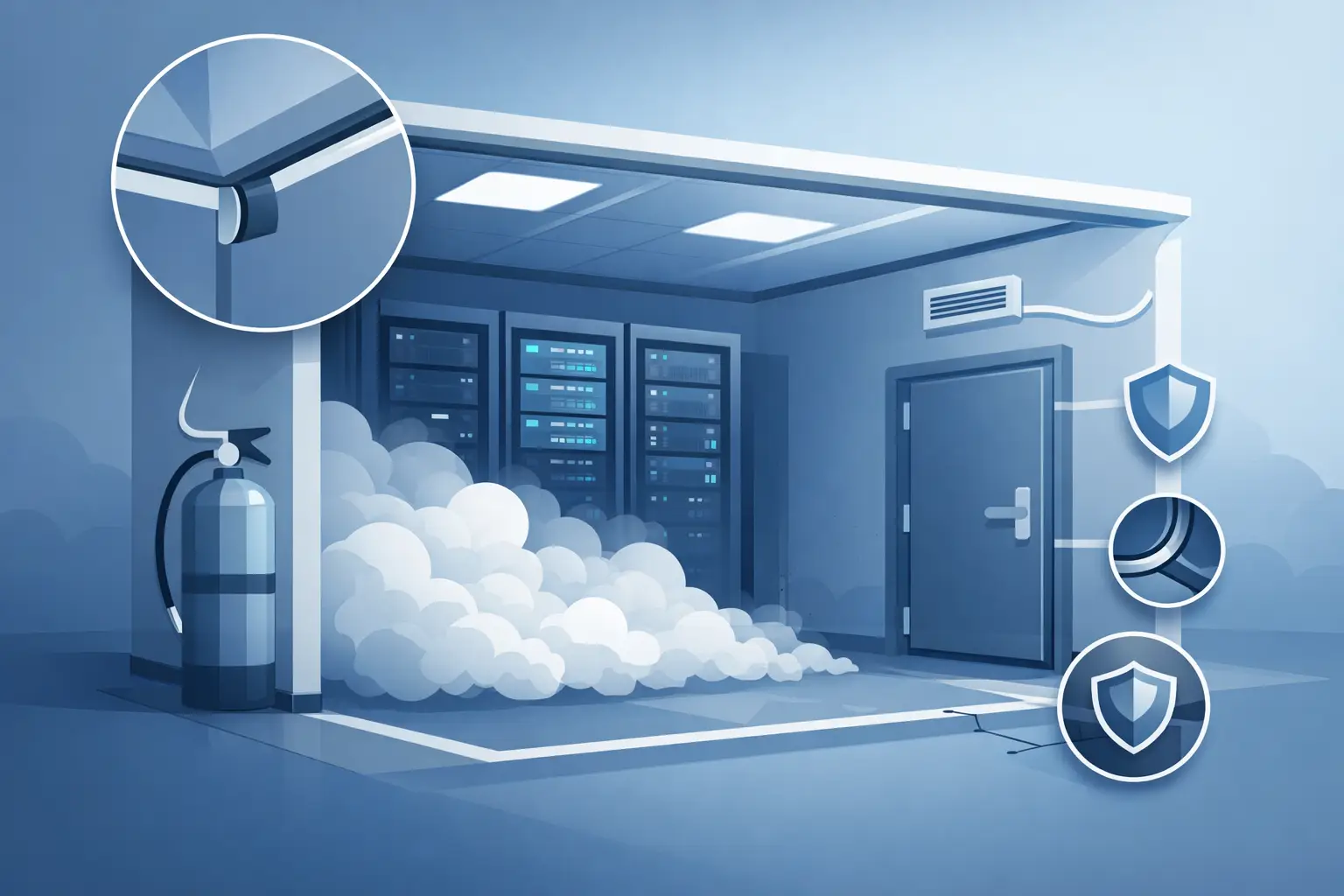
A gaseous suppression system relies on the enclosure retaining the extinguishing concentration for a defined period. Open cable penetrations, unsealed dampers, poorly fitted doors and ventilation paths can allow the agent to escape too quickly. In practical terms, a correctly installed cylinder bank and control panel cannot compensate for a leaky room.
This is why room sealing forms part of the engineering work, not an optional finishing task. Cable and pipe penetrations should be sealed with suitable fire-stopping materials, and ventilation dampers or shutdown arrangements must operate when the system releases. The room also needs pressure-relief provision where required, so discharge does not damage doors, walls or ceilings.
A room-integrity test verifies whether the enclosure is likely to retain the agent for the specified hold time. It avoids the cost and disruption of a full discharge test while providing meaningful assurance that the protected volume performs as designed. Any shortcomings can then be addressed before handover, rather than discovered after an incident.
Design the controls around people and operations
Suppression controls need to do more than release agent. They coordinate detection, alarms, warning devices, ventilation shutdown, door releases, electrical isolation and interfaces with the wider fire alarm system. These functions should be documented in a clear cause-and-effect matrix and demonstrated with the people who will operate the site.
Electrical isolation requires careful thought. De-energising the affected switchgear may reduce the chance of re-ignition and improve safety for responders, but an immediate trip could remove supplies needed for critical processes, life-safety systems or controlled shutdown. In some environments, the system may need to transfer loads first or preserve selected circuits. There is no universal sequence that suits every facility.
Personnel protection is equally central. Warning signs, audible and visual pre-discharge alarms, manual abort arrangements and emergency procedures must reflect the room’s occupancy. Staff and contractors need to understand what the alarms mean, where to go and when it is safe to re-enter. A technically compliant installation still needs to work under the pressure of a real event.
Standards, commissioning and ongoing maintenance
A switchgear suppression system should be designed and installed to the relevant British, European and insurer requirements. For gaseous systems, this commonly includes BS EN 15004 and the associated components and control requirements. The applicable standards will depend on the chosen agent, system type, building arrangement and risk assessment.
Commissioning is where the design becomes a working protective measure. It should include checks on detector operation, alarms, control logic, interfaces, cylinder supervision, pipework and discharge nozzles, along with confirmation that room sealing, dampers and pressure relief are in place. A demonstration of the cause-and-effect sequence helps facilities and operations teams understand exactly what will happen during an alarm and release condition.
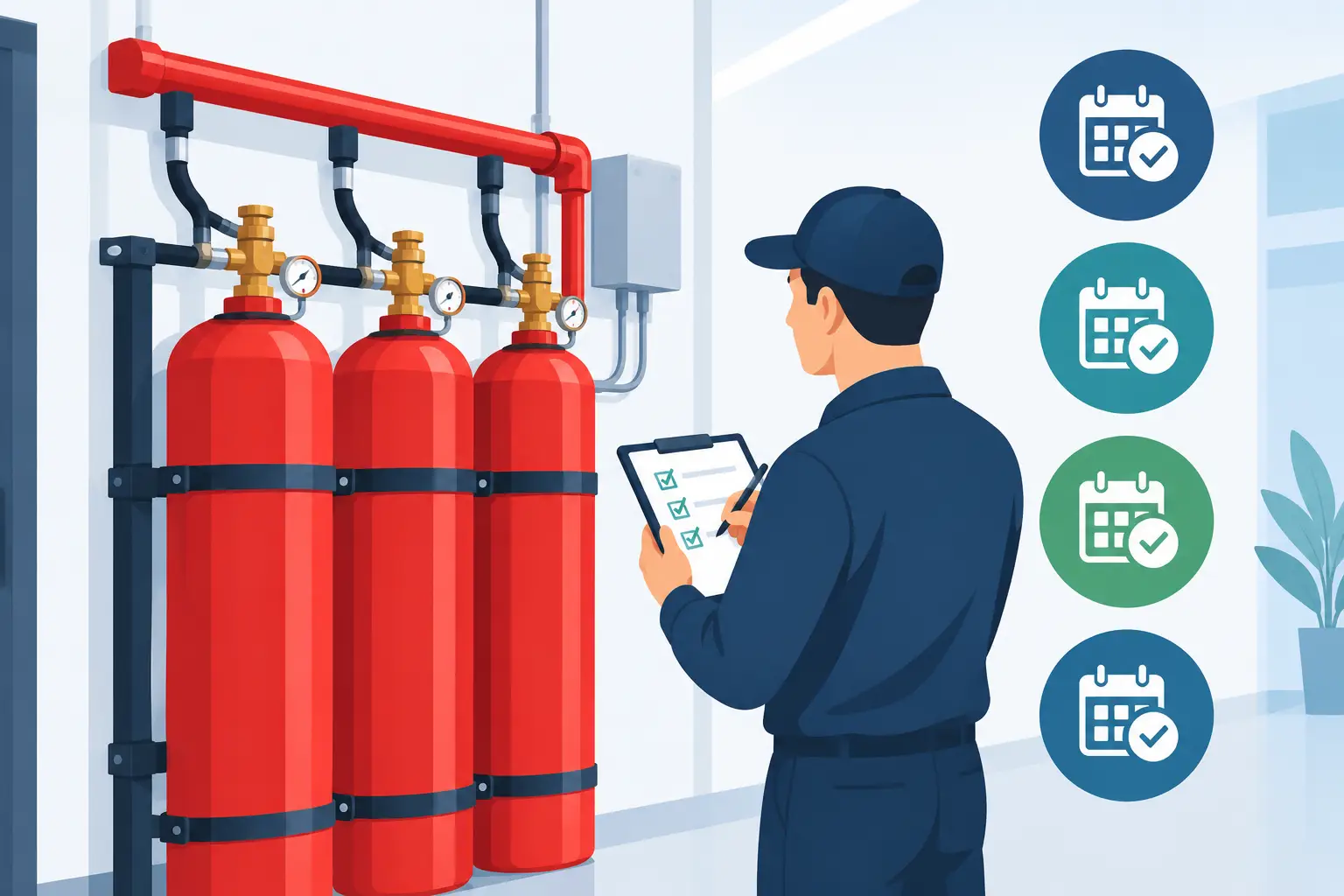
Maintenance then preserves that performance. Detector contamination, changes to room layout, new cable routes, altered ventilation and equipment upgrades can all affect a system that was originally correct. Regular inspection, testing and service records provide assurance for responsible persons, insurers and auditors, while identifying issues before they compromise protection.
A practical route to a defensible solution
The strongest projects are built around a site-specific risk discussion rather than a catalogue specification. Begin with the switchgear’s criticality, its fault history, the room construction and the consequences of losing power. From there, the system can be engineered around detection speed, agent suitability, occupancy safety, enclosure integrity and the required recovery time.
Active Fire Suppression Ltd can take responsibility from initial budgeting and technical design through installation, room sealing, integrity testing, commissioning and long-term maintenance. That joined-up approach reduces the risk of gaps between electrical, building-services and fire-suppression scopes.
When a switchgear room supports operations that cannot simply stop, fire protection should be designed to give the business time, choices and a clearer route back to service after an incident.

Leave A Comment
You must be logged in to post a comment.