


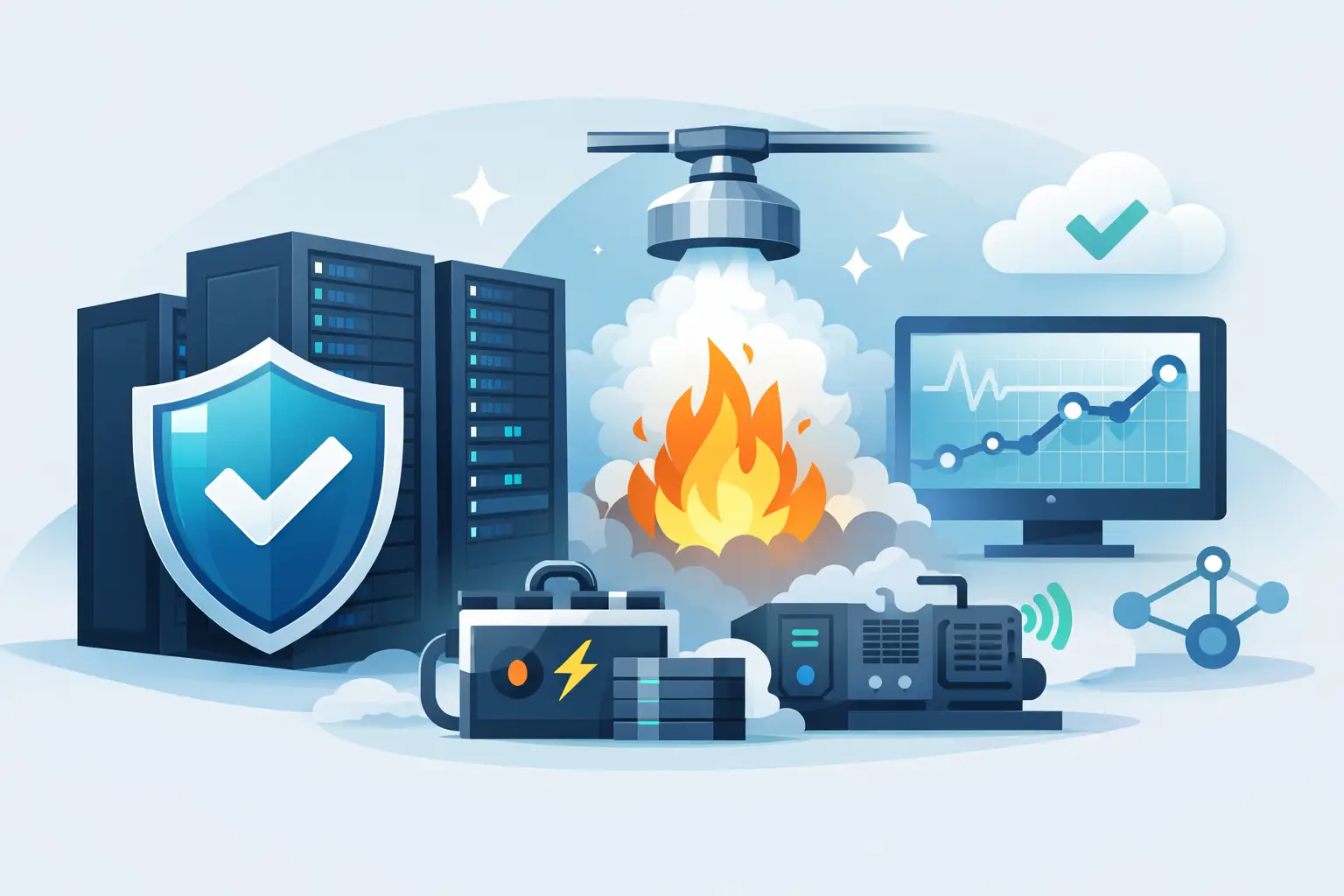
A fire in a critical room rarely begins with visible flame. It may start as an overheating connection, a damaged cable, a failing power supply or a component beginning to smoulder inside a cabinet. By the time conventional detection operates, smoke may already be affecting equipment, operations and the ability to investigate safely. VESDA detectors are designed to identify minute smoke particles at the earliest practical stage, giving responsible teams more time to intervene before a developing fault becomes a damaging fire.
For organisations operating data centres, server rooms, control rooms, battery spaces, communications facilities and specialist manufacturing equipment, that additional warning time can be decisive. It can protect people, preserve high-value assets and reduce the prospect of a prolonged outage.
What are VESDA detectors?
VESDA stands for Very Early Smoke Detection Apparatus. Rather than waiting for smoke to travel naturally to a detector mounted on the ceiling, an aspirating smoke detection system actively draws air from the protected area through a network of small-bore pipes.
Air enters through carefully positioned sampling holes and passes to a highly sensitive detector. The detector analyses the air for products of combustion and can identify low concentrations of smoke that may not yet be visible in the room. This makes VESDA particularly suitable where the first indication of a fault needs to be acted on well before open fire, dense smoke or heat are present.
The detection unit is normally located where it can be accessed for testing and maintenance, while the sampling pipework can be installed within ceiling voids, under floors, around equipment cabinets or in other difficult-to-reach areas. This arrangement can provide effective coverage without relying solely on devices at ceiling level.
Why early warning matters in high-value environments
In many commercial buildings, a standard fire alarm arrangement is appropriate. In a critical environment, however, the cost of waiting for a conventional alarm threshold can be much higher. Smoke contamination can damage electronic components, interrupt clean processes and require costly restoration even where a fire is extinguished quickly.
A very early warning signal gives site teams options. They may investigate a developing equipment fault, isolate power to affected plant, pause a process, remove a potential ignition source or prepare a suppression system response. The right action depends on the site procedures and the alarm level reached, but the key benefit is time to make a controlled decision.
This is particularly valuable in data centres and communications rooms, where a small electrical fault can affect services far beyond the room itself. It also matters in industrial control spaces, archives, laboratories and facilities with continuous operations, where unplanned shutdown can create safety, production and contractual consequences.
Early warning should not be confused with a guarantee that no fire will occur. A VESDA system is one part of a coordinated fire strategy. Its value lies in detecting a developing condition quickly and passing a reliable signal to people, controls and, where appropriate, automatic suppression equipment.
How an aspirating detection system works
A VESDA installation is engineered around the room, the risk and the operational conditions rather than selected as a simple one-for-one replacement for point detectors. The pipe network must draw representative air samples from the areas where smoke is most likely to appear and where it can be detected promptly.
In a server room, for example, sampling may be positioned at high level, within a ceiling void and beneath a raised floor. Smoke movement can be affected by air-conditioning units, hot and cold aisle arrangements, cable routes and equipment airflow. In a production area, the design may need to account for high ceilings, dust, humidity or local extraction.
The detector continuously draws air through the pipework. Filters and monitoring functions help it distinguish normal environmental conditions from smoke, while fault monitoring can identify issues such as a blocked pipe, loss of airflow or a sampling network problem. Good design and commissioning are essential, because sensitivity alone does not compensate for poorly placed sampling points.
Alarm levels support a measured response
One of the practical advantages of VESDA detection is the ability to use multiple alarm thresholds. These can be configured to suit the site’s emergency plan. A low-level alert may prompt investigation by facilities or security staff, while higher alarm stages can initiate wider fire alarm actions, plant shutdown or a suppression release sequence.
This staged approach is useful where nuisance alarms would be operationally disruptive but delayed action is unacceptable. It should be agreed with the building operator, fire strategy provider and relevant stakeholders, not simply set to maximum sensitivity. An excessively sensitive system in a contaminated or poorly controlled environment can create avoidable alarms and reduce confidence in the system.
Where VESDA detection is most effective
VESDA detectors are commonly specified where early smoke warning provides a clear continuity benefit. Data centres, IT suites and telecoms rooms are established applications, but the technology is equally relevant in battery rooms, electrical switchrooms, clean manufacturing spaces, heritage stores and high-bay facilities.
They can also be valuable where access is limited. Sampling pipework can reach ceiling voids, underfloor spaces, enclosed cabinets and areas that would otherwise be difficult to inspect or test regularly. In spaces with high air movement, aspirating detection can be designed around airflow patterns rather than relying on smoke reaching a single static device.
There are limits. VESDA is not automatically the best solution for every room. A small, low-risk office may not justify the additional design, installation and maintenance cost. Environments with substantial dust, aerosols, steam or airborne contaminants need particular care, as these conditions influence filter selection, detector configuration and maintenance intervals. The system should be selected for the actual risk, not specified because it is perceived as the most advanced option.
Integrating VESDA with fire suppression
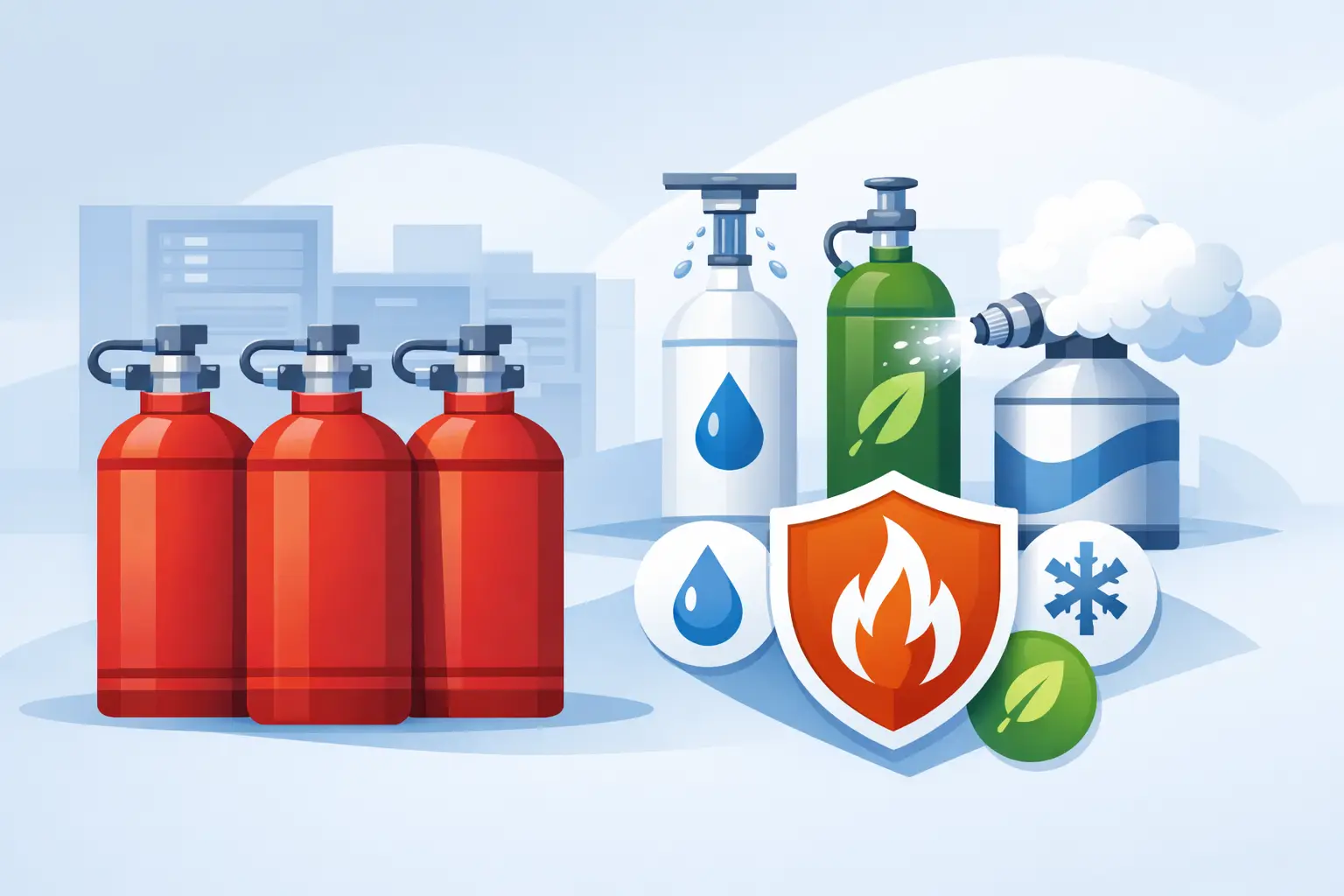
For rooms protected by gaseous fire suppression, such as IG55, IG541, IG01, IG100, INERGEN®, Novec 1230 or HFC227ea systems, early detection can form a critical part of the release logic. In many applications, a confirmed fire signal from two independent detection zones is used to trigger the suppression sequence, subject to the agreed cause-and-effect design.
VESDA may provide one or both detection inputs, or it may deliver an early investigation alarm before separate confirmation devices operate. The appropriate arrangement depends on the room layout, fire risk, occupancy, suppression agent, insurer requirements and applicable standards.
A suppression system must never be treated as an isolated installation. Detection, releasing controls, sounders, warning signage, manual controls, plant shutdowns, door retention, pressure relief and room integrity all need to work together. If any element is overlooked, the intended response may be delayed or the extinguishing concentration may not be maintained for long enough.
Design, testing and maintenance considerations
Aspirating detection requires disciplined engineering throughout its life. Before installation, the designer should understand the protected volume, airflow, likely fire sources, environmental contaminants, access constraints and the required response time. Pipe calculations, hole sizes, pipe lengths and transport times must all be considered so that air reaches the detector within the required design parameters.
Following installation, commissioning verifies detector performance, airflow supervision, alarm outputs and cause-and-effect actions. Where the system interfaces with suppression, testing should confirm the full sequence without compromising safety or unnecessarily discharging agent. Site staff should also understand what each alarm level means and who is responsible for responding.
Ongoing maintenance is equally important. Filters require inspection or replacement, pipework must remain intact, and changes to room layouts, cooling systems or equipment loads may affect detection performance. A room that has gained new cabinets, partitions or altered airflow since installation may need its detection arrangement reviewed.
Active Fire Suppression provides integrated detection and suppression support, from risk discussion and technical design through installation, commissioning, testing and continuing maintenance. That joined-up approach helps ensure the detector, control equipment and suppression system are designed to operate as one protective measure rather than as disconnected components.
Choosing the right level of protection
The strongest case for VESDA detection is not simply that it detects smoke earlier. It is that earlier, dependable information allows an organisation to protect continuity on its own terms. The right design reflects the consequences of interruption, the nature of the equipment at risk and the realistic actions available once an alert is received.
If a room contains assets or processes that cannot tolerate smoke, water damage or lengthy recovery, early warning deserves a detailed conversation. A site-specific assessment can establish whether VESDA detection, conventional detection or a combined approach provides the right balance of protection, practicality and cost.
Leave A Comment
You must be logged in to post a comment.