

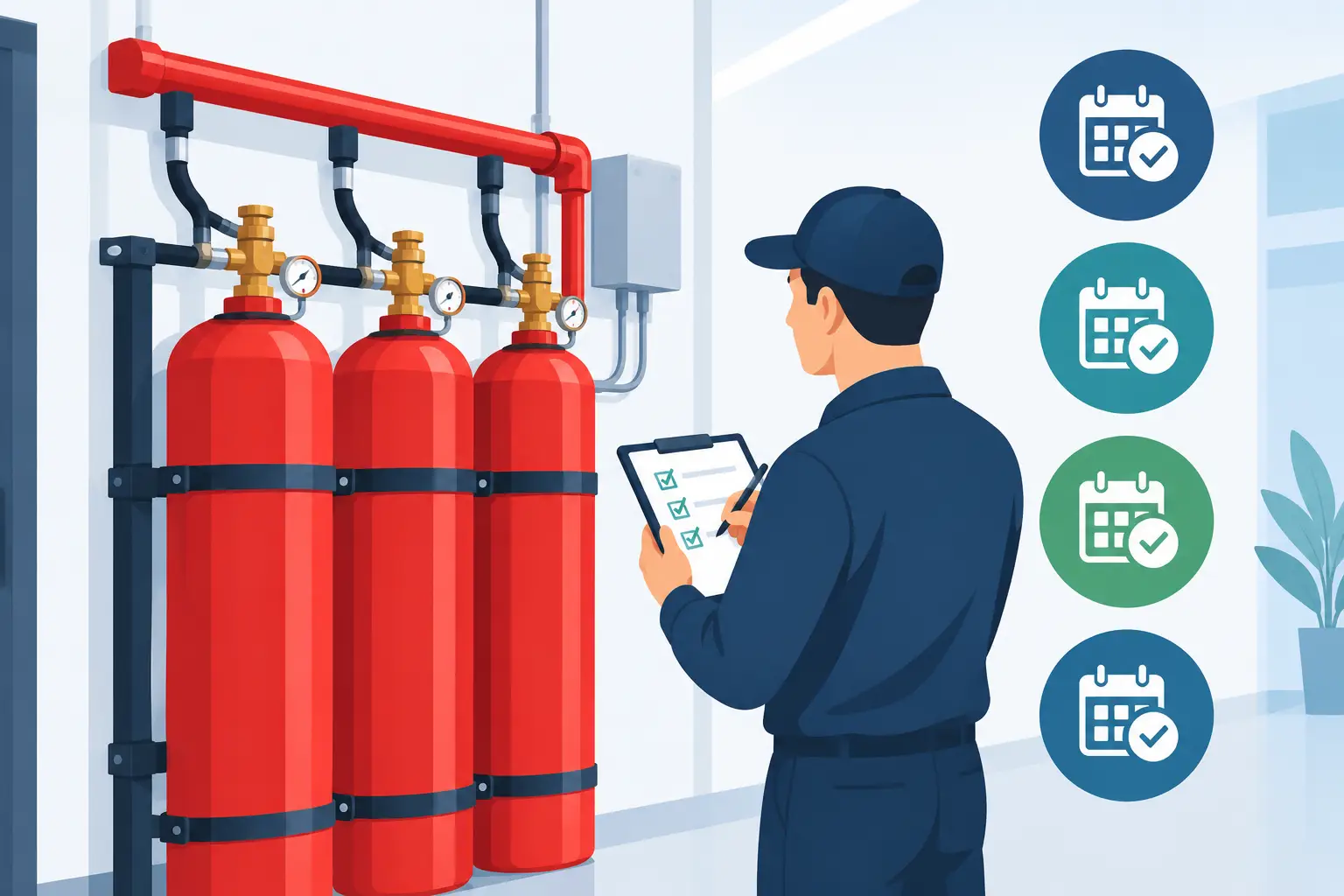
A fire suppression system is often installed to protect the part of a business that cannot simply be replaced tomorrow: a live server environment, production line, electrical room, commercial kitchen or battery space. Suppression inspection frequency therefore is not an administrative detail. It is what helps ensure the system will detect, release and contain a fire as designed, while avoiding unplanned discharge, compliance gaps and costly interruption.
For UK businesses, there is no sensible one-size-fits-all interval that can be applied without looking at the system, risk and operating conditions. The correct programme depends on the extinguishing agent, control equipment, protected enclosure, manufacturer instructions, relevant standards, insurer requirements and how the site is used. A data centre operating around the clock has different exposure from a kitchen that sees intense daily cooking activity, even where both rely on automatic suppression.
What determines suppression inspection frequency?
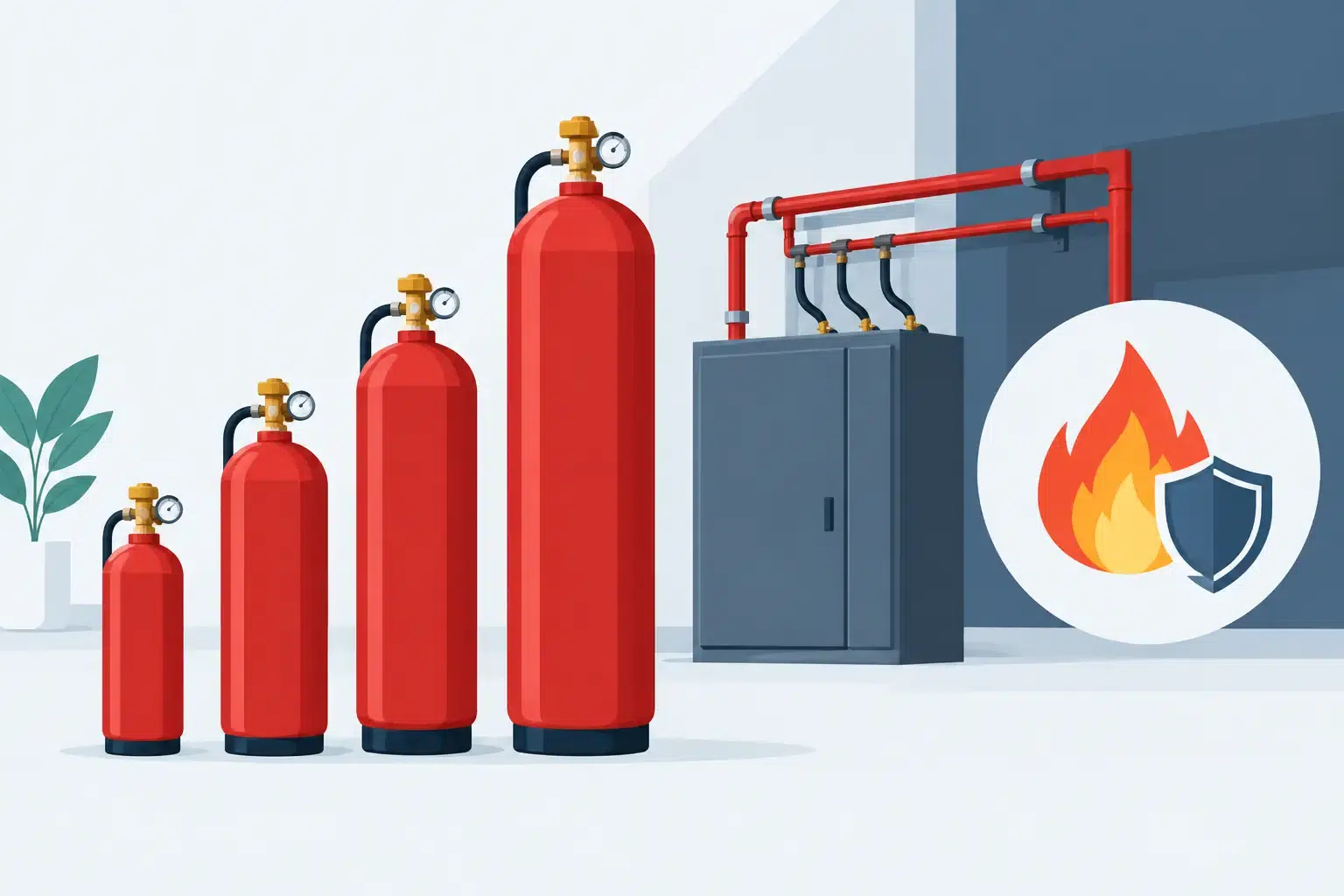
The starting point is the system design and the standards that apply to it. Gaseous systems protecting enclosed hazards, for example, need their cylinders, pipework, nozzles, detection, releasing controls, warning devices and room integrity considered as one engineered arrangement. A clean-agent system using Novec 1230 or HFC227ea, and an inert gas system using IG55, IG541, IG01, IG100 or INERGEN®, each have their own equipment and performance considerations.
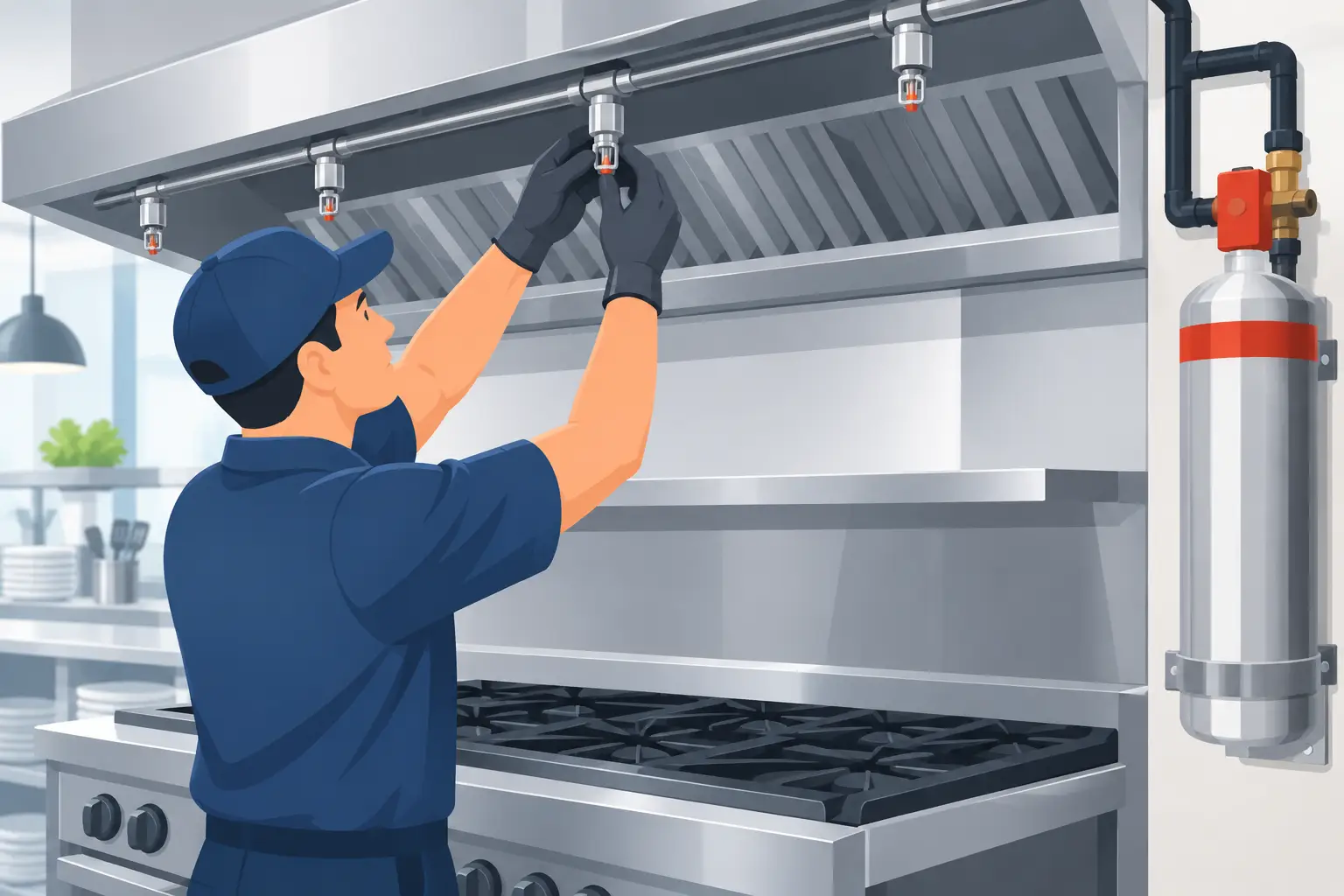
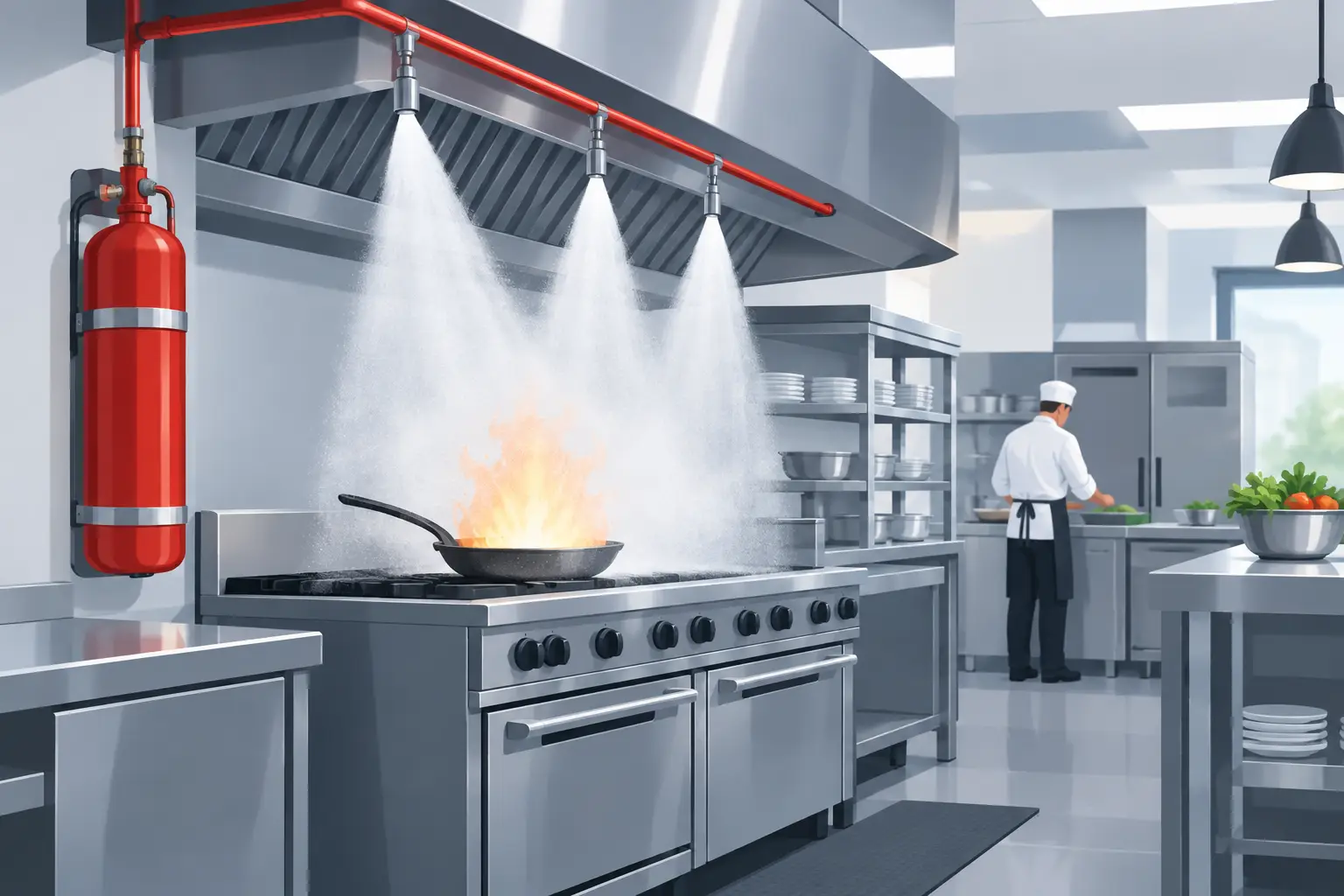
CO2 systems demand particular care because of the life-safety controls required around a potentially occupied area. Wet-chemical kitchen systems are exposed to grease, heat and frequent changes to cooking equipment. Dry-powder systems may protect industrial risks where dust, vibration or corrosive conditions affect components. The agent alone does not set the schedule, but it strongly influences what a competent engineer must inspect.
The environment matters just as much. Building work can damage detection cabling or obstruct nozzles. Changes to server racks, partitions, ductwork and cable penetrations can compromise a room’s ability to retain extinguishing concentration. A shift in manufacturing process may introduce a different fire class or alter ventilation arrangements. These changes can mean an inspection is needed sooner than the planned visit.
A practical maintenance rhythm for fixed suppression systems
A planned programme usually combines routine site checks with periodic attendance by a competent suppression specialist. The precise intervals should be confirmed against the system documentation, applicable standards, manufacturer guidance and insurer conditions, rather than copied from a generic checklist.
Site teams should carry out simple, documented visual checks at regular intervals. These checks are not a substitute for engineered maintenance, but they can identify obvious issues early: a control panel showing a fault, a damaged manual release point, blocked discharge nozzles, missing safety signage, an inaccessible cylinder bank or changes within the protected enclosure.
Professional inspections are commonly planned at quarterly, six-monthly and annual points, according to the system type and risk. A periodic service may test indication, fault monitoring, interfaces, alarms and releasing circuits while verifying the physical condition of cylinders, actuators, pipework and ancillary equipment. Annual work is normally more comprehensive and may include checks that require planned isolation, testing of shutdown interfaces and closer examination of system components.
Some activities are less frequent but remain essential. Cylinder pressure or weight checks, hose replacement, pressure testing, detector servicing, battery replacement and room-integrity testing each follow requirements set by the equipment, standard and system design. They should be scheduled before their due date, not discovered during an audit or after a fault occurs.
Why room integrity testing cannot be overlooked
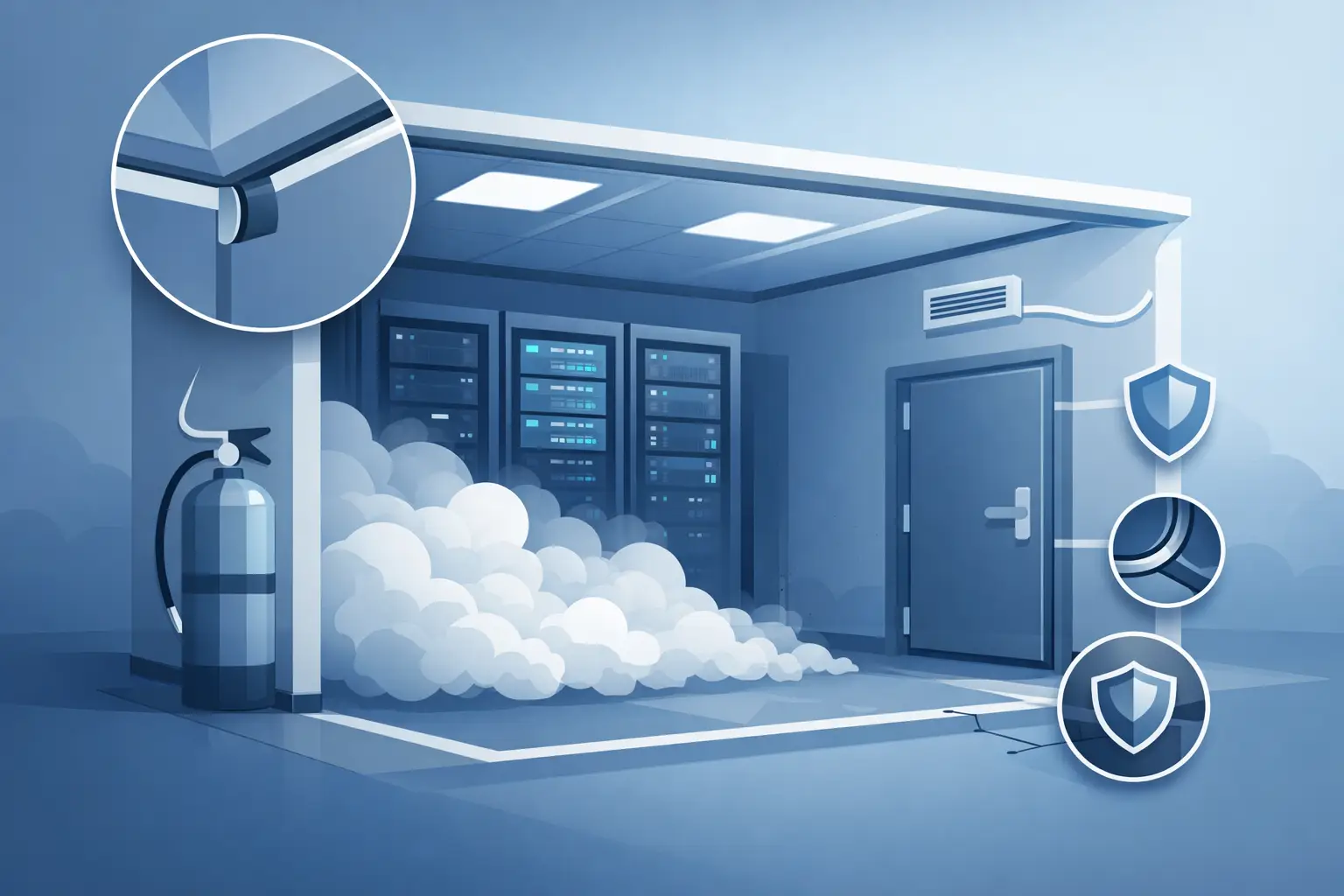
For an enclosure protected by gaseous suppression, the gas must remain at the required concentration for long enough to control the fire. A perfectly maintained cylinder bank cannot compensate for unsealed cable routes, poorly fitting doors, open ceiling voids or later alterations to the room fabric.
Room-integrity testing, often referred to as a door fan test, assesses whether the protected enclosure can hold the design concentration for the required retention period. It is particularly relevant after building alterations, changes to services or any work that creates new penetrations. In many critical rooms, treating integrity testing as a one-off commissioning activity leaves unnecessary uncertainty.
The appropriate retest interval depends on the enclosure and its history. A stable purpose-built room may need less intervention than a constantly changing communications room or data hall. Where turnover of contractors is high or cabling changes are routine, a more proactive approach reduces the risk of finding a problem only when it matters most.
Inspection means more than checking cylinders
A suppression system is a coordinated sequence. Detection has to identify the developing fire. The control panel must interpret the signal and start the correct logic. Audible and visual warnings need to operate, plant shutdowns may need to occur, dampers or doors may need to close, and the agent must discharge into a room capable of retaining it.
That is why a meaningful inspection considers interfaces as well as the extinguishing equipment. Engineers should assess the condition and operation of items such as releasing panels, manual release and abort controls, sounders, beacons, remote status indicators, pressure switches, ventilation shutdowns and fire alarm connections. Where appropriate, testing should be carefully managed to avoid disruption to live operations while still proving the intended cause-and-effect sequence.
For facilities teams, this integrated view has a practical benefit. A panel fault may appear minor, yet it could prevent a critical shutdown signal or leave the system unable to release automatically. Conversely, an interface that operates unexpectedly can stop production or affect IT services. Testing needs to prove protection without introducing avoidable operational risk.
When to bring an inspection forward
Planned maintenance dates are not a reason to wait after a material change. An additional inspection should be considered following accidental damage, a control-panel fault, a discharge, cylinder replacement, significant building work, changes to ventilation or alterations to the protected hazard.
The same applies when a protected room changes use. Installing higher-value equipment, adding lithium-ion battery charging, rearranging kitchen appliances or increasing fuel loading may require more than a service visit. The existing agent quantity, nozzle layout, detection arrangement and enclosure assumptions may all need to be reviewed.
After any discharge, the system should be professionally reinstated and checked before it is returned to service. This includes replacing or recharging cylinders as applicable, resetting controls, confirming interfaces and investigating the event that caused operation. Reinstatement is also the right time to identify any improvements that would reduce future downtime.
Records, responsibilities and insurer confidence
Clear records are a core part of an effective inspection regime. They demonstrate that faults have been identified, corrective work has been completed and critical life-safety infrastructure is being managed responsibly. For organisations with multiple sites, consistent records also make it easier to identify recurring problems, plan budgets and verify that statutory and insurer obligations are being met.
The responsible person should know who owns each action. Facilities teams may monitor panel status and keep access clear, while a specialist contractor carries out maintenance, repairs and formal testing. Building-services changes may sit with another contractor, yet they can affect suppression performance. A named point of coordination prevents gaps between trades.
At Active Fire Suppression, maintenance planning is approached as part of the system’s full operating life, not as an isolated annual visit. That means considering the installed agent, detection and releasing controls, enclosure condition, site activity and the business consequence of a failure.
Set the interval around the risk, not the diary
The best suppression inspection frequency is one that reflects how your premises actually operate and gives faults little opportunity to develop unnoticed. A well-planned programme protects more than compliance: it protects recovery time, critical equipment and the confidence that a fire event will not become a business-stopping incident.
If your operation has changed since the system was commissioned, or if maintenance records do not clearly show what is being checked and why, it is worth reviewing the arrangement now. A practical discussion about the protected risk can clarify the right inspection scope before a small gap becomes a serious exposure.

Leave A Comment
You must be logged in to post a comment.