

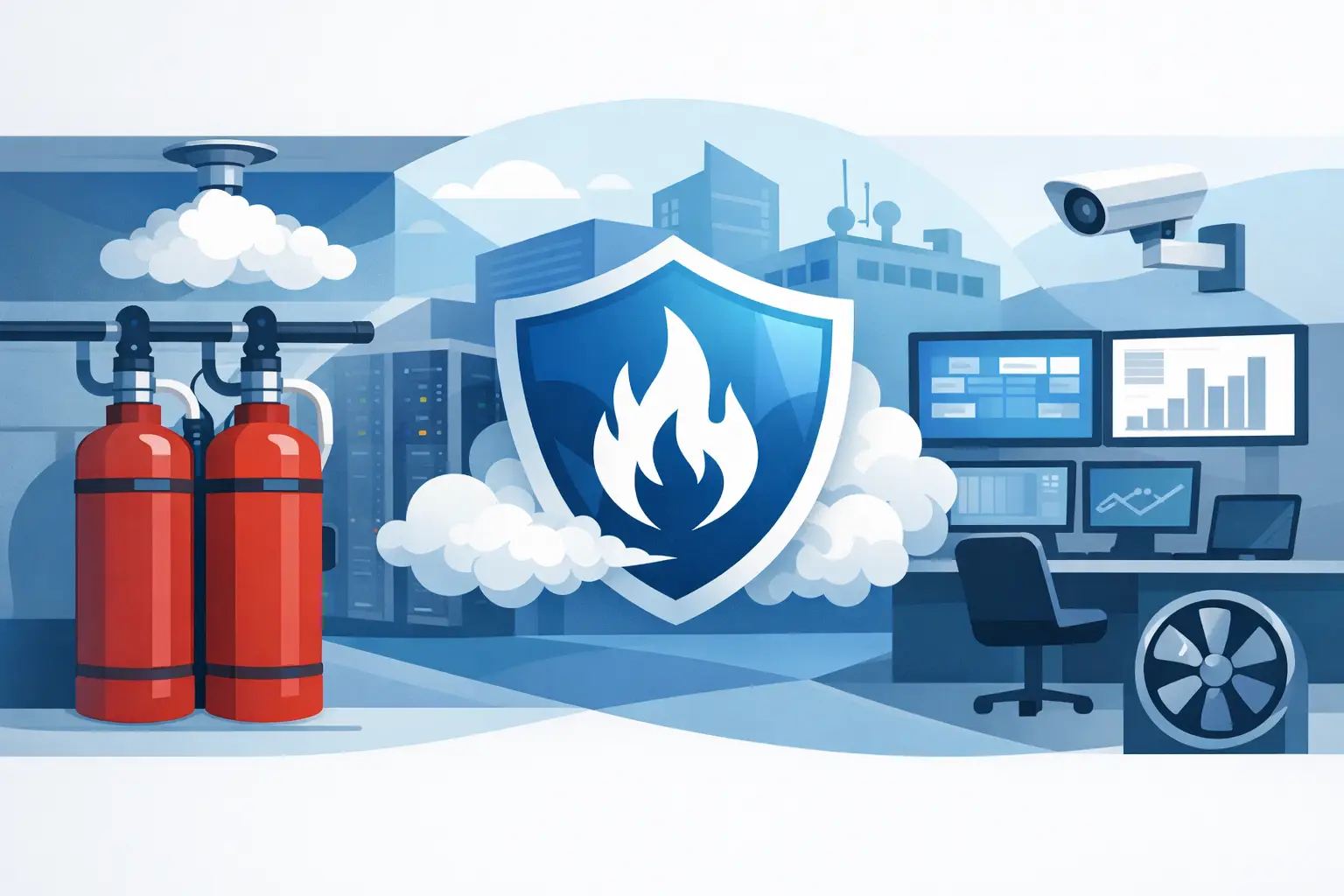
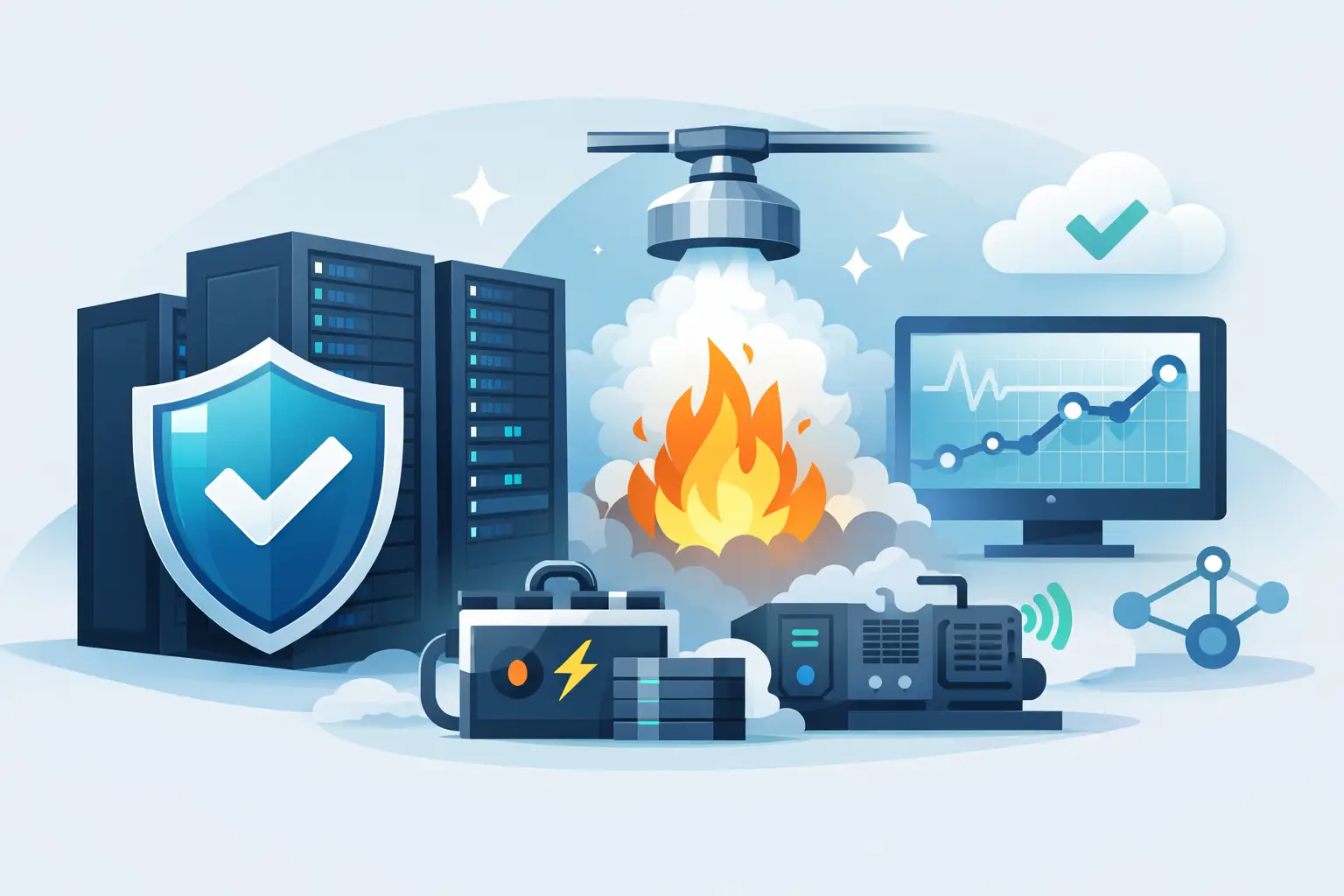
A fire in a server room, control room or specialist plant area can become a business-continuity event long before flames cause structural damage. Smoke contamination, corrosive residues and water from conventional suppression can take essential equipment out of service for days. This Novec 1230 review considers where the clean agent performs well, where its limitations lie, and what UK operators should establish before specifying, upgrading or maintaining a system.
Novec 1230 is the widely recognised trade name for FK-5-1-12, a clean extinguishing agent used in total flooding fire-suppression systems. It is discharged into a properly enclosed hazard area to extinguish a fire quickly, without leaving residue on sensitive equipment. That makes it a familiar option for data and communications rooms, archives, electrical switchrooms, control spaces and high-value industrial equipment.
The right question is not simply whether the agent is effective. It is whether it remains the right engineered solution for the room, the fire risk, the people who may occupy it, current supply arrangements and the organisation’s environmental policy.
Novec 1230 review: what the agent does well
FK-5-1-12 suppresses fire principally by removing heat from the combustion process. Unlike an inert gas system, it does not depend primarily on reducing oxygen concentration. This enables lower design concentrations by volume than many inert gas systems, which can be an advantage where cylinder storage space is constrained.
For critical environments, its clean discharge is the central benefit. The agent is electrically non-conductive, does not leave powder, foam or water residue, and is intended to allow protected equipment to be returned to operation following the appropriate post-incident checks. In a communications room, for example, avoiding water damage can be as important as stopping the initial fire.
Properly designed systems also act quickly. A total flooding installation is normally designed to reach its extinguishing concentration within a defined discharge time, following the relevant standard and the system manufacturer’s listed design criteria. Fast automatic intervention can limit the spread of fire while protecting the assets and processes that keep an operation running.
Novec 1230 has also historically been selected where occupied-space considerations are important. However, this should never be interpreted as a reason to treat a discharge casually. Every system needs suitable detection, pre-discharge warning, evacuation procedures, abort arrangements where appropriate, signage and trained site personnel. The safe use of any gaseous extinguishing system depends on the completed design, not the agent name on the cylinders.
Where a Novec 1230 system is a good fit
A clean-agent system may be well suited to an enclosed room containing equipment that cannot tolerate water or residue. Typical applications include server rooms, data centres, UPS rooms, electrical control rooms, telecoms facilities, museums and archives, and certain manufacturing enclosures.
The enclosure is crucial. Total flooding is not a general-purpose solution for an open warehouse, a loading bay or a poorly separated process area. The room must retain the necessary extinguishing concentration for the specified hold time. Doors, cable penetrations, dampers, raised floors, suspended ceilings and building joints all need consideration.
This is why a room-integrity test is not an optional final formality. It verifies whether the protected enclosure is likely to retain the extinguishing concentration for the required duration. If the room leaks excessively, even a correctly calculated cylinder quantity may not deliver the intended protection. Remedial sealing, damper interlocks or a revised protection strategy may be needed.
Novec 1230 is also not automatically the best response to every fire class. Deep-seated, shielded or high-energy hazards may require particular design measures, longer hold times, local application or a different agent entirely. Where the principal risk is a commercial kitchen, wet-chemical suppression is generally the appropriate approach. For some machinery, battery-related hazards or processes involving reactive materials, the fire scenario must be assessed in detail before an agent is selected.
The issues that require careful scrutiny
The most significant current consideration is long-term product availability and environmental strategy. FK-5-1-12 has a low global warming potential compared with many legacy HFC clean agents and no ozone-depletion potential. Nevertheless, it is a fluorinated substance, and the wider regulatory and market direction around PFAS requires informed procurement decisions.
In addition, 3M announced its intention to exit PFAS manufacturing, including the manufacture of Novec branded products. For building operators with existing systems, this does not mean a maintained installation suddenly stops protecting its room. It does mean that agent provenance, service support, cylinder recharge arrangements, future supply and the viable lifecycle of the system should be reviewed rather than assumed.
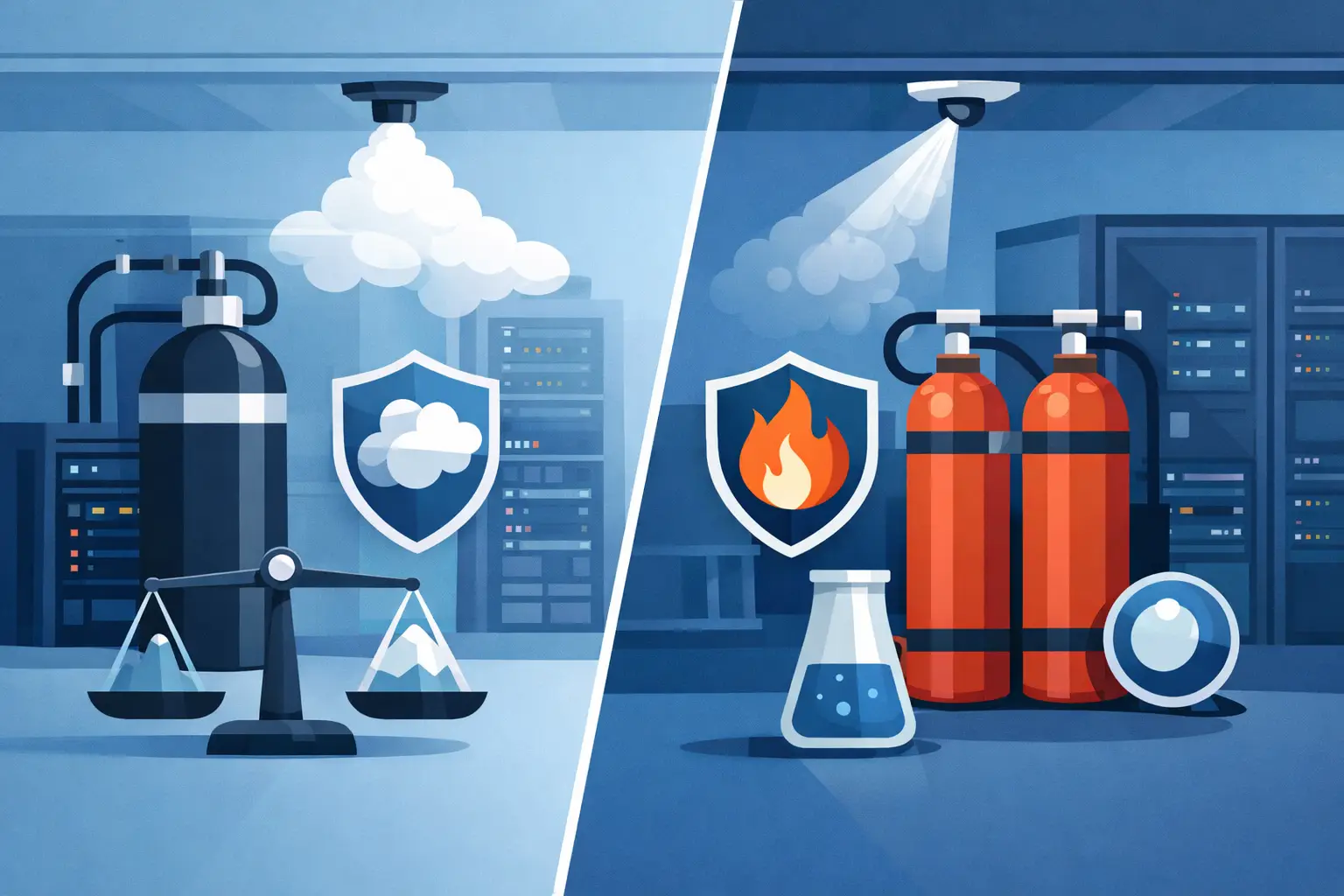
A responsible assessment should distinguish between maintaining a serviceable existing system and specifying a new installation intended to operate for many years. Stock availability, agent certification, insurer expectations and client sustainability commitments can all affect the decision. An alternative clean agent or an inert gas system may offer a more suitable long-term route, depending on the site.
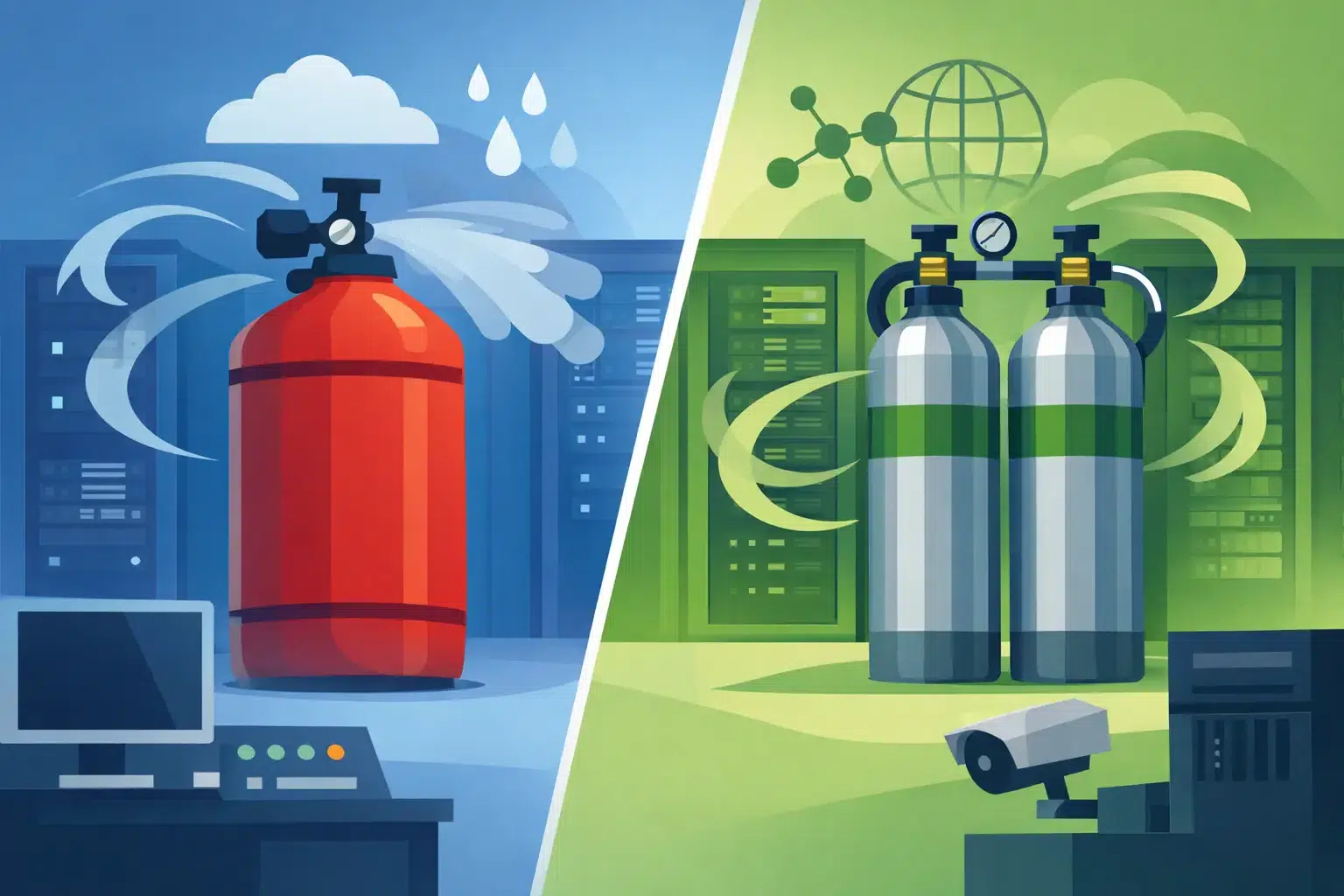
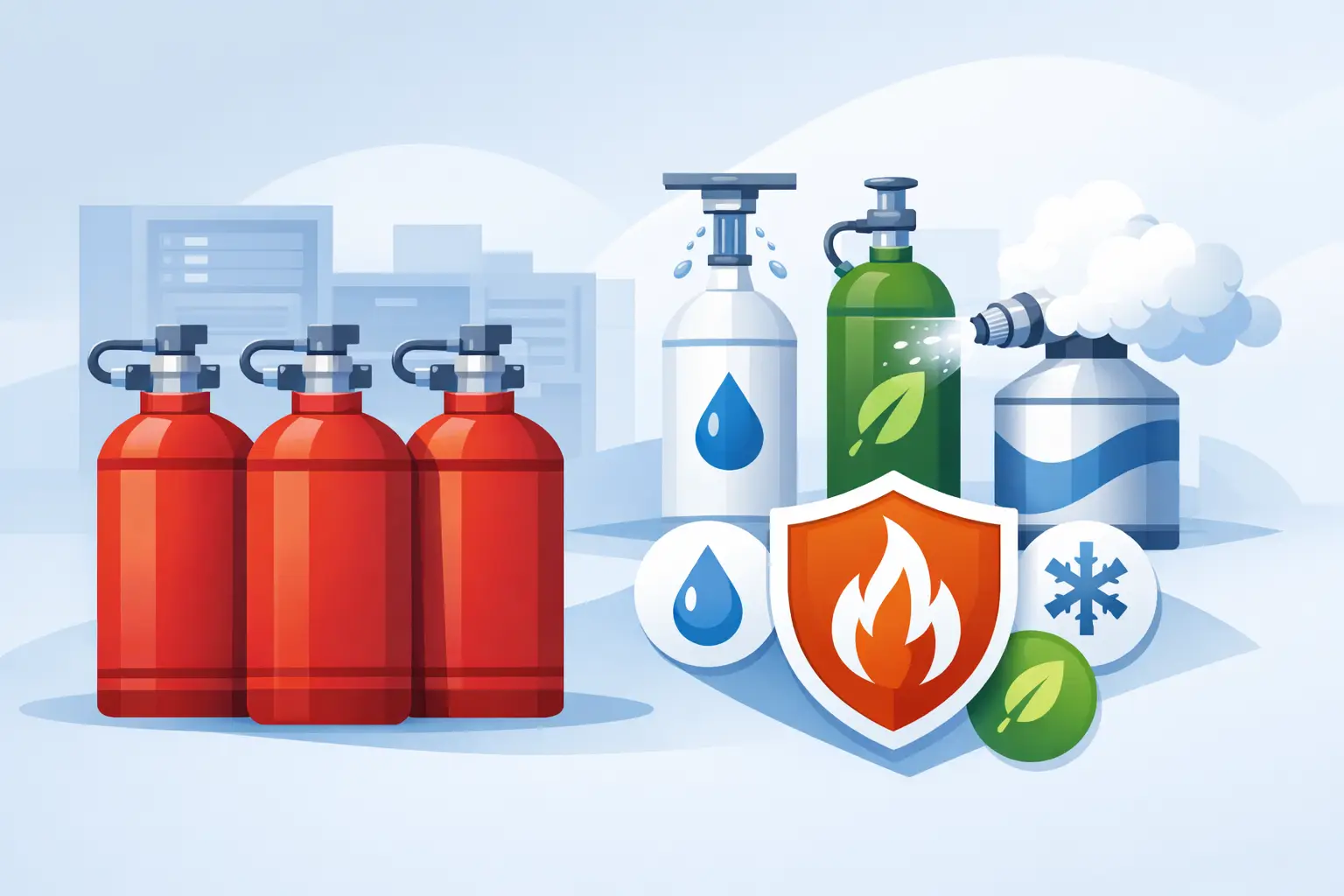
There are physical trade-offs too. Compared with inert gas, FK-5-1-12 may reduce cylinder storage requirements. Conversely, inert agents such as IG55, IG541, IG01 and IG100 are naturally occurring gases and may align better with an organisation’s environmental policy and future-agent strategy. They can, however, require more storage volume and need equally careful consideration of room pressure, discharge noise, occupancy and enclosure integrity.
Over-pressure venting is another essential design issue. Discharging a gaseous agent rapidly changes the pressure within the enclosure. Without correctly sized pressure-relief venting, the discharge could damage ceilings, walls, doors or other elements of the room. Vent sizing must be calculated as part of the engineered system, rather than added as an afterthought.
Detection and controls matter as much as the cylinders
No suppression system should be designed around cylinders alone. Early, reliable detection provides the time needed to investigate a developing incident, initiate alarms, close dampers, stop ventilation where necessary and discharge only when the confirmed fire condition demands it.
Many critical rooms benefit from multi-stage detection. A very early warning aspirating system can identify abnormal smoke conditions before a visible fire develops, while confirmed detection zones can initiate the automatic extinguishing sequence. The precise cause-and-effect programme should reflect the operational risk. A data room that is occupied only occasionally has different requirements from a continuously staffed control room.
Controls must also interface correctly with the building. Depending on the risk assessment and system design, this may include air-handling shutdown, fire damper closure, door release, equipment shutdown or alarm transmission to a receiving centre. These functions need to be tested during commissioning, not merely listed in the design documentation.
The relevant design and maintenance framework will commonly include BS EN 15004, ISO 14520, BS 5306-4 and, where required by a project or insurer, NFPA 2001. The applicable standard, system approval basis and local fire strategy should be confirmed at the outset. Compliance is not a substitute for sound engineering, but it provides the disciplined basis for calculation, installation, testing and ongoing servicing.
Questions to ask before keeping or specifying Novec 1230
Before making a decision, establish the actual hazard and the consequence of downtime. Confirm whether the enclosure can be made sufficiently tight, whether people may be present during discharge, and whether the available cylinder location is practical. Review the site’s environmental requirements and ask for a clear explanation of agent sourcing, future maintenance support and recharge arrangements.
It is also worth examining the existing system’s condition rather than assuming replacement is required. Cylinder condition, pipework, nozzles, control panels, detection, pressure vents, room sealing and cause-and-effect logic all influence whether an upgrade, remedial works or a full redesign is most proportionate.
For a new project, compare like with like. A lower initial equipment cost can be outweighed by extensive room sealing works, structural alterations, poor access for cylinders or uncertainty around long-term agent strategy. The best option is the one that controls the identified risk, meets the required standard and can be maintained confidently throughout its working life.
Novec 1230 remains a technically capable clean-agent solution for suitable enclosed hazards, particularly where avoiding water and residue damage is critical. Yet agent choice should now be treated as a whole-life engineering decision, not a catalogue selection. Active Fire Suppression can assess the room, the operational consequence of fire and the available suppression options, then take responsibility from design through installation, integrity testing, commissioning and ongoing support.
Leave A Comment
You must be logged in to post a comment.