

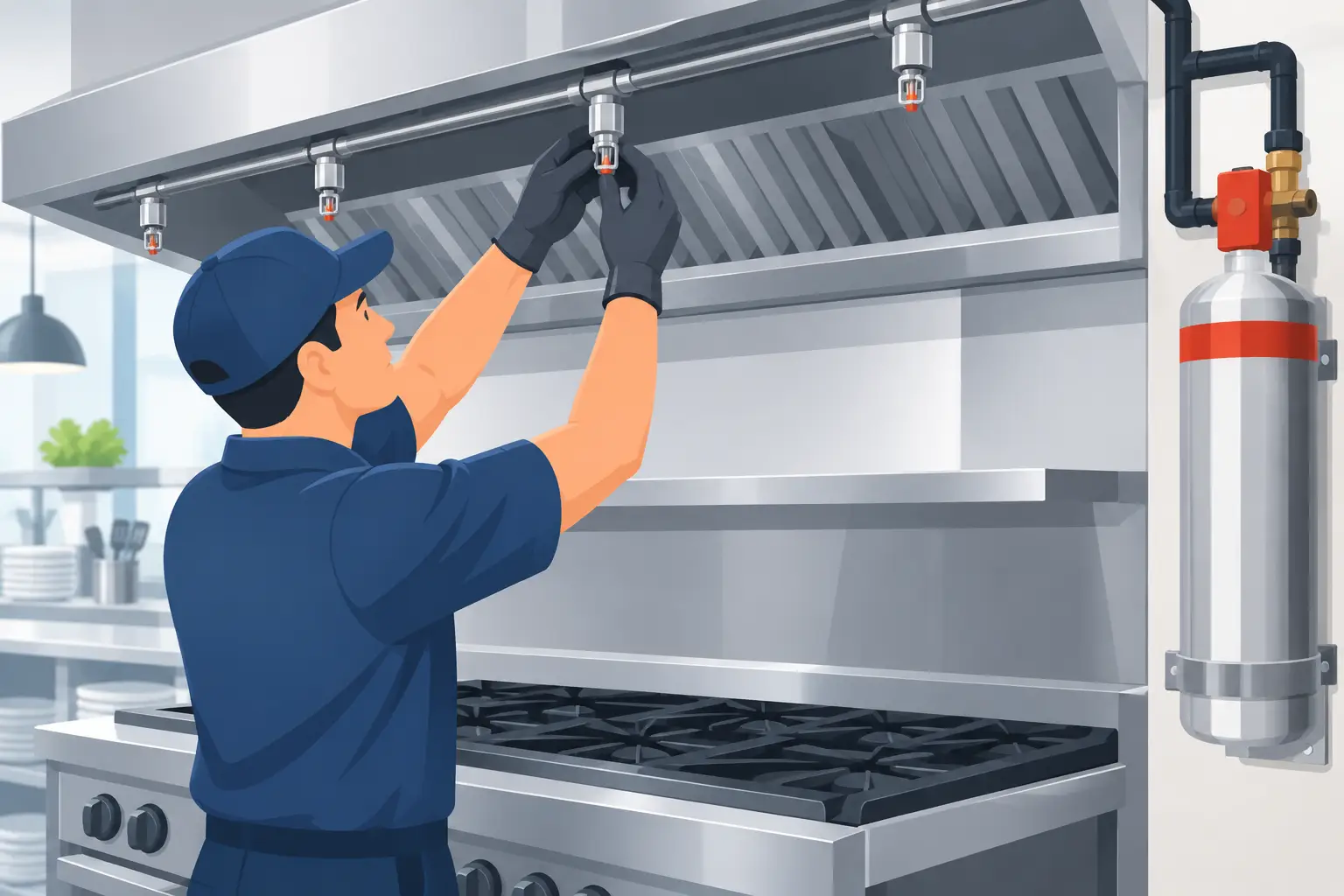
A cooking line can change faster than the fire risk assessment that originally supported it. A new chargrill, altered canopy, replacement fryer or moved wok burner can place hot oils and fat-laden vapours outside the protected discharge pattern. That is why installing kitchen suppression nozzles is an engineered task, not a matter of fixing components beneath a hood.
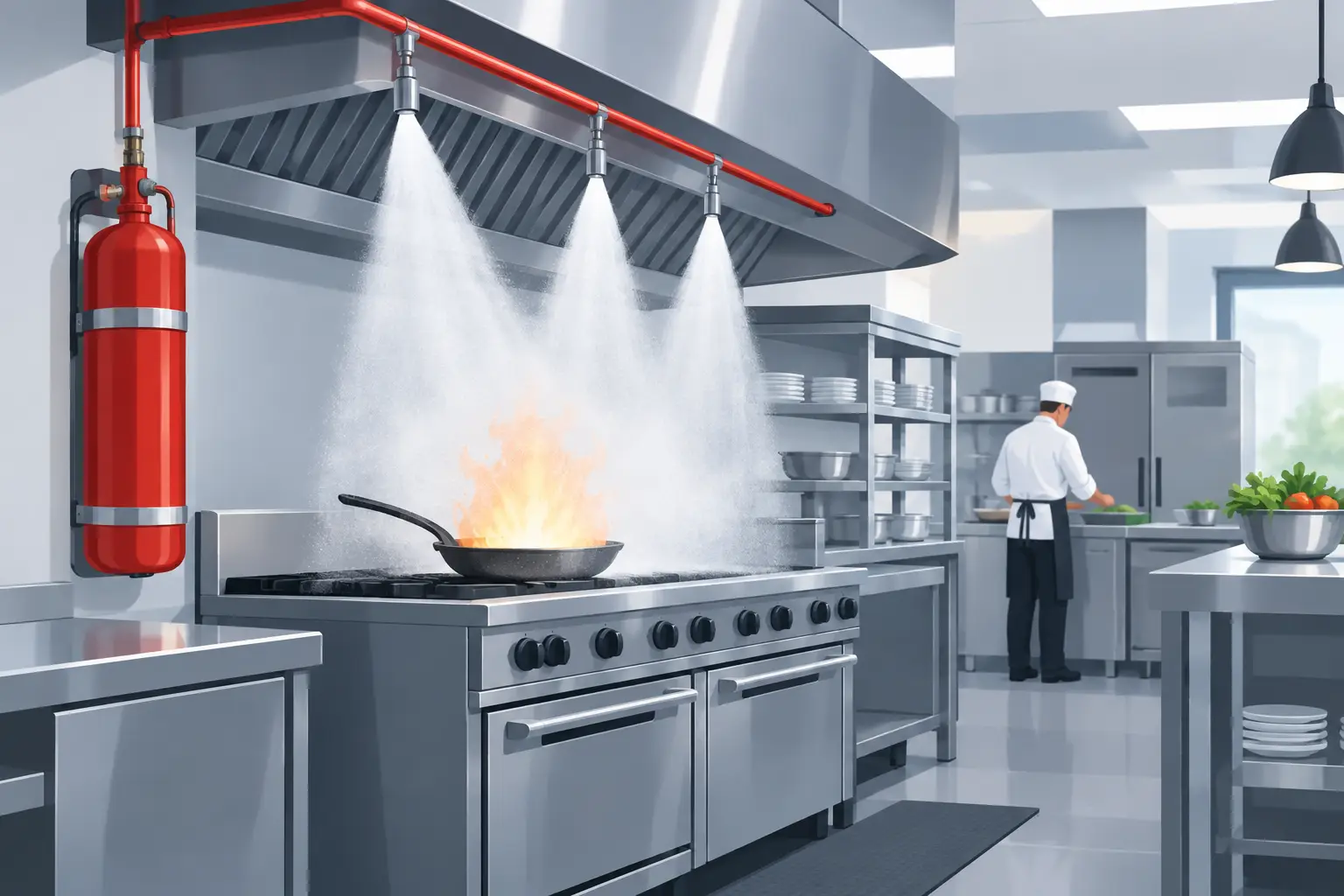
A properly designed wet-chemical system detects a developing fire and discharges agent directly where it is needed: at the cooking appliance, in the canopy plenum and, where required, into the extract duct. It is designed to suppress flames, cool hot surfaces and react with cooking oils and fats to form a soap-like layer that helps prevent re-ignition. The result is a quicker intervention that can limit damage, protect people and reduce the disruption that a commercial kitchen fire can cause.
Why nozzle position is critical
Kitchen suppression nozzles are not interchangeable spray heads. Each has a defined discharge pattern, flow rate, orientation and permitted installation position established by the system manufacturer. The nozzle must cover the hazard for which it is listed, whether that is a deep-fat fryer, bratt pan, range, griddle, solid-fuel appliance or the grease risk within the extraction system.
A nozzle positioned a few centimetres too high, too low or at the wrong angle may leave part of the hazard untreated. Equally, a fitting installed where it can be knocked by cookware, obstructed by a filter or coated heavily in grease may not discharge as intended. The installation must also account for lids, splashbacks, shelving, lighting and other equipment that can interrupt the agent pattern.
The design should never be based solely on the width of the canopy. Two kitchens with the same canopy dimensions can require very different protection because their appliance types, fuel sources, cooking temperatures, extraction arrangements and operating practices differ.
Installing kitchen suppression nozzles starts with survey and design
Before pipework is measured or nozzles are selected, the kitchen and its extract route need to be assessed as a complete system. This includes the appliance line, canopy, plenum, filters, ductwork, fan arrangement, fuel supplies and how the kitchen is used during service.
The engineer will establish the make, model and dimensions of each appliance, as well as its location beneath the canopy. Appliance manufacturer data is particularly valuable because it identifies whether a specific nozzle type, height and aiming point are required. If the cooking equipment has been modified, it may no longer match the original protection arrangement.
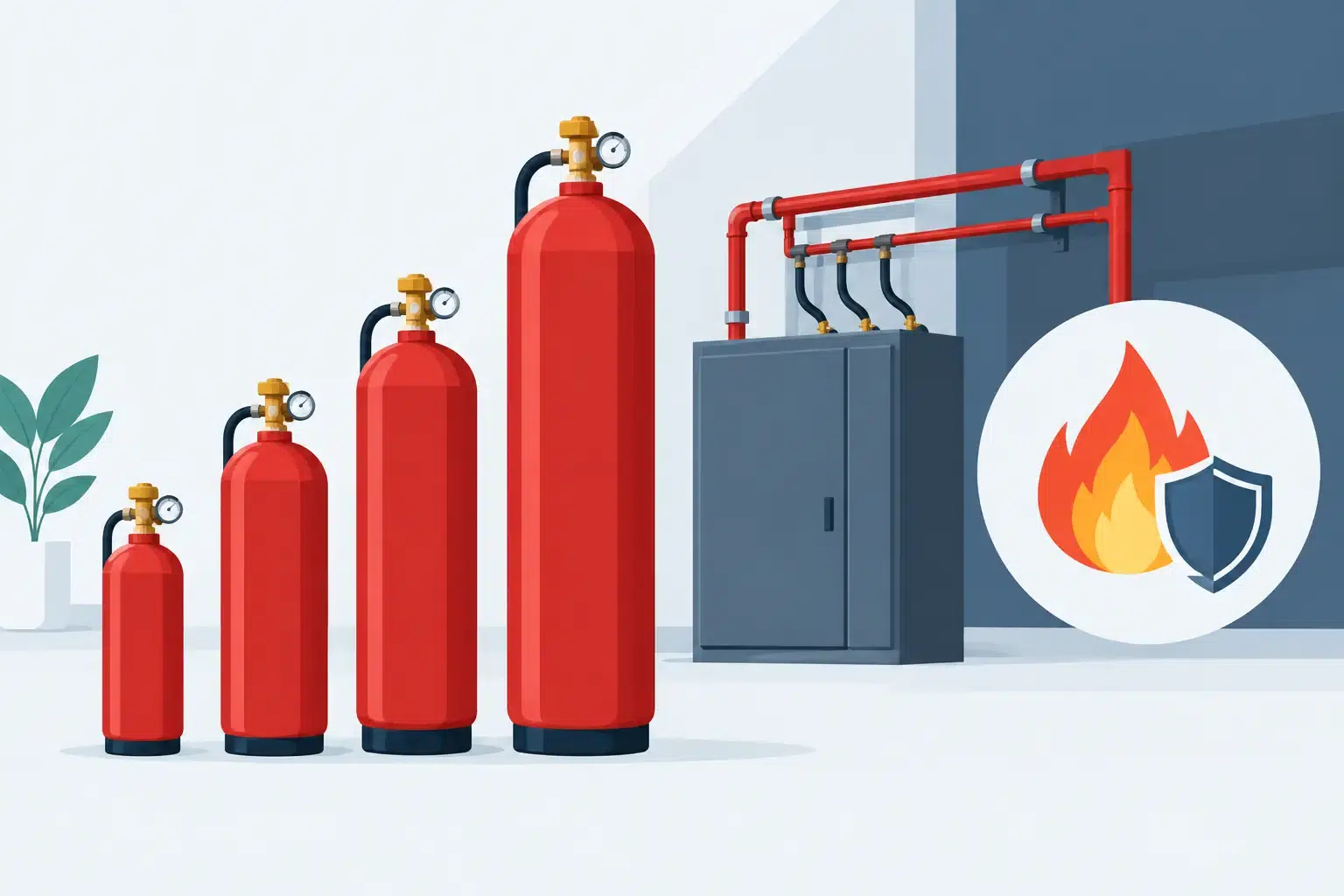
The extinguishing agent quantity, cylinder size, pipe diameter and nozzle count are then calculated around the approved system design. This is a controlled arrangement. Adding an extra nozzle, extending a pipe run or substituting a component without recalculation can affect the discharge performance across the whole system.
For UK commercial kitchens, the installed solution should be designed and fitted in accordance with the applicable manufacturer instructions and recognised standards, including BS EN 16282-7 where relevant. Insurer requirements, local authority expectations and the building’s wider fire strategy may impose additional conditions.
Appliance, plenum and duct protection work together
The appliance nozzles deal with the visible cooking hazard. They are generally installed beneath the canopy and aimed at precise locations over fryers, griddles and other protected equipment. Their purpose is not simply to fill the space with agent, but to deliver it to the surface where burning oil, grease or cooking media needs to be cooled and suppressed.
Plenum nozzles protect the concealed volume immediately above the filters, where grease deposits can support fire spread. Duct nozzles protect the extract path beyond the canopy when the design calls for them. A fire that has entered the extraction system can travel beyond the cooking line, so overlooking these areas can undermine an otherwise well-planned installation.
The exact arrangement depends on the suppression system and the kitchen layout. Some appliances need individual protection, while others can be protected by a listed multiple-appliance configuration. Those decisions must come from the approved design data, not visual judgement on site.
Installation details that determine performance
Once the design is agreed, installation quality is as significant as nozzle selection. Distribution pipework must follow the approved routing, with suitable supports and fittings to prevent movement, damage or unauthorised adjustment. It must remain accessible for inspection without creating an obstruction for kitchen staff or cleaning teams.
Nozzles need the correct protective caps to help keep grease out of the discharge orifice. Caps are small components, but missing, damaged or grease-bound caps can affect reliability. They should be checked during planned maintenance and replaced with approved parts where necessary.
The system also requires correctly positioned detection. Depending on the equipment, this may use fusible links or another listed means of automatic detection within the canopy. Detection must respond to fire conditions without being installed where normal heat from cooking causes unwanted operation. Manual actuation is also required, placed where staff can reach it on the escape route without moving towards the fire.
Discharge should trigger the necessary control functions for the specific kitchen. This commonly includes shutting off the fuel or electrical supply to protected cooking appliances and operating relevant alarms or signals. Extract ventilation arrangements vary by system and fire strategy, so they must be confirmed during design rather than assumed. The objective is to avoid feeding the fire while ensuring the system operates as tested and intended.
Commissioning is not a handover formality
A newly fitted nozzle network is only ready for service after commissioning and demonstration. The contractor should verify the cylinder pressure or charge condition, pipework, nozzle types, nozzle orientation, detection arrangement, manual release, control panel functions and shutdown interlocks. The completed installation should be checked against the approved design and manufacturer requirements.
A practical handover matters in busy kitchens. Responsible staff need to understand what happens on activation, how to raise the alarm, when to use the manual release and why the cooking equipment must not be restarted after a discharge. They should also know that a wet-chemical system does not remove the need for suitable portable extinguishers, staff training, cleaning and emergency procedures.
After any discharge, the system requires inspection, recharge or service exchange as appropriate, and recommissioning before the kitchen returns to normal use. Attempting to reset a system without addressing the fire cause, cleaning contamination and confirming correct operation creates an avoidable risk.
Changes to the cooking line require review
Kitchen layouts evolve for good commercial reasons. A restaurant may add capacity, replace gas appliances with electric units, install a new solid-fuel feature or alter the canopy during refurbishment. Each change can affect nozzle coverage and suppression calculations.
Do not assume that moving an appliance back into its former position restores compliance. Altered appliance dimensions, revised extraction, additional shelves or even a different cooking method may change the hazard. Ask a competent suppression specialist to review the system before the altered line is put into operation.
The same principle applies where nozzles appear dirty, damaged or poorly aligned. Kitchen staff should report the issue promptly, but should not clean, cap, reposition or remove nozzle components unless instructed by the maintenance provider. A short period of professional attention is preferable to discovering a coverage problem during an incident.
Maintenance keeps protection ready between services
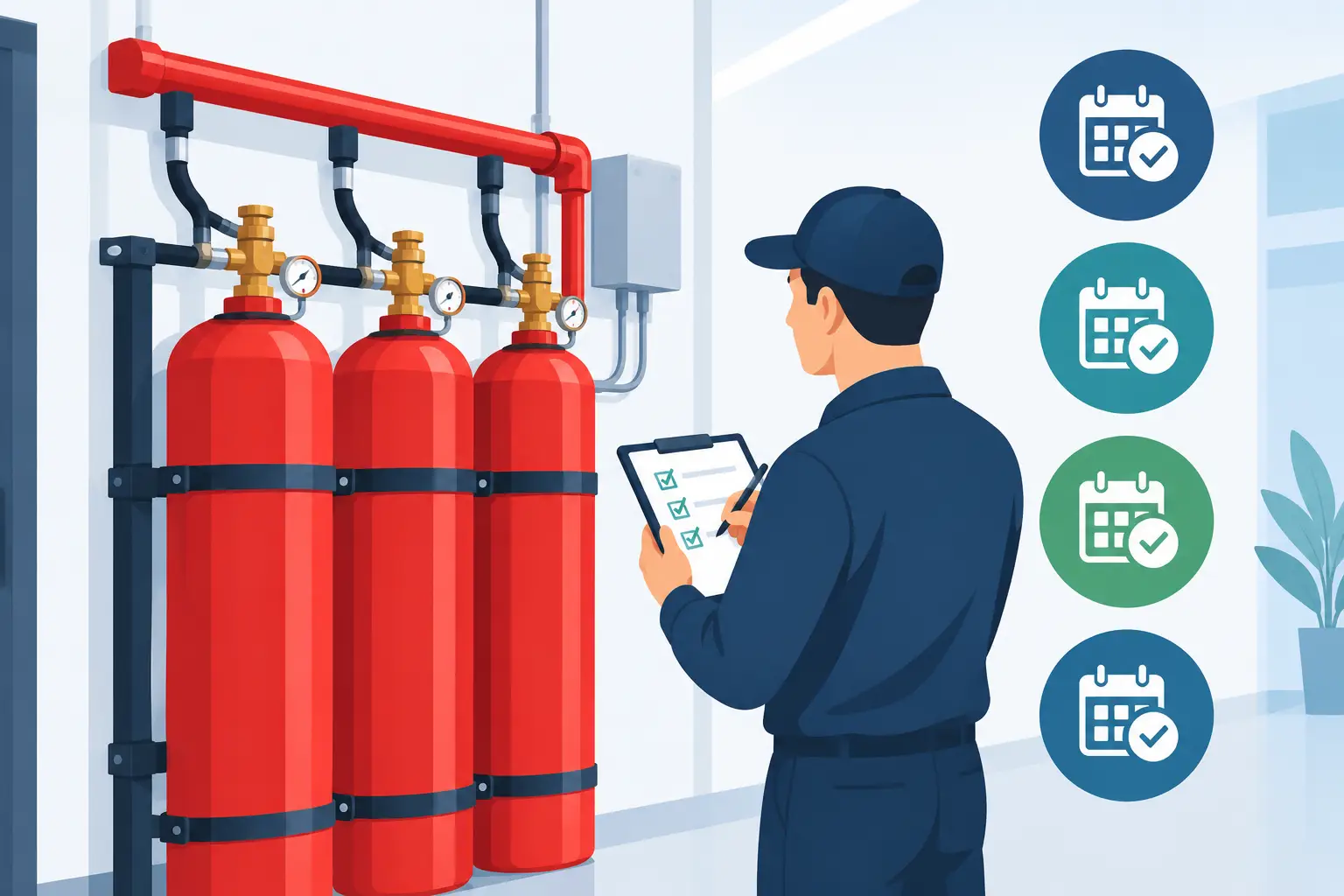
Wet-chemical kitchen suppression is life-safety infrastructure in a demanding environment. Grease, steam, vibration, cleaning chemicals and frequent equipment movement all place pressure on the installation. Regular inspection identifies damaged pipework, blocked or missing caps, altered appliances, degraded detection components and faults in the shutdown interfaces.
Cleaning remains fundamental. A suppression system is designed to control a fire, not compensate for excessive grease accumulation in filters, canopies and ductwork. Effective extract cleaning, sensible housekeeping and planned suppression maintenance work together to reduce fire likelihood and support reliable operation when it is needed.
At Active Fire Suppression Ltd, kitchen protection is approached as a complete engineered system: survey, design, installation, commissioning and ongoing support. For operators, the most useful next step is often a review of the kitchen as it operates now, rather than relying on drawings or assumptions from years ago.

Leave A Comment
You must be logged in to post a comment.