

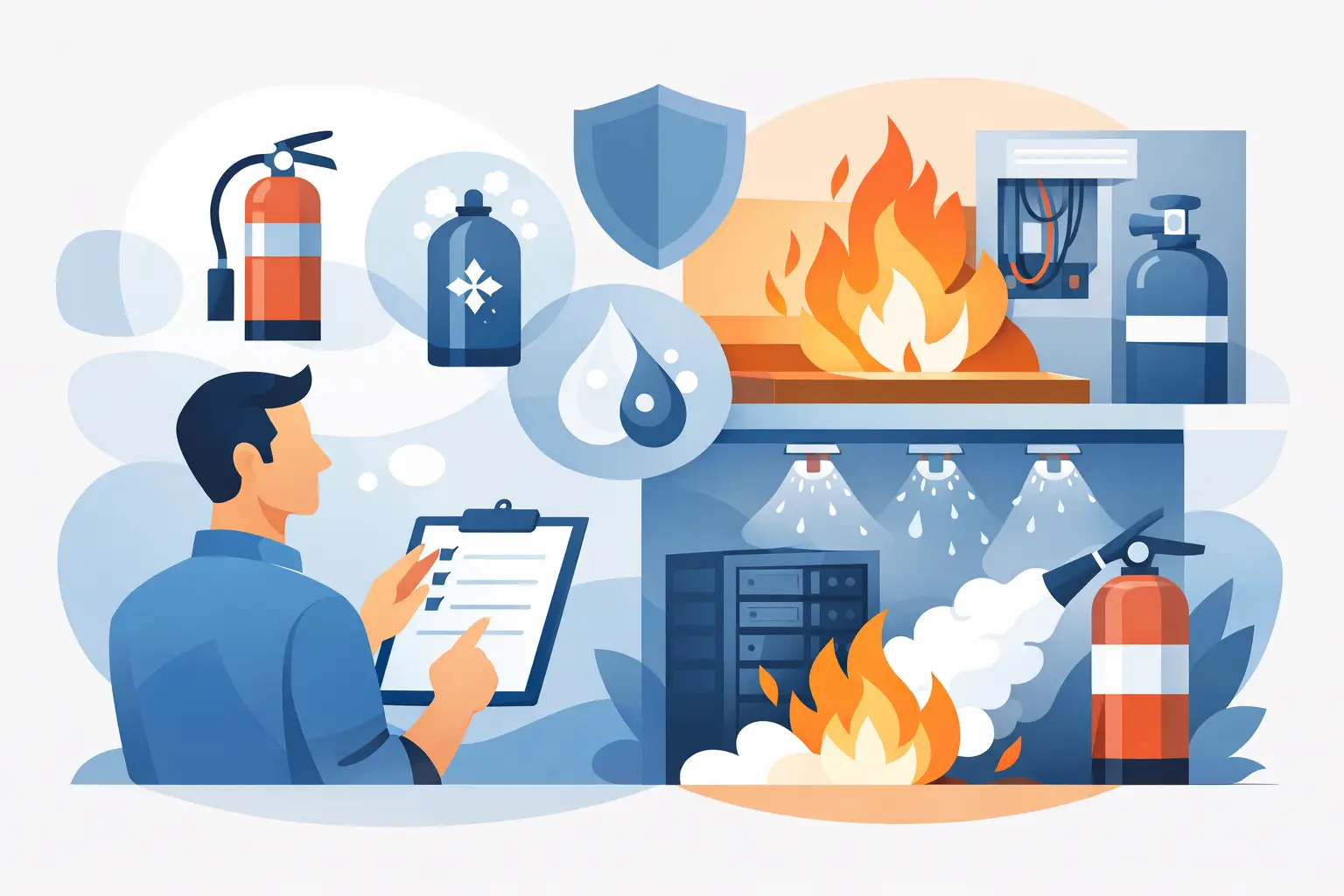
A fire in a server room, turbine enclosure or production line rarely gives an operator time to make a perfect decision. The suppression system must act quickly, without creating greater damage than the fire itself. That is why learning how to choose fire suppression agent options is not simply a product comparison. It is an engineering decision that affects people, assets, compliance and the speed at which your operation can recover.
For a commercial site with valuable equipment or a safety-critical process, the best agent is the one that controls the expected fire hazard at the required speed while remaining suitable for the enclosure, the people who use it and the organisation’s long-term environmental and maintenance policy.
Start with the risk, not the cylinder
An extinguishing agent should be selected around the fire scenario, rather than around a preferred system type or an existing installation. A kitchen hood, battery room and data centre may all require automatic suppression, but they do not present the same fuel, ignition source, ventilation arrangement or consequence of failure.
The first question is what may burn. Ordinary solid combustibles such as paper, packaging and plastics behave differently from flammable liquids, cooking oils, pressurised gases and electrically energised equipment. The likely fire class establishes the starting point, but it is only one part of the decision. A small electrical fault in a control cabinet may be best managed with a clean agent, whereas a deep-seated fire in stored materials may need a different approach or additional measures.
Also consider how quickly a fire can grow and what happens if it is not contained. In a data hall, even limited smoke contamination can interrupt services and damage sensitive electronics. In an industrial enclosure, flame spread or heat transfer may threaten adjacent machinery. In a commercial kitchen, burning cooking oil can reignite if the agent is unsuitable. The protection objective may be life safety, asset protection, business continuity, or all three.
How to choose a fire suppression agent for the enclosure
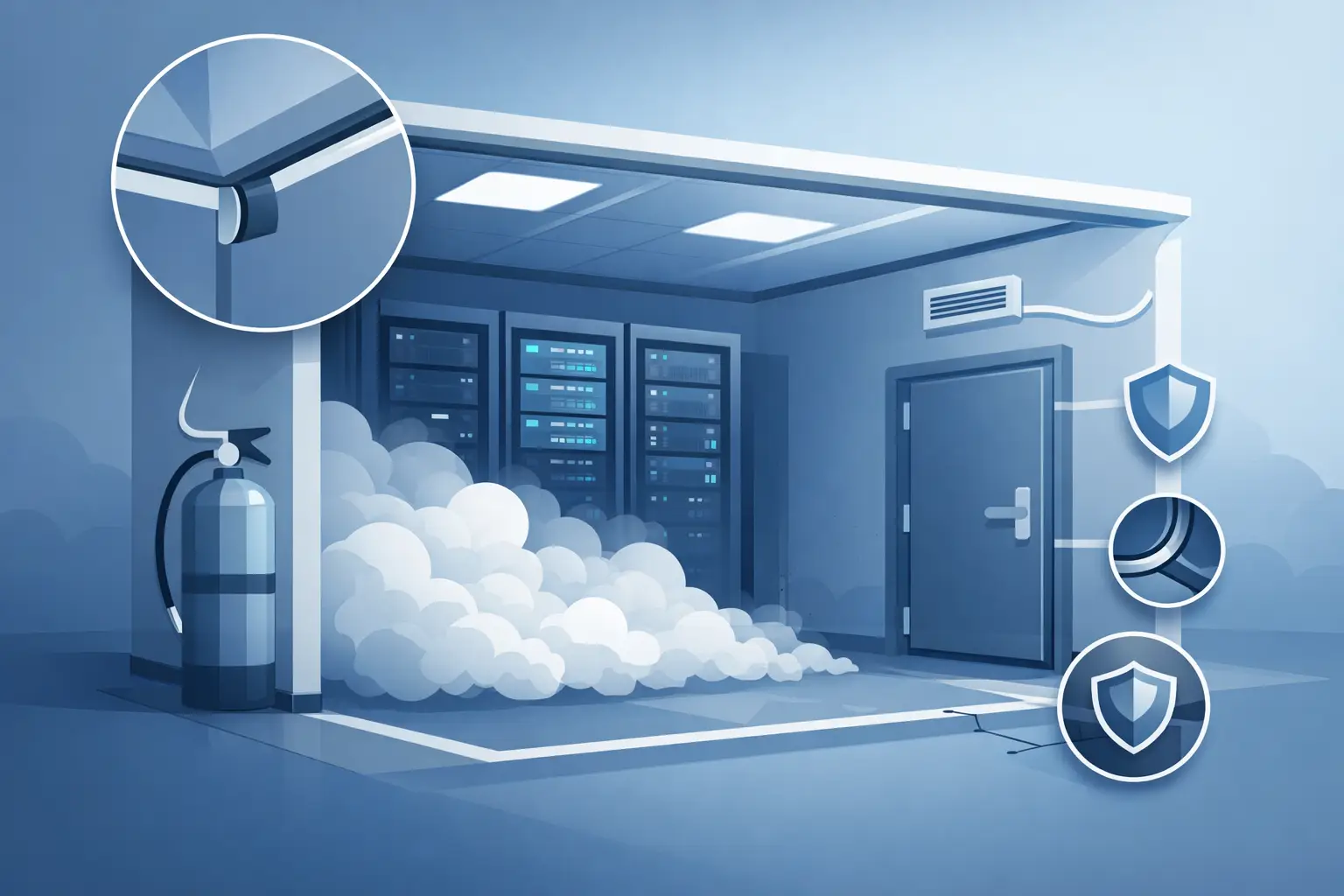
The protected space has as much influence on agent selection as the fire itself. Its volume, ceiling voids, raised floors, cable penetrations, doors, louvres and pressure-relief arrangements all matter. A system designed for an ideal sealed room may fail to hold the required extinguishing concentration in a room with unaddressed leakage paths.
Gaseous suppression systems, including inert gases and clean agents, depend on achieving and retaining a calculated concentration for a defined period. This means room integrity testing is not an optional final check. It is a central part of making the system perform as designed. Where a room cannot reasonably be sealed, the design may require remedial works, revised discharge arrangements or a different suppression strategy.
Discharge also creates pressure effects. Gas entering an enclosure rapidly can generate positive pressure, while agent cooling or venting can affect pressure in the opposite direction. Correctly sized over-pressure vents help protect walls, ceilings, doors and building fabric. This is particularly relevant in lightweight data rooms and purpose-built equipment enclosures.
Detection should be considered alongside suppression. Early warning aspirating smoke detection, such as VESDA, can identify developing conditions before open flames occur, allowing investigation or controlled intervention. Flame detection may be more appropriate where fast-developing liquid or gas fires are expected. The detection method, control logic and release sequence should support the operational risk, not just trigger a discharge at the earliest possible signal.
Consider people, escape and operational control
Any automatic system installed in an occupied area must account for the people who may be present at discharge. Warning alarms, time delays, manual release and abort controls, emergency signage, isolation procedures and staff training need to form part of the design.
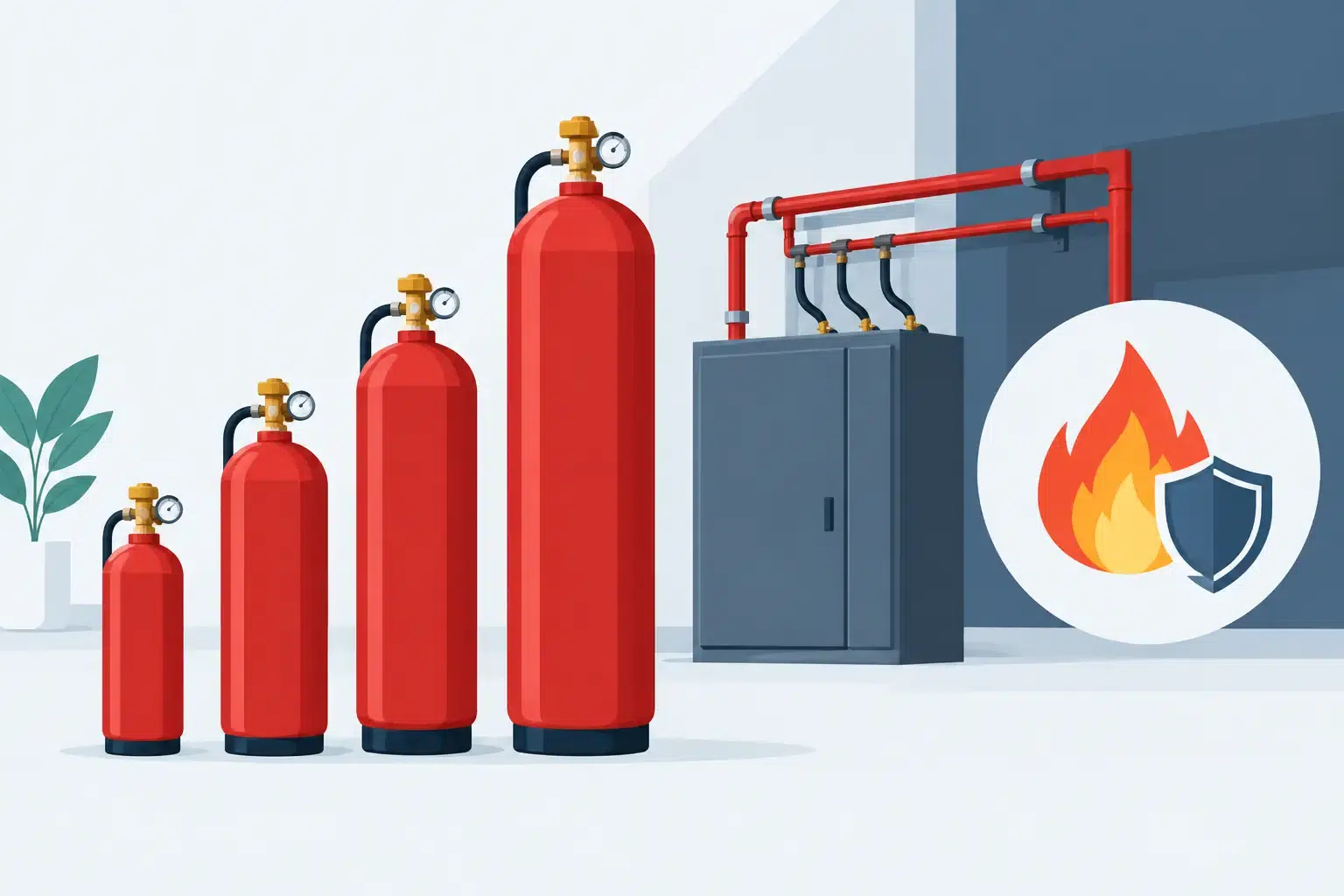
Inert gases such as IG55, IG541, IG01 and IG100 reduce oxygen concentration to a level that suppresses combustion. They can be suitable for occupied spaces when designed to the applicable standards and concentration limits, but the room layout, duration of occupancy and emergency procedures still need careful assessment. They also require substantial cylinder storage compared with some clean-agent systems.
Clean agents including Novec 1230 and HFC227ea, also known as FM200 or FE227, are commonly selected for sensitive electronic and electrical environments because they leave no residue and can discharge rapidly. Their suitability depends on design concentration, enclosure conditions, personnel exposure considerations and the organisation’s environmental policy. The industry is moving towards lower-environmental-impact options, so the long-term availability and lifecycle position of any agent should be discussed before specification.
Carbon dioxide is highly effective for certain local-application and total-flooding risks, particularly in industrial settings. However, it presents a significant life-safety hazard in occupied spaces because it displaces oxygen. CO2 systems require rigorous safeguards, clear procedures and careful assessment of access, occupancy and evacuation. It is not a default choice for every electrical or machinery risk simply because it is effective.
Match the agent to the asset you are protecting
The consequences of discharge deserve the same attention as the consequences of fire. Water may be appropriate and highly effective for many building risks, but it can cause unacceptable damage or outage where electronic equipment, archives or precision machinery are involved. By contrast, clean agents and inert gases leave no residue, helping limit clean-up and supporting a faster return to service after a controlled discharge.
Dry powder can provide rapid knock-down for certain flammable gas, liquid and industrial hazards. Its residue, however, can be difficult to remove and may damage or contaminate sensitive machinery. It may be an excellent solution in an outdoor process area and a poor one inside a control room.
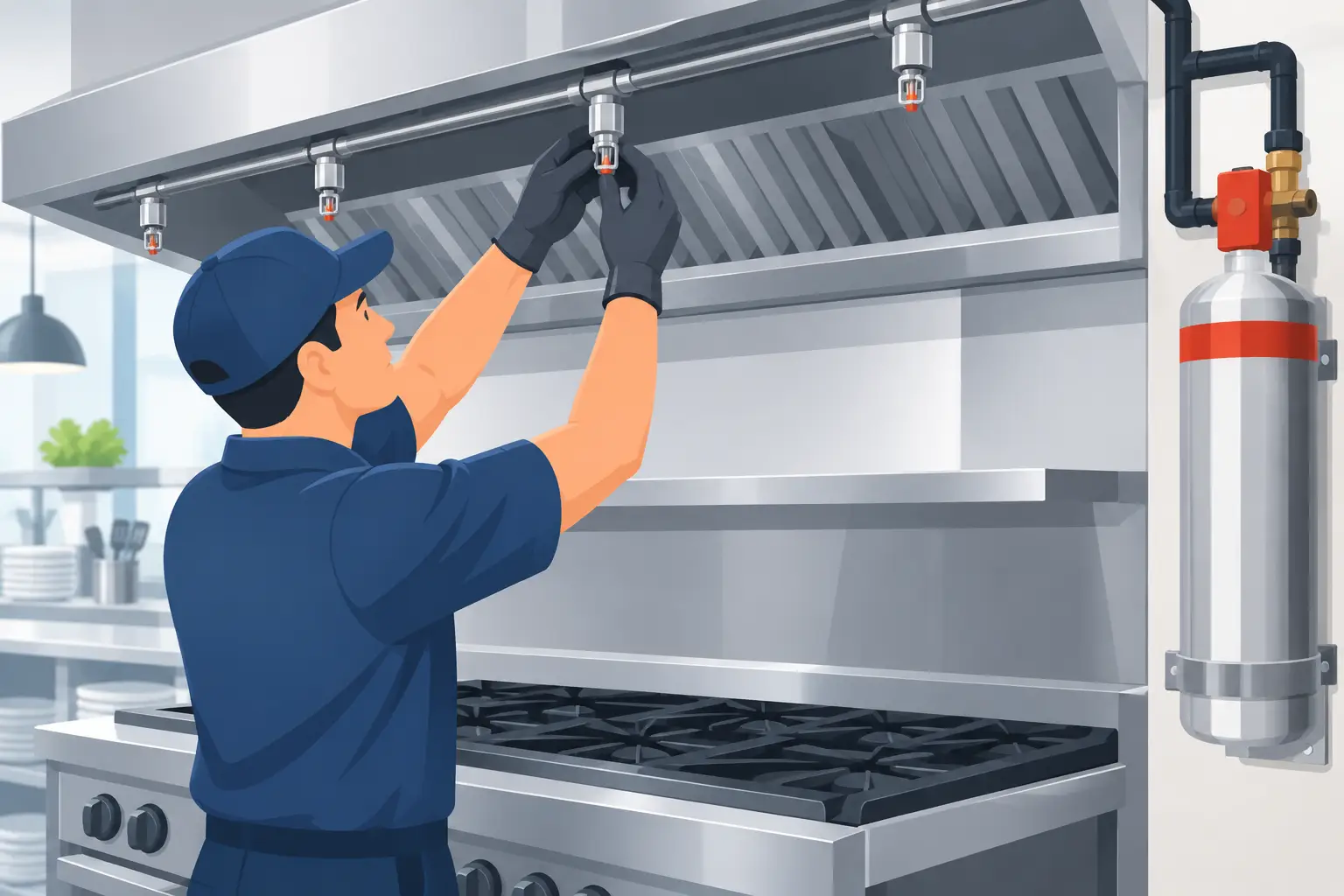
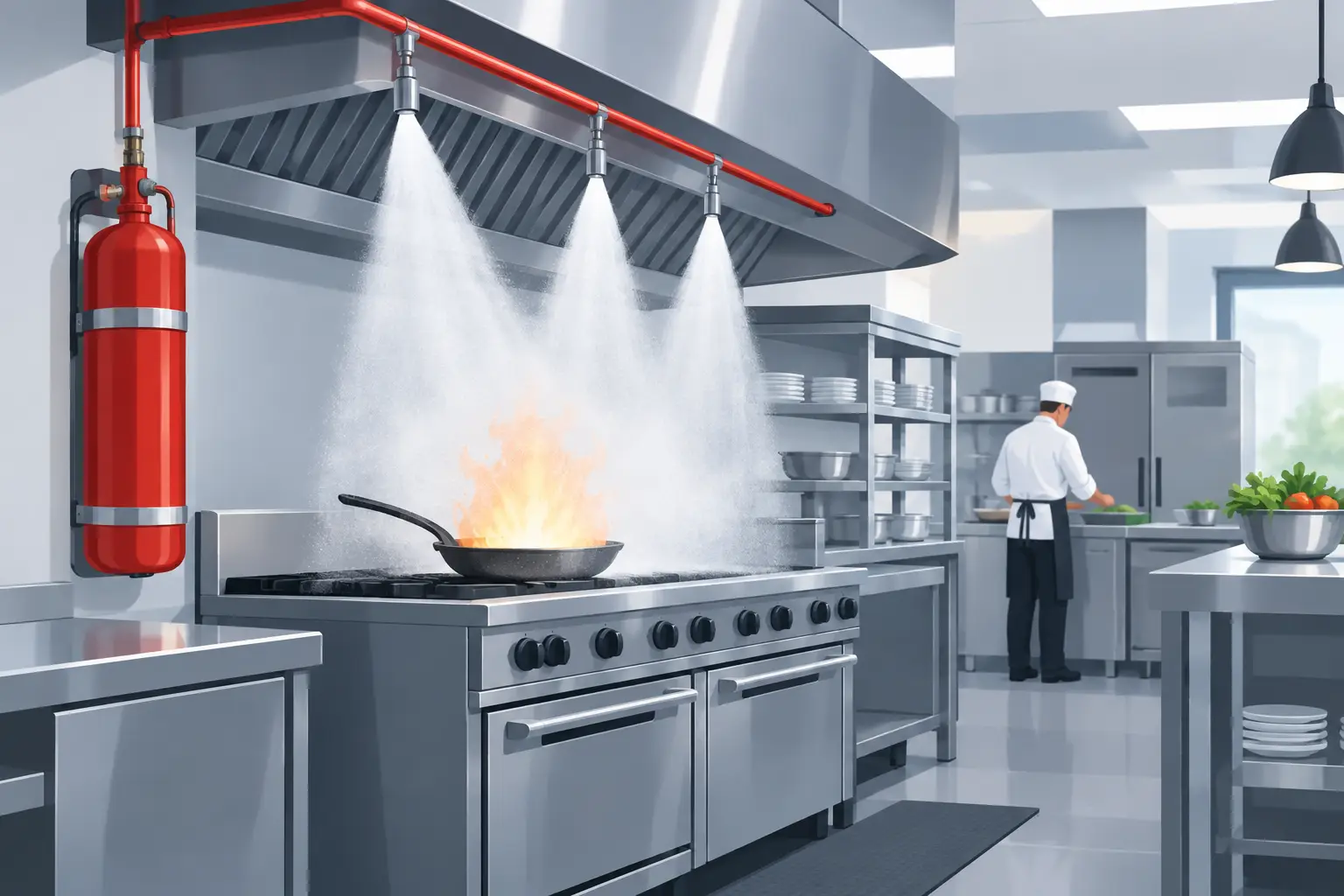
Wet-chemical suppression is designed for commercial cooking risks. It reacts with hot cooking oils to form a cooling, sealing layer that helps prevent re-ignition. A kitchen system should protect the appliances and extraction canopy arrangement actually in use, with fuel and electrical shut-offs coordinated as part of the release sequence.
Battery rooms require particular care. Thermal runaway, off-gassing, electrical energisation and ventilation can make the hazard more complex than a conventional electrical fire. The system approach may involve early detection, suppression, ventilation controls and wider fire strategy measures. An agent cannot compensate for an incomplete assessment of the battery chemistry and installation arrangement.
Build compliance and insurer requirements into the design
Agent selection should be supported by recognised design standards, manufacturer data, discharge calculations and installation practice. Depending on the system and application, relevant requirements may include British Standards, European standards, NFPA guidance, insurer specifications and the expectations of the approving authority.
Compliance is not achieved by selecting a named agent alone. It relies on correct pipework sizing, nozzle placement, cylinder quantity, detection zoning, control-panel programming, room integrity, pressure relief, signage and commissioning. A system should be demonstrated to the client after installation, with records that support ongoing inspection, maintenance and any future audit.
Insurers may impose specific requirements for high-value plant, warehouses, data processing operations or manufacturing processes. Engage them early where possible. An insurer’s preferred solution may influence the choice of agent, the level of redundancy, the need for remote monitoring or the testing evidence required before cover is agreed.
Think beyond installation
The right system must remain dependable for years, not merely pass commissioning on day one. Ask practical questions about cylinder storage, access for servicing, agent refill arrangements, spare parts, control-panel support and the impact of future room alterations. A new cable route, replaced door or added air-conditioning unit can compromise room integrity and system performance.
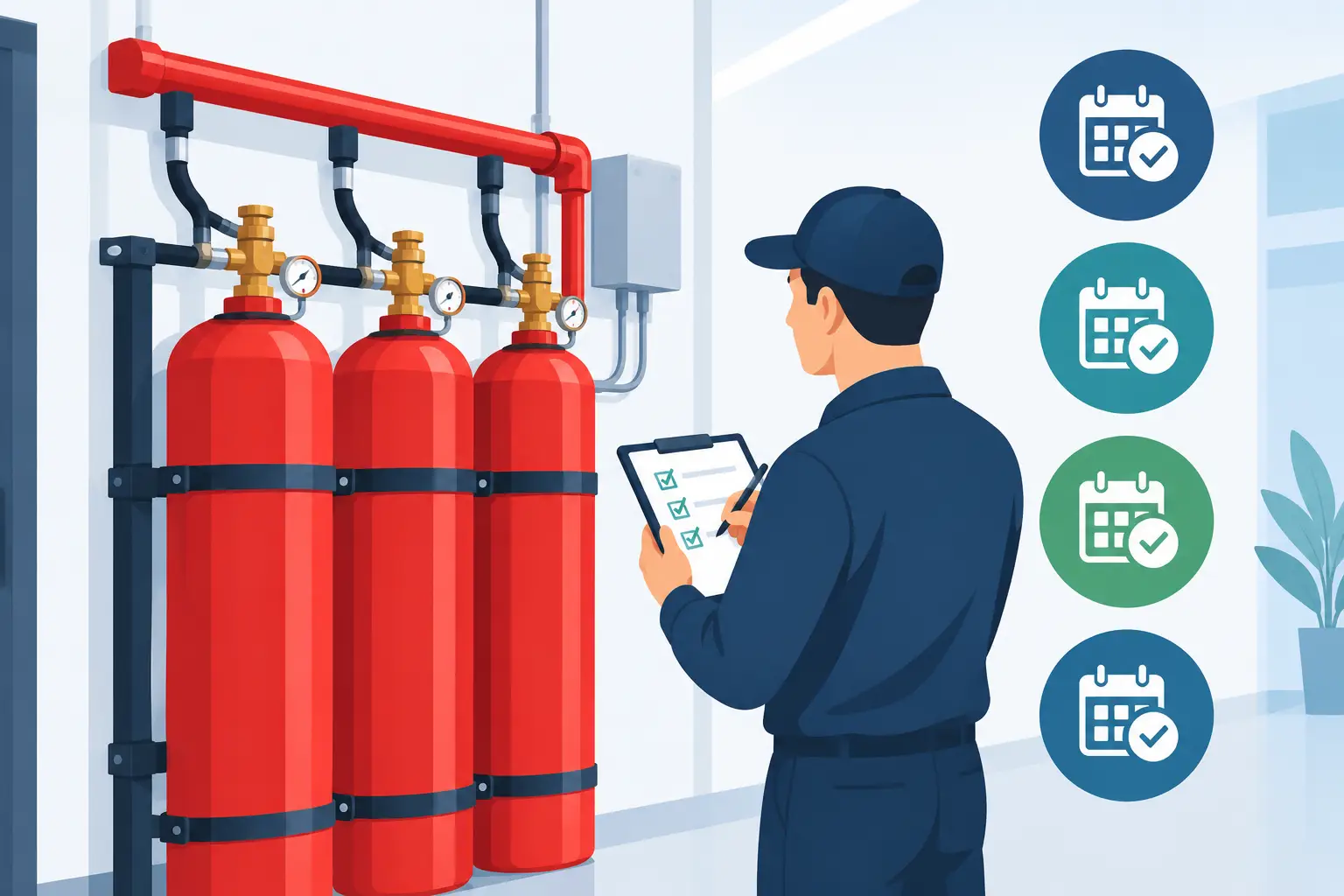
Maintenance should include periodic inspection of detection, controls, containers, actuators, pipework, nozzles, alarms and ancillary equipment, as well as the required room-integrity testing. Clear site procedures are equally valuable. Staff should know what the pre-discharge warning means, how to evacuate, when an abort control may be used and who is authorised to reset the system after an event.
For complex sites, a specialist contractor can coordinate these elements from initial risk discussion and design through installation, commissioning, testing and ongoing support. Active Fire Suppression Ltd approaches agent selection in this joined-up way, so room conditions, operational needs and future serviceability are resolved before they become expensive problems.
The useful question is not, “Which agent is best?” It is, “Which engineered combination of detection, agent, enclosure measures and controls gives this site the best chance of stopping a fire with the least interruption?” Answer that question carefully, and the suppression system becomes a practical part of your continuity plan rather than a box on a compliance checklist.

Leave A Comment
You must be logged in to post a comment.