

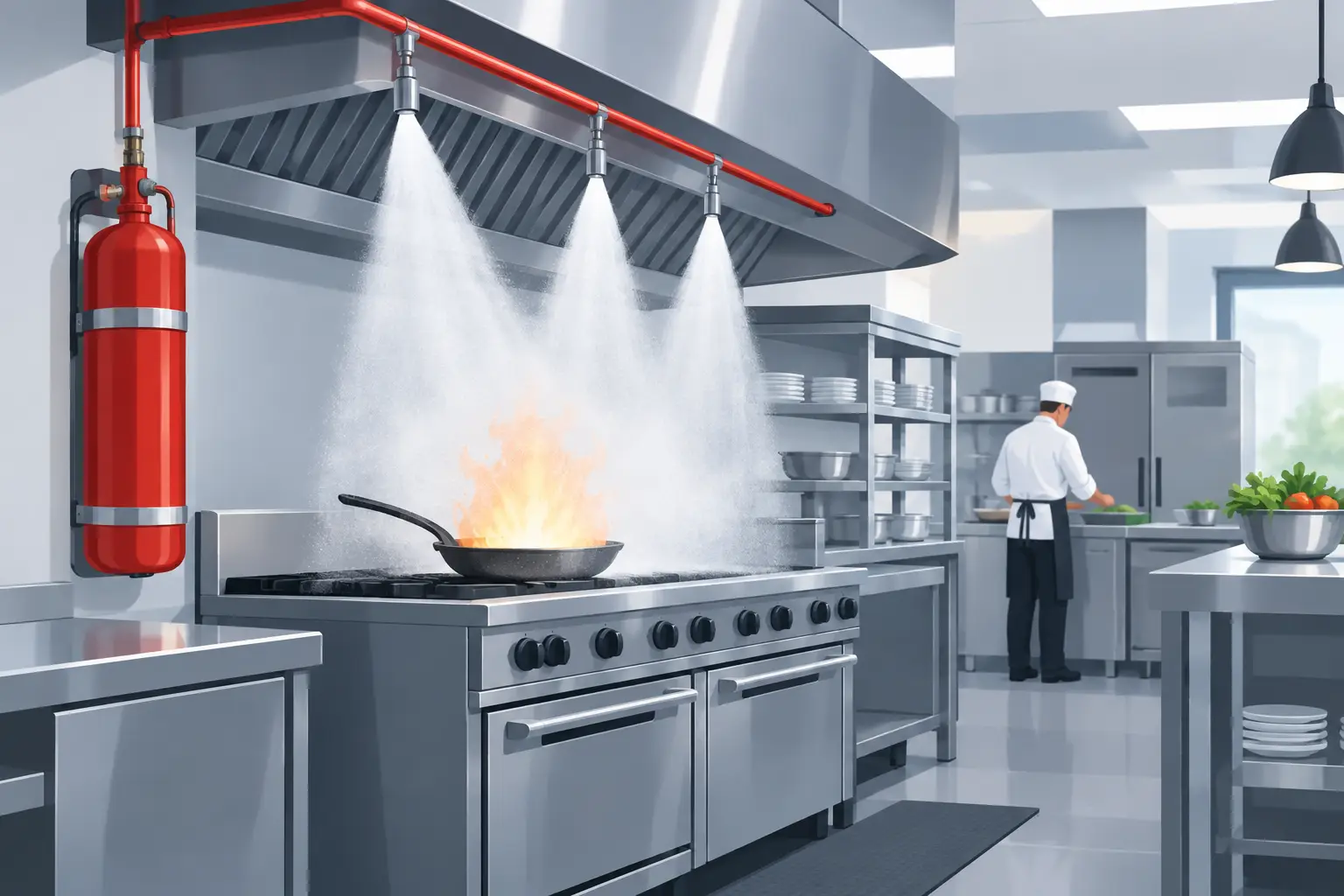
A busy kitchen can move from routine service to a serious fire incident in seconds. Oil and grease accumulate in extract canopies, ductwork and filters; meanwhile, high-temperature cooking appliances operate for long periods with staff focused on orders, timing and customer experience. Commercial kitchen suppression provides automatic intervention at the point where a cooking fire is most likely to develop, helping protect people, equipment and the ability to reopen promptly.
For restaurants, hotels, care settings, schools, stadiums and food-production facilities, the question is not simply whether there is a fire extinguisher nearby. It is whether the cooking line, canopy and extract system are protected by a correctly engineered system that will operate when staff cannot safely intervene.
Why kitchen fires demand a specialist response
Cooking-oil fires behave differently from ordinary combustible fires. Applying water to burning fat or oil can cause rapid vapourisation and spread burning material beyond the original appliance. Powder extinguishers may have a role in some circumstances, but they can contaminate food areas and equipment, obscure visibility and create a substantial clean-up burden.
The usual solution for commercial cooking risks is a wet-chemical suppression system. This is designed specifically for cooking appliances and their associated extract canopy. On discharge, the agent cools the burning oil and reacts with it to form a soapy layer over the surface. This process, known as saponification, helps prevent reignition while the cooking surface cools.
That distinction matters operationally. A fire can begin in a fryer, range or griddle, then travel into grease-laden filters and ductwork. If it reaches inaccessible parts of the extract route, the consequences can extend well beyond the kitchen. Effective protection therefore considers the complete cooking risk, rather than treating each appliance in isolation.
What commercial kitchen suppression should protect
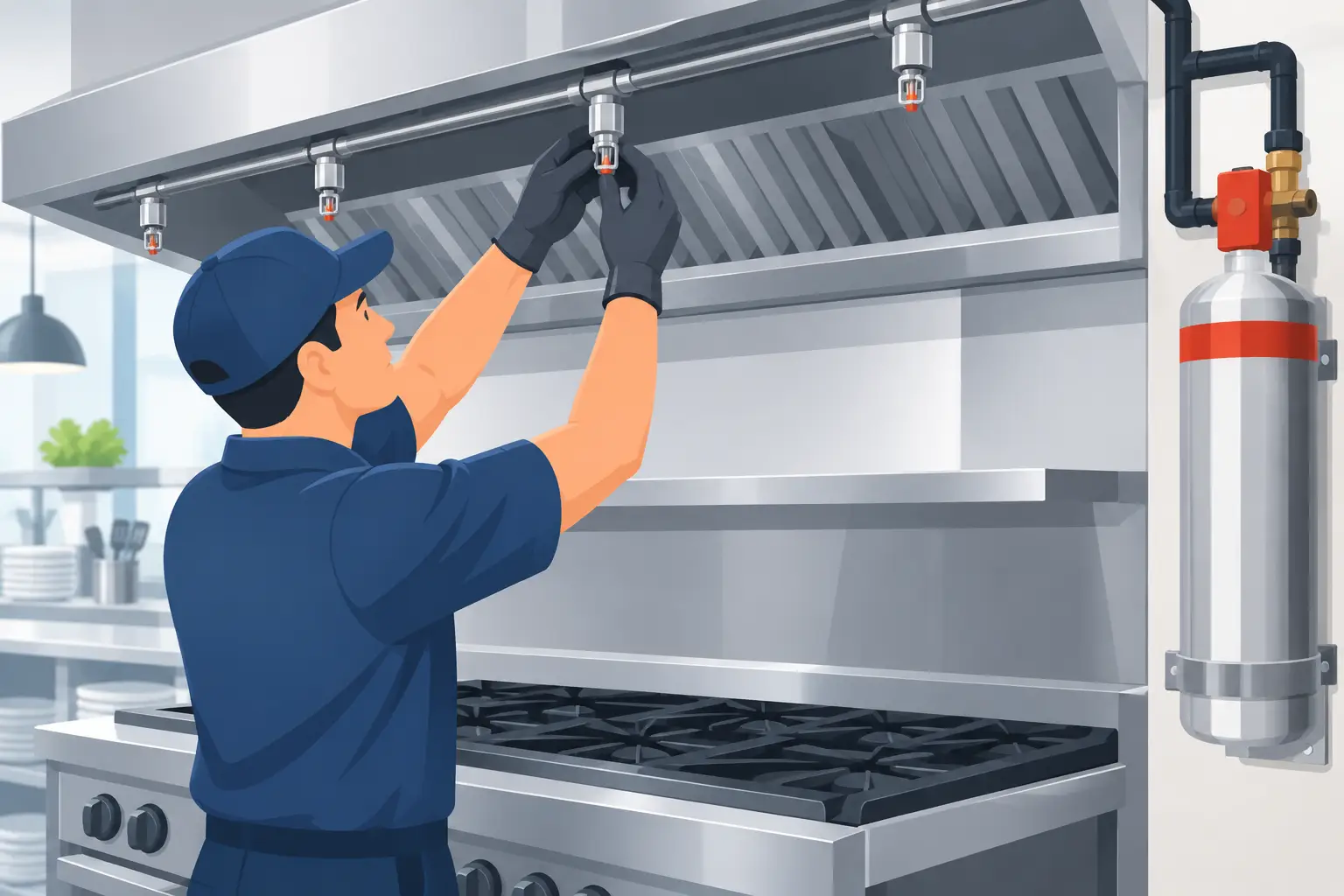
A properly designed system is built around the actual appliances beneath the canopy and the extract arrangement above them. Detection is normally provided by heat-sensitive elements positioned in the canopy or plenum area. When a defined temperature threshold is reached, the system releases wet chemical through dedicated nozzles aimed at specific hazards.
Nozzles may protect fryers, griddles, ranges, chargrills and woks, as well as the canopy plenum and filter area. The exact arrangement depends on appliance type, dimensions, fuel source, cooking temperatures and whether equipment is moved or replaced over time. A generic nozzle layout is not a substitute for a site-specific design.
The system should also shut down the fuel or electrical supply to affected cooking equipment as part of the discharge sequence. Removing the heat source is fundamental to preventing re-ignition. Where gas is involved, this commonly requires a carefully coordinated interface with the gas shut-off arrangement. The extract fan strategy must also be considered as part of the overall design, rather than assumed.
Manual actuation is usually included alongside automatic detection. This allows trained staff to initiate suppression if they identify a developing fire before the automatic system operates. It does not remove the need for staff training or suitable portable extinguishers, but it gives the kitchen a dedicated first response built for the risk at hand.
Design starts with how the kitchen actually operates
The right system is not selected from a price list. It starts with a survey and a clear understanding of the kitchen’s operation. A hotel breakfast kitchen, a high-volume quick-service restaurant and a school catering facility may all use a canopy, but their appliances, service patterns and consequences of downtime are very different.
The survey should establish what sits beneath each canopy, how the appliances are powered, whether cooking equipment is fixed in position, and where ductwork runs. It should identify changes that may already have been made since the last installation or inspection. A new fryer, relocated chargrill or altered canopy can compromise coverage if the suppression layout is not reviewed.
Insurer requirements, landlord obligations and the fire-risk assessment should inform the project from the outset. In the UK, kitchen suppression design and installation may need to align with the applicable manufacturer listing and approval requirements, relevant British and European standards, building requirements, and the expectations of the enforcing authority or insurer. The applicable standard route depends on the system and site, so it should be confirmed for the individual project rather than assumed.
For larger estates, consistency matters too. A standardised approach to equipment, records, maintenance intervals and staff instruction can make it easier for facilities teams to manage risk across multiple sites. That said, standardisation should never mean forcing the same system layout onto kitchens with different cooking hazards.
Installation without creating avoidable disruption
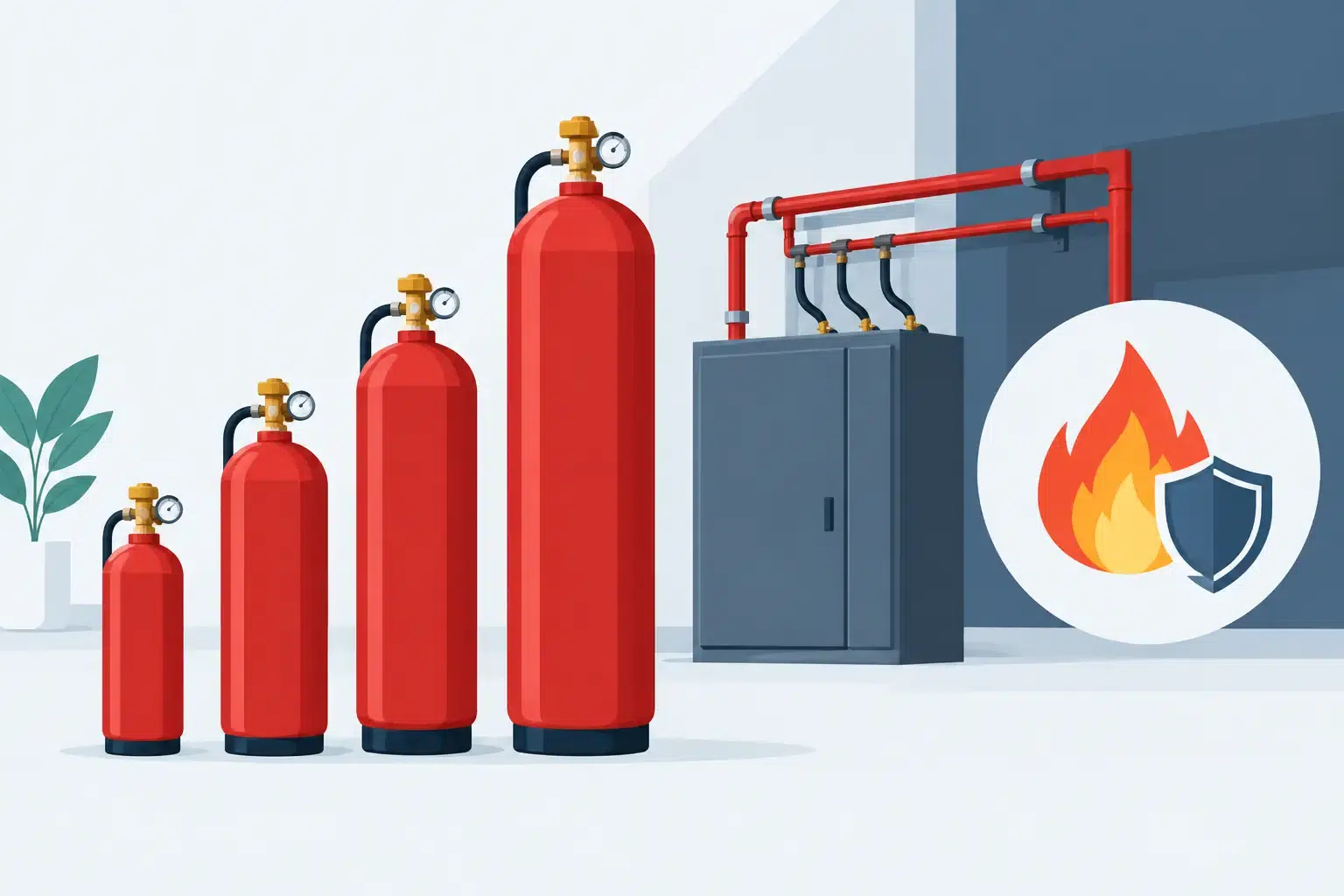
Kitchen work is often planned around trading hours, hygiene controls and contractor access restrictions. Installation needs to be coordinated around those realities. Pipework, detection cable, cylinders, control equipment and discharge nozzles must be installed securely while preserving safe access for canopy cleaning, filter removal and future servicing.
The finished installation should be neat, protected from accidental damage and clearly identified. More importantly, it must be commissioned correctly. This includes checking detection operation, manual release, control-panel functions, appliance shut-down interfaces and alarm signalling. Teams responsible for the kitchen should understand what will happen during a discharge, how to raise the alarm, when not to re-enter the area and who to contact afterwards.
A demonstration is not a box-ticking exercise. Kitchen managers and facilities personnel need confidence that the system will isolate equipment as intended and that their local emergency procedures match the installed arrangement. Clear handover information is particularly valuable where shifts change frequently or a business relies on agency staff.
Maintenance is part of the protection, not an add-on
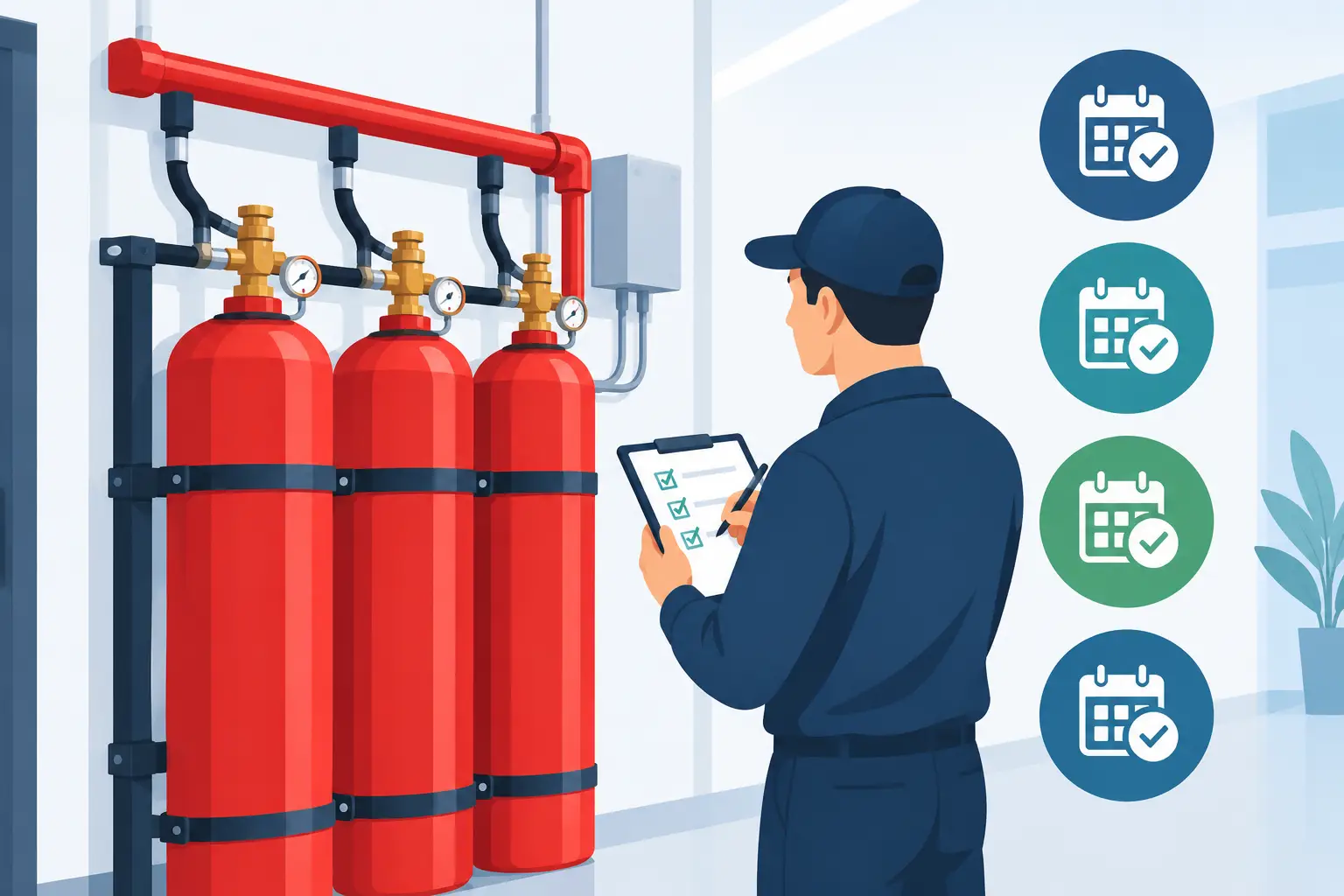
Commercial kitchen environments are demanding. Heat, steam, airborne grease, vibration, cleaning activity and changes to appliances can all affect a system’s condition or suitability. Regular inspection and maintenance are therefore essential to keep the suppression system ready to operate.
Servicing should confirm that cylinders remain correctly charged and in date, detection components are in suitable condition, nozzles are present and correctly capped where required, pipework has not been damaged, and control functions continue to operate. Engineers should also check that appliance layouts have not changed since the system was designed.
Canopy and duct cleaning is closely connected to suppression performance, even though it is a separate service. A suppression system controls a fire, but it cannot remove the underlying fuel load created by poor grease management. Kitchen operators should maintain cleaning records, ensure filters are cleaned at appropriate intervals and act on any concerns raised during inspections.
After any discharge, the system must be restored by competent personnel before cooking resumes. The affected area will require cleaning, appliances may need inspection, and the reason for the activation should be investigated. Treating a discharge as a reset-and-restart event can leave a recurring fault or operational problem unresolved.
Common gaps that put trading at risk
The most significant weaknesses are often simple ones. Equipment is replaced without updating the suppression design. A manual pull station becomes inaccessible behind stored items. A gas interlock is altered during kitchen refurbishment. Nozzle caps are missing after cleaning, allowing grease to contaminate discharge outlets.
Another frequent issue is assuming the canopy system protects every kitchen fire scenario. Wet-chemical protection is intended for cooking equipment beneath the protected canopy and its immediate extract hazard. Electrical distribution equipment, cold rooms, waste-storage areas and adjoining plant spaces may need separate detection or suppression measures based on their own risk.
Staff response also remains critical. Employees should know not to fight a large or spreading fire, not to use water on burning cooking oil, and not to restart equipment after an activation until it has been checked. Good training supports the suppression system without asking staff to take unreasonable risks.
Choosing an engineering partner
A kitchen suppression project needs more than hardware supply. It needs a contractor able to assess the cooking risk, design coverage around listed equipment, coordinate isolation interfaces, install with care, commission the system and support it throughout its service life.
Active Fire Suppression Ltd approaches this work as an integrated protection requirement, not a standalone cylinder installation. That means considering the cooking line, extract path, operational procedures and continuity plan together, then providing the testing, maintenance and responsive support needed after handover.
If your kitchen has changed, your canopy is being refurbished or your maintenance records reveal recurring issues, it is worth reviewing the system before the next busy service makes the decision for you.

Leave A Comment
You must be logged in to post a comment.